

Key Takeaways
Why Your Paperwork Trail Matters
Owning a car involves more than fueling it and scheduling oil changes. A layer of documentation sits behind every vehicle - legal, financial, and mechanical records that quietly protect your ownership rights, your wallet, and your safety. Most owners never think about these documents until they urgently need one, which is precisely the wrong moment to discover it's missing.
Whether you're dealing with a roadside stop, filing an insurance claim, resolving a warranty dispute, or preparing to sell, having the right records on hand makes every process faster and less stressful. The good news: building an organized vehicle file isn't complicated. It just requires knowing what to keep. For a broader view of how to stay on top of your vehicle's needs over time, a long-term maintenance framework is a useful companion resource.
Create a Dedicated Vehicle File
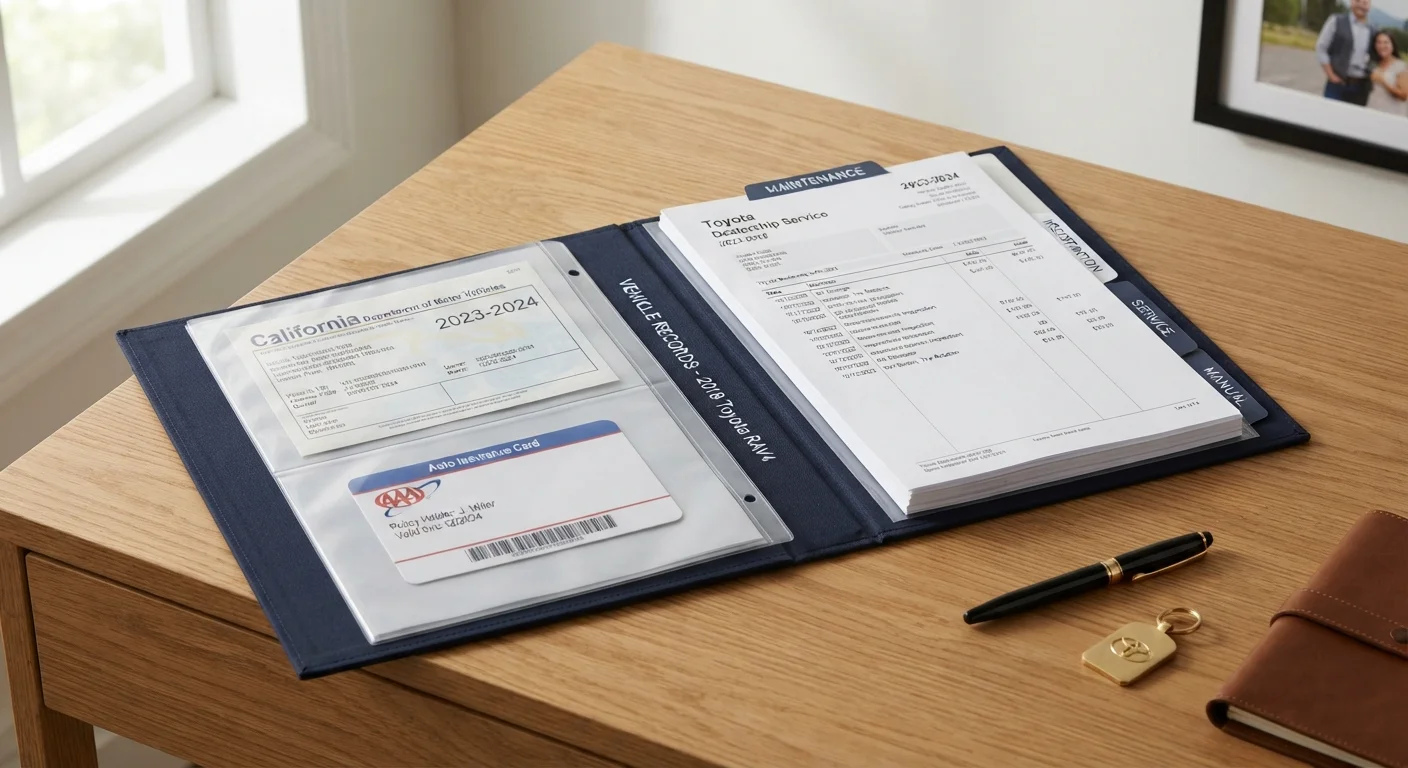
A single accordion folder or labeled binder for each vehicle you own keeps all paperwork in one predictable place. Divide it into sections: ownership, insurance, registration, service history, and warranty. Review and update the file each time you renew insurance or complete a service visit. This habit takes minutes to maintain but can save hours in a pinch.
The Seven Documents Worth Filing Away
Vehicle Title (Certificate of Ownership)
The title is your legal proof that you own the vehicle. Without it, you cannot legally sell, transfer, donate, or in some states even register the car. If you paid cash for the vehicle, you should receive the title directly. If you financed it, the lender typically holds the title until the loan is paid off - at which point they'll release it to you.
Store the title somewhere secure and fireproof at home, such as a lockbox or filing cabinet. Do not keep it in the car itself, as a theft would complicate ownership claims considerably.
Without your title, selling or transferring your vehicle becomes a significant legal headache.
Current Insurance Card
Every state requires drivers to carry proof of insurance while operating a vehicle. Your insurer issues a physical insurance card - or in most states now, a digital version on your phone is acceptable - that shows your policy number, coverage dates, and insured vehicle.
Keep the current card in your glove compartment and replace it immediately when a new card arrives. An expired card at a traffic stop or accident scene creates unnecessary complications, even if your policy is technically active. Many insurers also offer app-based proof, which can serve as a reliable backup.
An expired insurance card in your glove box can complicate an already stressful roadside situation.
Vehicle Registration
Your registration certificate, issued by your state's motor vehicle authority (often the DMV), confirms that your vehicle is legally registered to operate on public roads. It typically must be renewed annually or biannually and should be kept in the car at all times.
Registration is commonly checked during traffic stops, at vehicle inspection stations, and whenever a law enforcement officer requests identification of the vehicle. If you drive across state lines frequently, check that your registration and plate reflect your current home state - rules on out-of-state vehicles vary.
Registration is one of the few documents you're legally required to have physically present in the vehicle.
Service and Maintenance Records
A complete service history is one of the most undervalued documents a car owner can maintain. Records from oil changes, tire rotations, brake jobs, and major repairs help a mechanic understand your car's full story - making it easier to diagnose problems and avoid duplicate work. See your car's maintenance schedule, explained for guidance on what services to expect at each mileage milestone.
Service records also matter when selling. A car with a documented history typically inspires more buyer confidence than one without. Keep receipts from dealerships, independent shops, and even part purchases if you handle any maintenance yourself. A simple accordion folder or a dedicated app works well for ongoing organization.
A complete service history can be a meaningful asset when it's time to sell your vehicle.
Warranty Documents
New vehicles come with manufacturer warranties - commonly a bumper-to-bumper warranty and a separate powertrain warranty - that cover specific repairs at no cost to you during the coverage period. If you purchased an extended warranty (also called a vehicle service contract), that documentation is equally important.
Warranty terms outline exactly what is and isn't covered, which repair facilities are authorized, and what voids the coverage. Losing these documents can leave you unable to enforce a valid claim. Keep them for the full warranty period and ideally a year or two beyond, in case a dispute arises over timing of a covered repair.
Knowing exactly what your warranty covers - and what voids it - can save you significant repair costs.
Loan or Lease Agreement
If you financed or leased your vehicle, your loan or lease agreement details the full terms of your financial obligation: monthly payment amounts, interest rate, total loan cost, lease mileage limits, and end-of-term conditions. This document is essential for resolving any disputes with the lender or lessor.
For lease holders in particular, the agreement specifies fees for excess mileage, wear-and-tear standards, and buyout options. Review it before your lease ends so there are no surprises at turn-in. Store this document with your other vehicle files - not just on an online portal, which you may lose access to after the loan is paid off.
Your loan or lease agreement contains rights you may need to exercise - keep a physical copy accessible.
Recall and Safety Notice Records
Vehicle recalls are issued when a manufacturer or the National Highway Traffic Safety Administration (NHTSA) identifies a safety defect. Recalls are repaired at no cost to the owner, but you need to act on them - and knowing your recall history helps confirm the work was completed.
When a recall repair is done, ask the dealership for written confirmation and keep it with your vehicle file. You can check whether any open recalls apply to your car at any time using the NHTSA's free online lookup tool (at nhtsa.gov) with your Vehicle Identification Number (VIN). This record is particularly useful when buying a used car or selling your current one.
Documented proof that recall repairs were completed adds credibility and safety assurance for future buyers.
Digital Backups Are Worth the Effort
Scanning or photographing your key documents and storing them in a secure cloud folder or encrypted drive provides a reliable safety net if originals are lost in a fire, flood, or theft. This is especially useful for the title, warranty paperwork, and loan agreement. Just be mindful of where sensitive financial documents are stored digitally - use password-protected services and avoid emailing copies unnecessarily.
Staying Organized for the Long Haul
Assembling these documents once is a good start, but organization requires a little ongoing attention. Each time you renew your registration, receive an updated insurance card, or complete a significant repair, take two minutes to update your vehicle file. The car maintenance hub is a helpful reference for tracking what services are due and when.
Think of your vehicle file the same way you'd think about a home maintenance log - a living record that reflects your ownership history and protects your investment. The effort involved is minimal, and the payoff when you actually need the information can be considerable.