

Key Takeaways
Disc Braking System
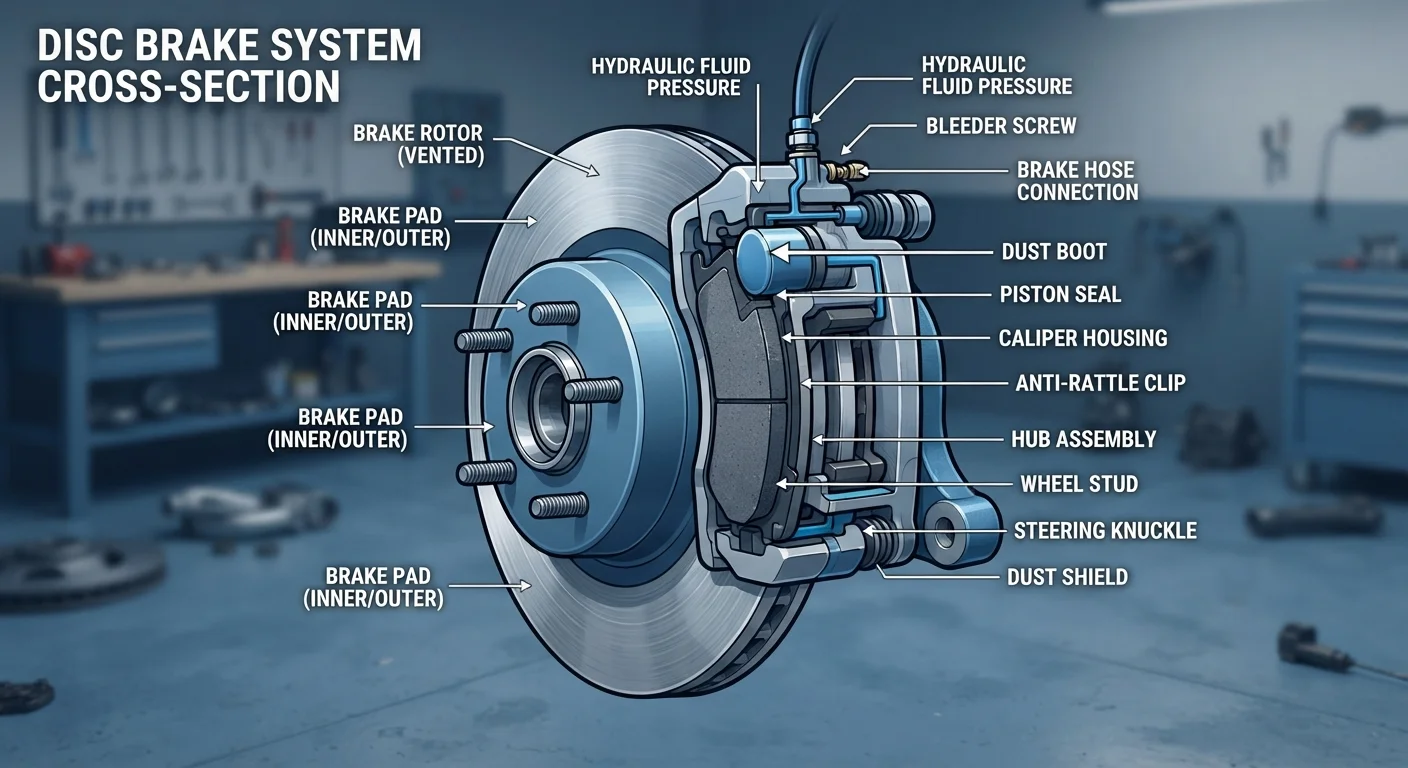
A disc braking system slows your vehicle by using hydraulic pressure to squeeze brake pads against a spinning metal rotor, converting kinetic energy into heat through friction. The three key components - pads, rotors, and calipers - must all work together for your car to stop safely. Most modern passenger vehicles use disc brakes on all four wheels.
Hydraulic force is transmitted through brake fluid, which is why brake fluid condition is directly linked to braking performance. Low or contaminated fluid can compromise the entire system.
The Three Parts Working as One
Every time you press the brake pedal, three key components spring into action: the brake pad, the rotor (also called a disc), and the caliper. Understanding what each one does - and how they interact - gives you a much clearer picture of your car's most critical safety system.
Pressing the pedal sends pressurized brake fluid from the master cylinder through the brake lines to each wheel. That hydraulic pressure activates the caliper, which clamps the brake pads against the spinning rotor. Friction slows the rotor, which is bolted to your wheel hub, and your car decelerates. It's a sequence that happens in milliseconds, thousands of times over the life of your vehicle.
If you're newer to understanding what's happening under your car, the beginner's guide to what's under the hood is a useful starting point before going deeper on brakes.
25,000-70,000 mi
Typical brake pad replacement interval
The range reflects differences in driving style, pad compound, and vehicle weight - city driving wears pads faster than highway use.
30,000-70,000 mi
Typical rotor lifespan range
Rotor longevity depends heavily on pad condition, driving habits, and whether rotors are resurfaced during pad replacements.
2-4 years
Recommended brake fluid change interval
Brake fluid is hygroscopic - it absorbs moisture over time, which lowers its boiling point and can reduce braking effectiveness under heavy use.
Brake Pads: The Wear Item You'll Replace Most Often
Brake pads are consumables - they're designed to wear down gradually so the rotor and caliper don't take the brunt of the friction. A typical pad has a layer of friction material (commonly semi-metallic, ceramic, or organic compounds) bonded to a metal backing plate.
Most pads include a small metal wear indicator that contacts the rotor and creates a squealing noise when the pad material has worn thin. That sound is your cue to have brakes inspected promptly. Ignoring it long enough leads to grinding - metal backing plate against rotor - which damages the rotor and raises repair costs considerably.
Replacement intervals vary, but many drivers need new pads somewhere between 25,000 and 70,000 miles. City driving with frequent stops wears pads faster than highway driving. Always replace pads in axle pairs to maintain even braking balance.
Check Pad Thickness During Tire Rotations
Most tire rotations require removing the wheels, which gives a clear view of your brake pads through the caliper. Ask your mechanic to note pad thickness at each rotation so you can track wear trends over time. This is one of the simplest ways to avoid being caught off guard by worn brakes.
Rotors: The Spinning Discs That Take the Heat
Rotors are thick metal discs that spin with your wheels. When the pads clamp down, the rotor absorbs an enormous amount of heat - that's by design. Most rotors are vented (they have internal cooling fins between two disc faces) to help dissipate heat more efficiently.
Over time, rotors wear down from friction, and they can also develop hot spots or warp from uneven heat distribution. A warped rotor causes the brake pedal to pulsate or vibrate under your foot - a sensation that's hard to miss once you know what it means. Rotors can sometimes be resurfaced (machined back to a flat, even surface) if they're thick enough, but once they fall below the manufacturer's minimum thickness, replacement is required.
Keeping brake fluid in good condition helps ensure even caliper pressure, which in turn reduces the risk of uneven rotor wear. See the guide to identifying and checking car fluids for how to check your brake fluid level and condition.
Calipers: The Hydraulic Clamps
The caliper sits over the rotor like a clamp and houses the brake pads on both sides. Inside it, one or more pistons push the pads inward when brake fluid pressure arrives. Once you release the pedal, the pistons retract slightly and the pads pull back from the rotor.
Calipers can develop two main problems over time. A seized caliper fails to fully retract, keeping the pad in constant light contact with the rotor. This causes rapid, uneven pad wear, excessive heat, and sometimes a burning smell after driving. A leaking caliper allows brake fluid to escape, reducing hydraulic pressure and resulting in a soft or spongy pedal feel. Both conditions require professional repair - caliper work isn't a typical DIY task for most drivers.
Caliper Repairs Are Best Left to Professionals
Unlike brake pad inspection or checking fluid levels, caliper service involves the hydraulic side of your brake system. Mistakes during reassembly - such as introducing air into the lines or improperly retracting pistons - can seriously compromise braking. If you suspect a caliper issue, have a qualified mechanic assess it before driving further.
For context on how brake maintenance fits into your overall service schedule, the car maintenance schedule explainer outlines what to expect at common mileage intervals.
Warning Signs You Shouldn't Ignore
Your braking system gives clear signals when something is wrong. Here's what to watch - and listen - for:
- Squealing when braking: Worn pad wear indicators making contact with the rotor.
- Grinding noise: Pad material is gone; metal-on-metal contact is damaging the rotor.
- Pulsating pedal: Warped or uneven rotor surface.
- Pulling to one side: Uneven pad wear or a sticking caliper on one side.
- Soft or spongy pedal: Air in the brake lines or a leaking caliper; have this checked immediately.
- Brake warning light: Could indicate low brake fluid, worn pads, or a system fault - don't ignore it.
Routine brake inspections - typically recommended at least once a year or whenever tires are rotated - catch issues early. The maintenance tasks owners commonly overlook covers brake fluid changes and other easy-to-miss service items worth keeping on your radar.