

Key Takeaways
The Upkeep Items That Slip Through the Cracks
New car owners quickly learn the basics: oil changes, tire rotations, the occasional car wash. But a handful of genuinely important maintenance tasks rarely make it onto anyone's mental checklist - until something goes wrong. These aren't obscure or exotic jobs. They're routine items with clear service intervals that simply don't get the same cultural attention as an oil change.
Understanding what these tasks are, and roughly when they need attention, puts you in a much stronger position as an owner. For a broader framework around keeping your vehicle reliable over time, see our long-term maintenance framework. The list below focuses specifically on the items most commonly overlooked - and why each one matters.
Cabin Air Filter
The cabin air filter cleans the air entering your car's heating, ventilation, and air conditioning (HVAC) system. A clogged filter restricts airflow, reduces the effectiveness of your defroster, and can leave the interior smelling musty. Most manufacturers recommend replacing it every 15,000 to 25,000 miles, though dusty or high-pollen environments may shorten that interval.
This is one of the few items a confident DIYer can often handle without tools - the filter housing is typically located behind the glove box or under the dashboard. Check your owner's manual for your vehicle's specific location and interval.
A clogged cabin filter quietly undermines your defroster and HVAC airflow long before you notice.
Brake Fluid
Brake fluid is hygroscopic, meaning it absorbs moisture from the air over time. As water content rises, the fluid's boiling point drops - which can reduce braking performance under heavy or repeated use. Most manufacturers recommend a brake fluid flush every two years or roughly every 30,000 miles, but this varies by vehicle.
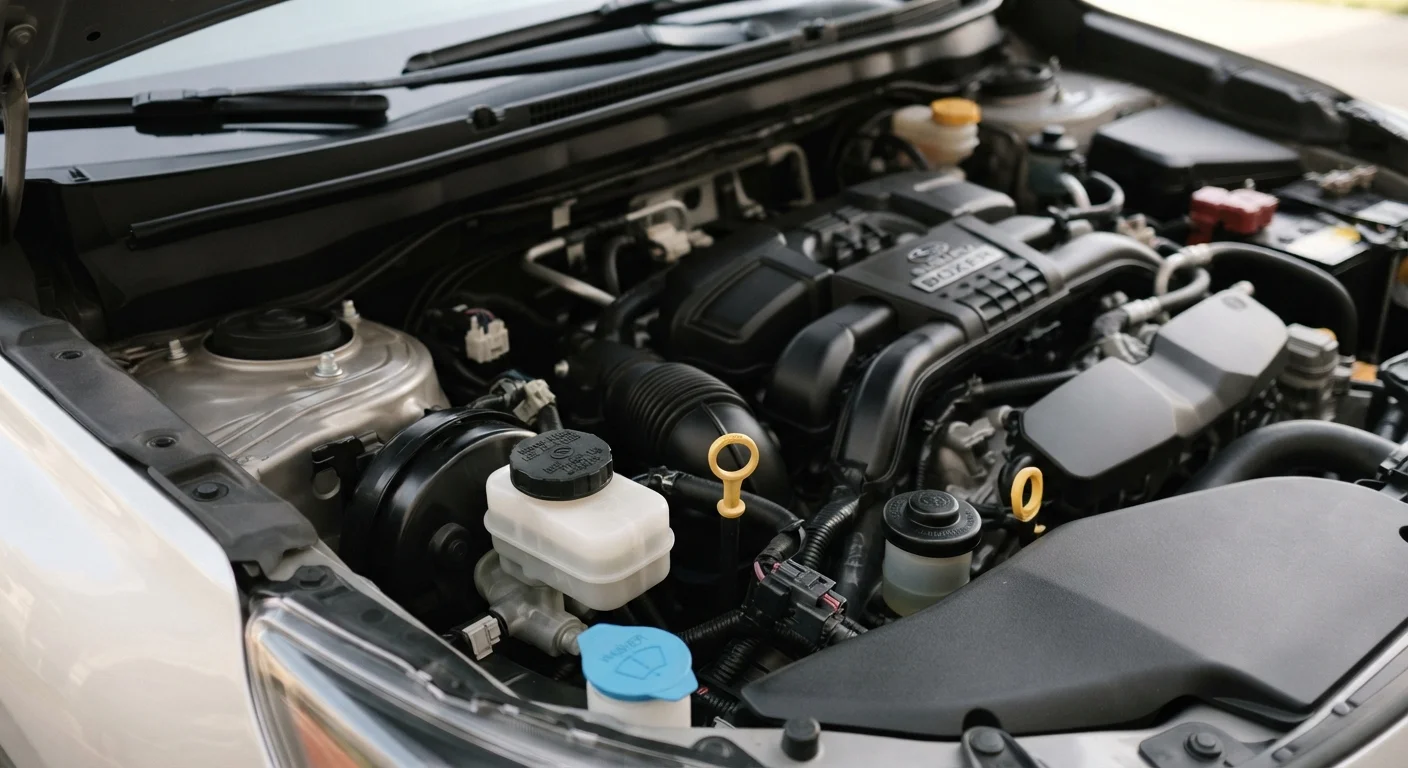
You can check the fluid level yourself via the reservoir under the hood, but testing for moisture content and performing a flush is a job best left to a qualified mechanic. For more on how your braking system works as a whole, see our guide to brake pads, rotors, and calipers.
Brake fluid absorbs moisture over time, gradually lowering its boiling point and braking reliability.
Coolant Flush
Engine coolant (also called antifreeze) prevents your engine from overheating in summer and freezing in winter. Over time, coolant degrades chemically and becomes less effective at preventing corrosion inside the cooling system. A coolant flush - where the old fluid is drained and replaced - is typically recommended every 30,000 to 50,000 miles, depending on the type of coolant your vehicle uses.
Topping up a low reservoir is a simple check anyone can do. However, a full flush involves draining the system and should be performed by a professional, as improper handling of coolant carries environmental and safety considerations.
Degraded coolant loses its corrosion-inhibiting properties, quietly damaging your cooling system from within.
Tire Pressure (Seasonal Adjustments)
Most drivers know tire pressure matters, but fewer account for seasonal temperature swings. Air pressure drops roughly 1 PSI for every 10°F decrease in ambient temperature - meaning tires that were correctly inflated in summer may be underinflated by winter. Underinflated tires wear unevenly, reduce fuel efficiency, and can affect handling.
Check pressure with a gauge at least monthly, and always when temperatures shift significantly. Your vehicle's recommended pressure is on a sticker inside the driver's door jamb - not on the tire sidewall, which shows the maximum pressure. Our tire maintenance guide covers pressure, tread, and rotation in full.
Tire pressure drops with temperature - a correctly inflated summer tire may be underinflated by December.
Transmission Fluid
Transmission fluid lubricates the moving parts inside your transmission and helps regulate operating temperature. In automatic transmissions especially, degraded or low fluid can lead to sluggish shifts, overheating, or long-term internal wear. Service intervals vary widely - some vehicles require a change every 30,000 miles, others are rated for much longer - so the owner's manual is your most reliable source here.
Transmission work is firmly in professional territory. Even checking fluid level on some modern vehicles requires a lift and specific tools. Establishing the correct interval for your car and having a mechanic inspect it at the right mileage is the practical approach for most owners.
Transmission fluid intervals vary widely by vehicle - ignoring yours is one of the costlier oversights possible.
Wiper Blades
Wiper blades degrade from UV exposure, temperature extremes, and simple use. Most drivers notice this only during a downpour - exactly the wrong moment. Streaking, skipping, or squeaking are all signs that replacement is overdue. General guidance suggests replacing blades every six to twelve months, though climate plays a significant role.
Replacement is one of the most straightforward car maintenance tasks and requires no tools on most vehicles. Checking blades before winter or rainy seasons - rather than waiting for failure during them - is a simple habit that pays dividends in visibility and safety. See our seasonal maintenance checklist for a full pre-season rundown.
Wiper blades fail visibly only when you need them most - inspect them before bad weather arrives.
Staying Ahead Before Problems Develop
None of the tasks above require specialist knowledge to monitor - even if a mechanic should perform some of them. Building a habit of checking your owner's manual for service intervals, and glancing at fluid levels periodically, closes most of the gap between attentive owners and reactive ones. Our guide on identifying and checking car fluids covers the practical how-to in more detail.
Your Owner's Manual Is the Best Starting Point
Manufacturer service intervals are spelled out in your vehicle's owner's manual, often in a dedicated maintenance schedule section. These intervals are specific to your engine type, transmission, and operating conditions - far more reliable than general rules of thumb. If you've misplaced your manual, most manufacturers make digital versions available through their official websites.
If you're weighing which tasks to handle yourself versus delegating to a garage, this breakdown of DIY versus professional servicing can help you draw that line sensibly. Staying informed - not just reactive - is what separates owners who avoid expensive surprises from those who don't.