

Key Takeaways
Boiler Servicing
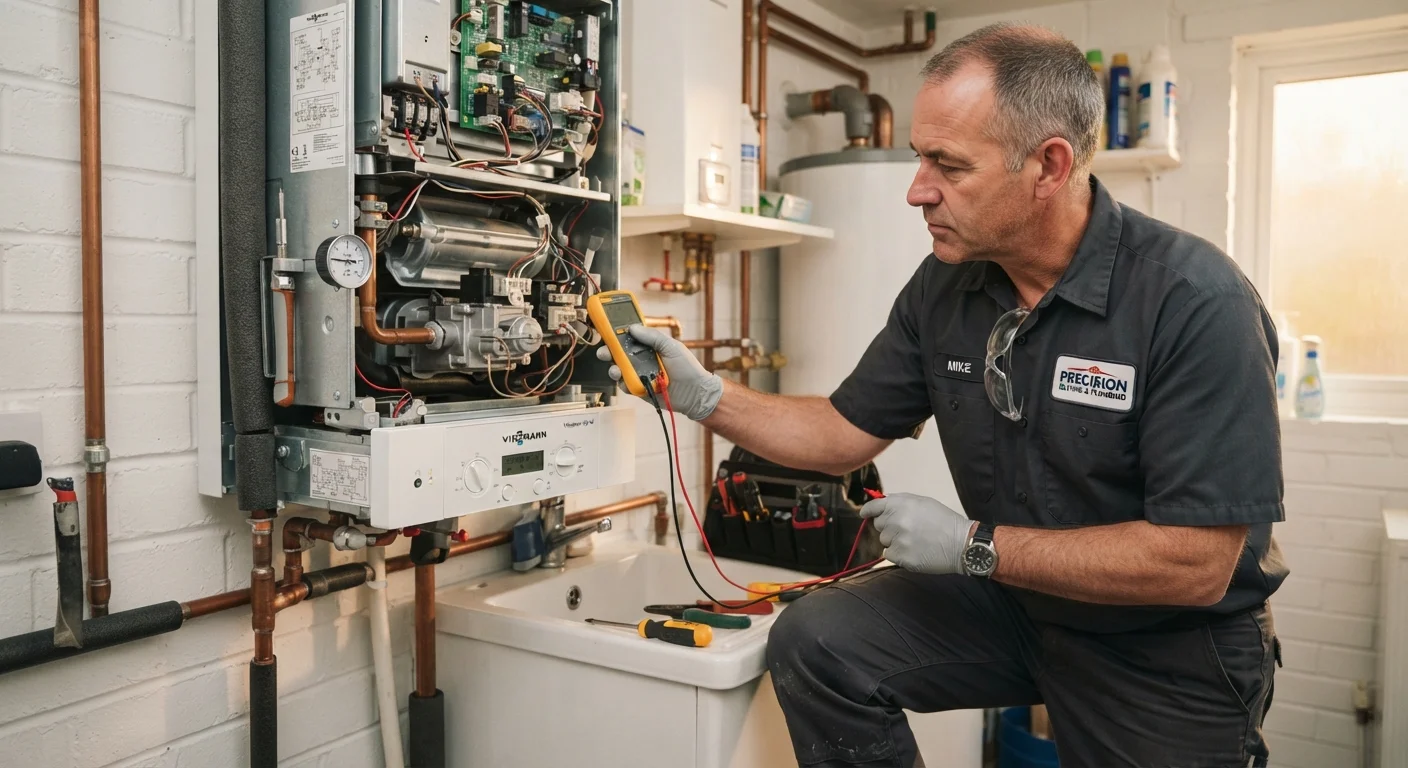
A boiler service is a routine inspection and maintenance procedure carried out by a qualified heating engineer, typically once a year. During the service, the technician checks that the boiler is operating safely, cleans key components, tests controls and safety devices, and identifies any parts showing wear. The goal is to keep the system running efficiently and catch small problems before they become expensive failures.
In the U.S., gas appliance servicing should always be performed by a licensed HVAC technician or plumber qualified to work on gas systems. Requirements for licensing vary by state, so verify credentials with your local authority having jurisdiction (AHJ).
What a Boiler Service Actually Covers
Many homeowners assume a boiler service is a quick visual check. In practice, a qualified technician works through a structured checklist that touches every major component of the system.
A typical service includes:
- Visual inspection of the boiler casing, pipework, and flue for signs of corrosion, leaks, or damage
- Burner and heat exchanger check — cleaning out deposits that reduce heat transfer and strain the system
- Combustion analysis — testing the flue gases to confirm the burner is burning cleanly and efficiently
- Safety device testing — verifying that pressure relief valves, thermostats, and automatic shut-offs function correctly
- Controls inspection — confirming that the programmer, thermostat, and zone valves respond as intended
- Gas pressure and flow check — ensuring the supply pressure meets the manufacturer's operating specification
- Leak detection — checking gas connections and seals with appropriate equipment
The engineer will document findings and flag anything that needs attention, whether a minor adjustment or a part that's approaching end of life.
The Safety Case for Annual Servicing
Efficiency savings are real, but the more urgent reason to service a boiler is safety. A boiler burning gas that isn't fully combusted can produce carbon monoxide (CO) — a colorless, odorless gas that is acutely dangerous at elevated concentrations. A cracked heat exchanger or blocked flue, both detectable during a service, are common sources of CO leaks in residential systems.
CO detectors are an important safeguard, but they are not a substitute for keeping the boiler itself in good condition. A service catches the root cause; a detector only alerts you after the problem has already developed.
Beyond CO risk, a poorly maintained boiler is also more likely to experience pressure-related failures or burner issues that can pose fire hazards. Licensed technicians are trained to assess these risks systematically — which is why this work is regulated and should never be attempted as a DIY project.
What Skipping a Service Costs You
There's a straightforward financial logic to annual servicing. A boiler running with a dirty burner or scaled heat exchanger uses more fuel to produce the same heat output — meaning higher energy bills month after month. A service restores that efficiency.
More significantly, small problems found during a routine service are almost always cheaper to fix than emergency callouts. A worn seal or a failing pump identified during a scheduled visit costs a fraction of what it does when it causes a complete breakdown on the coldest night of the year.
Warranty coverage is another consideration. Most boiler manufacturers require documented annual servicing to keep the warranty valid. Skipping even one year can leave you unprotected if a major component fails during what should still be a covered period.
For a broader view of how scheduled maintenance prevents expensive surprises across your home, see the seasonal home maintenance calendar — boiler servicing fits naturally into a late-summer preparation routine.
How to Prepare and What to Expect
Before the technician arrives, clear the area around the boiler so they have unobstructed access. Locate your boiler manual if you have it — the engineer may want to reference manufacturer specifications. Note any symptoms you've observed, such as unusual noises, inconsistent heating, or pressure drops.
During the visit, the engineer should explain what they've checked and what, if anything, needs attention. Ask for a written service record. This documentation matters: it protects your warranty, supports insurance claims, and is valuable if you ever sell the property. The principle is the same as keeping records for any mechanical system — the analogy to maintaining a car service history holds directly.
When choosing a technician, verify that they hold appropriate state licensing for gas appliance work. Ask whether the service includes a written report and what's covered in the quoted price — some engineers charge separately for minor adjustments made during the visit.