

Key Takeaways
What a Service History Actually Contains
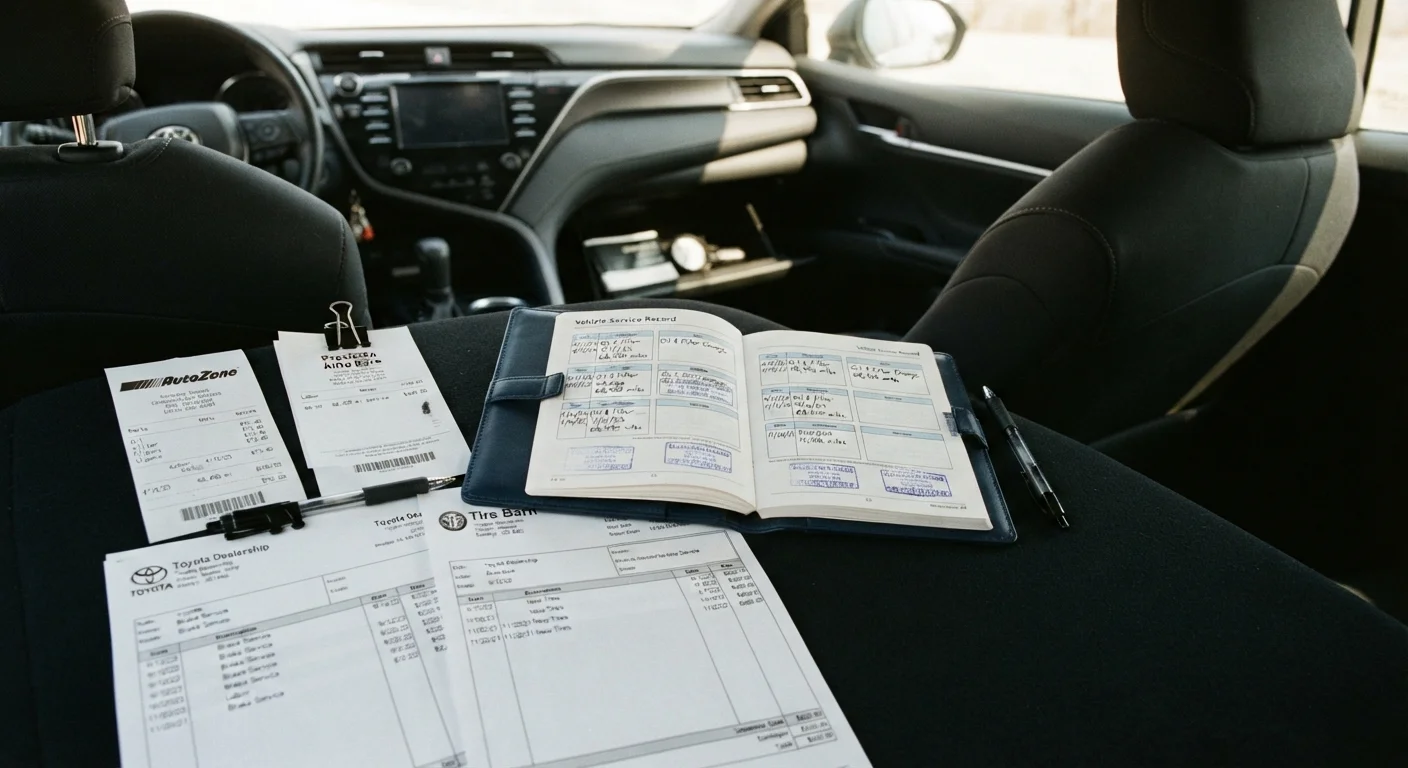
A service history is more than a stamped booklet in the glovebox. It's a chronological record of every significant maintenance event your vehicle has gone through - oil changes, filter replacements, brake inspections, timing belt swaps, fluid top-ups, and any repairs carried out during routine servicing visits.
At minimum, each entry should record the date, the odometer reading, the work performed, the parts used (where relevant), and the name of the shop or technician who carried it out. Receipts, invoices, and inspection sheets are all legitimate supporting documents that strengthen the record.
A complete history tells a story - not just of what was done, but of how consistently a vehicle was cared for. For mechanics diagnosing a problem, it can point directly to likely causes. For future buyers, it provides independent evidence of the care claims a seller is making. See our guide to vehicle documents every owner should keep on file for a broader look at which records deserve a permanent home in your files.
Why Service Records Have Real Financial Consequences
Owners sometimes treat service records as a nicety rather than a necessity - a habit that can have concrete financial consequences.
~$500-$1,000+
Estimated resale value difference with full vs. incomplete service history
Industry estimates from used vehicle market analysts suggest documented maintenance history can meaningfully influence private sale and trade-in valuations, though exact figures vary by vehicle type and age.
1 in 3
Used car buyers who say service history is a top purchase decision factor
Consumer research on used vehicle purchasing behaviour consistently identifies service records as one of the most influential factors after price and mileage.
From a resale standpoint, a vehicle with a full, verifiable service history typically commands stronger buyer interest and a more defensible asking price than an identical vehicle with patchy or missing records. Buyers - and dealers who appraise trade-ins - factor in documentation gaps as an unknown risk. A missing service history shifts that uncertainty onto the buyer, and they tend to price that uncertainty accordingly.
Warranty implications are equally significant. Many manufacturer and extended warranties require evidence that the vehicle was maintained according to the prescribed schedule. If a covered component fails and you can't demonstrate that scheduled maintenance was performed, the warranty claim may be denied - regardless of whether the missed service actually caused the problem. Check your warranty terms carefully and keep records that meet those specific requirements.
As common servicing assumptions that cost owners money points out, skipping services might feel like saving money in the short term but can generate significantly higher costs down the road.
Best Practices for Maintaining Your Service History
Building and keeping a solid service history doesn't require special tools or expertise - it requires consistency. The practices below apply whether you use a paper logbook, a digital spreadsheet, or a dedicated app.
Request and file itemised invoices after every service visit.
A verbal confirmation that service was performed is not a record. Itemised invoices list the specific work done, parts replaced, and mileage at the time - all of which are essential for warranty claims, diagnosis, and resale. Without these, you're relying on memory that will fade.
Log mileage and date for every maintenance event, including DIY tasks.
Odometer readings anchor each service event to a specific point in the vehicle's life. Without them, records lose their usefulness for tracking service intervals or verifying that schedules were followed. DIY maintenance counts - but only if it's documented.
Store records in at least two locations - one physical, one digital.
Paper records can be lost to flooding, fire, or simply moving house. A single digital copy on one device can disappear if that device fails. Redundancy protects years of documentation from a single incident.
Verify that independent shop records meet your warranty requirements.
Using an independent mechanic instead of a dealership is generally permitted under US federal law (the Magnuson-Moss Warranty Act), but your warranty may specify that certain services use manufacturer-approved parts or fluids. Confirming this in advance prevents surprises during a claim.
Transfer all records to a new owner when selling the vehicle.
Handing over a complete service history at the point of sale supports your asking price and builds buyer trust. It also protects you from any disputes about the car's condition prior to the sale.
For owners who prefer a long-term framework around these habits, our long-term maintenance framework outlines how routine servicing intervals and fluid checks fit into a structured ownership approach.
Getting Started If You Have Gaps in Your History
If your service history has gaps - whether because records were lost, you bought the car without full documentation, or servicing simply wasn't logged - don't assume the situation is unrecoverable.
Mechanics can sometimes identify the approximate state of a vehicle's maintenance history through physical inspection - condition of the oil, age of filters, and wear patterns on components can all offer clues. That's not a substitute for a paper trail, but it can help establish a credible baseline going forward. What the odometer doesn't tell you about a car's condition explores how mechanics read a vehicle's true history beyond mileage alone.
You Don't Need a Dealer to Have a Valid History
Under the Magnuson-Moss Warranty Act, US vehicle manufacturers generally cannot void your warranty solely because you used an independent mechanic for routine servicing - provided that work met the manufacturer's specifications. What matters is that the service was performed correctly and documented. Keep invoices that clearly show the work done, the parts used, and that specifications were followed.
The most important step is simply to start now. Every documented service from this point forward adds credibility and value - and reduces the risk of being caught without records when it matters most.