

Key Takeaways
Start here
Why Knowing Your Car Matters
Build your foundation
What's Actually Under the Hood
Take action
Fluid Checks You Can Do Yourself
Stay alert
Warning Signs Worth Acting On
Know your limits
When to Call a Mechanic
Why Knowing Your Car Matters
Most drivers learned how to operate a car, but very few were ever taught how to take care of one. That gap isn't a character flaw - it's simply how driver education tends to work. The result is that millions of people drive vehicles every day without any real sense of what those vehicles need to keep running well.
The good news: you don't need to become a mechanic to take better care of your car. A basic understanding of what's under the hood - and what to watch for - puts you in a much stronger position when something feels off, when a warning light appears, or when a service advisor tells you something needs fixing. It also helps you avoid the kind of costly surprises that come from deferred maintenance. For a broader look at managing your vehicle long-term, the Car Ownership hub is a practical starting point.
Engine oil
A lubricating fluid that reduces friction between moving metal parts inside the engine. Without adequate clean oil, engine components wear rapidly and can fail.
Coolant
A liquid - also called antifreeze - that circulates through the engine and radiator to regulate temperature and prevent overheating or freezing.
Dipstick
A long metal rod inserted into the engine oil reservoir that lets you check the oil level and get a rough sense of its condition without any tools.
Dashboard warning light
An indicator light on the instrument cluster that alerts the driver when a vehicle system detects a problem. Red lights typically require immediate action; amber lights usually mean schedule service soon.
Brake fluid
A hydraulic fluid that transfers force from your brake pedal to the brake components at each wheel. It absorbs moisture over time and should be checked and replaced on schedule.
Owner's manual
The booklet (or digital document) provided with your specific vehicle that details correct fluids, maintenance schedules, warning light meanings, and operating procedures for your exact make and model.
What's Actually Under the Hood
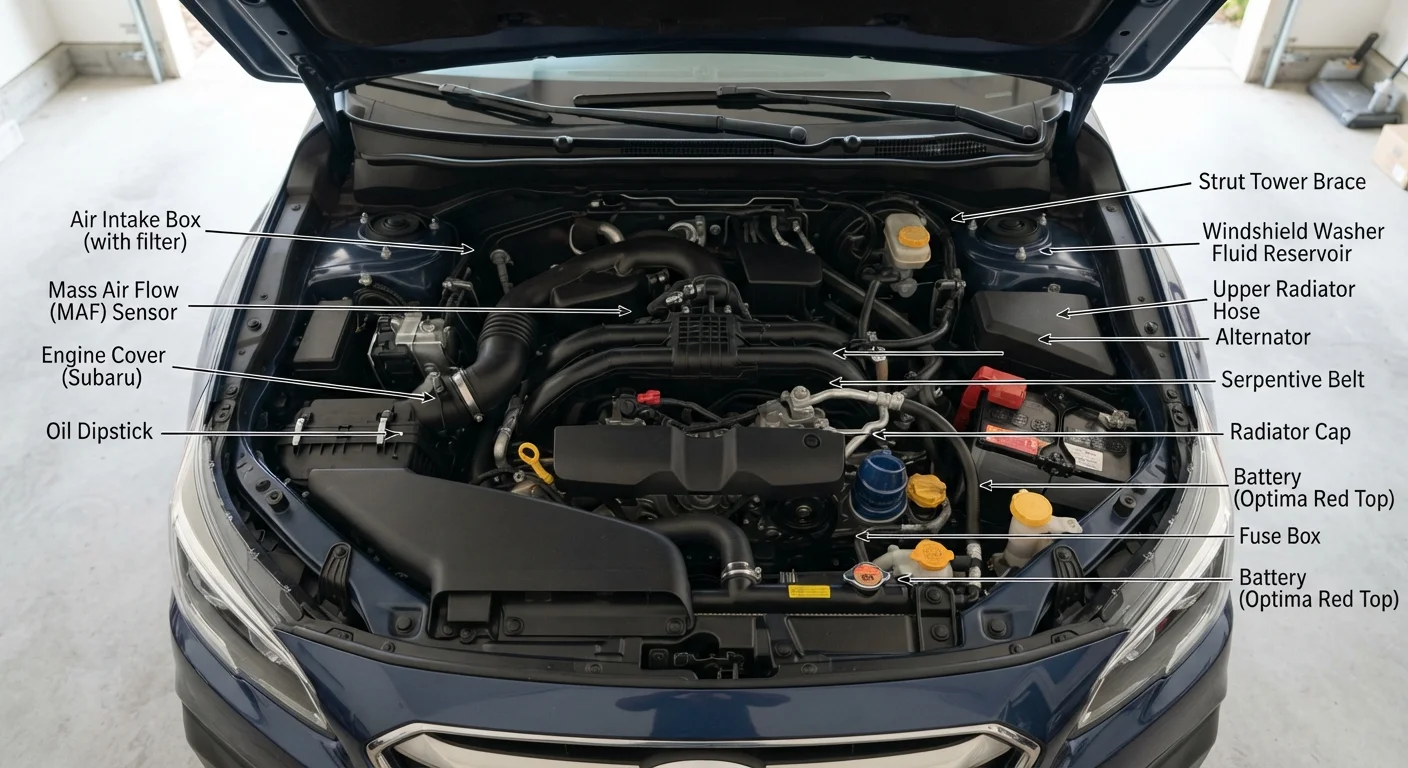
Pop the hood and you'll see a busy-looking collection of components - but most of what you're looking at falls into a handful of categories. Understanding each one removes the mystery.
- Engine: The large central mass. It burns fuel to generate power. You generally won't interact with the engine block itself, but many components around it require periodic attention.
- Battery: A rectangular box, usually near one side of the engine bay. It powers your car's electrical systems and starter motor. Terminals (the metal posts) should be free of white or bluish corrosion buildup.
- Radiator: Located at the front of the engine bay, behind the grille. It keeps the engine from overheating by circulating coolant. Never open its cap when the engine is warm.
- Fuse box: A covered plastic box containing fuses that protect electrical circuits. Your owner's manual identifies which fuse controls which system.
- Dipstick: A long, thin rod with a looped handle - usually yellow or orange - used to check engine oil level. It's one of the most useful tools in the engine bay.
Familiarizing yourself with where these components sit in your specific car takes five minutes and makes every future check far less intimidating.
Fluid Checks You Can Do Yourself
Fluids are the lifeblood of your vehicle. Running low on the wrong one - or running on degraded fluid - can cause damage ranging from minor wear to catastrophic failure. Here are the five you should monitor regularly:
- Engine oil: Use the dipstick to check the level when the engine is cold and the car is on level ground. Oil should sit between the two marks on the dipstick and appear dark amber, not black and gritty. Your owner's manual specifies which oil grade to use.
- Coolant (antifreeze): Check the translucent reservoir tank - not the radiator cap - for the min/max markings. Coolant is typically green, pink, or orange depending on the type. Always check when the engine is cold.
- Brake fluid: Located in a small reservoir near the firewall (the wall between the engine and cabin). Fluid should be between the min and max lines. If it's consistently low, that's a sign of a leak or worn brake pads - have a mechanic inspect it promptly.
- Power steering fluid: Not all vehicles have this - many newer cars use electric power steering. If yours has a hydraulic system, the reservoir is usually near the front of the engine and has a dipstick or min/max markings.
- Windshield washer fluid: The easiest to top off yourself. Use a washer fluid formulated for your climate - plain water can freeze in winter or leave mineral deposits on your screen.
Your Owner's Manual Is Your Best Tool
Before you buy any fluid or attempt any check, consult your owner's manual - it specifies the exact fluid grades and capacities for your vehicle. Using the wrong oil viscosity or coolant type can cause problems even if the level is correct. Most manuals are available as free PDFs on the manufacturer's website if you've misplaced your paper copy.
Warning Signs Worth Acting On
Your car communicates constantly - through sounds, smells, sensations, and dashboard lights. Learning to read those signals early is one of the most valuable skills you can develop as a driver.
Dashboard lights: These aren't decorative. A red warning light almost always means stop or act immediately. Amber lights typically indicate something that needs attention soon but isn't immediately dangerous. Our guide to reading dashboard warning lights breaks down the most common symbols in plain English.
Sounds to take seriously:
- A grinding noise when braking - often indicates worn brake pads contacting the rotor
- A clicking or knocking from the engine at idle - can signal low oil pressure or internal wear
- A high-pitched squeal when turning - may point to low power steering fluid or a worn belt
Smells worth noting:
- Burning rubber or plastic after driving - could indicate an overheating component or a belt slipping
- A sweet, syrupy smell - often coolant leaking onto a hot surface
- Rotten egg or sulfur smell - can indicate a catalytic converter issue
Never Ignore a Red Warning Light While Driving
A red oil pressure or engine temperature light means pull over safely and turn off the engine as soon as it is safe to do so - not at your destination. Continuing to drive with these lights active can cause severe engine damage in a matter of minutes. If you're unsure what a light means, err on the side of stopping and calling for assistance.
When to Call a Mechanic
Basic checks and fluid top-offs are within most drivers' ability. But there's a clear line between routine monitoring and hands-on repair - and knowing where that line sits protects both you and your vehicle.
Always involve a qualified mechanic for:
- Any brake system work beyond monitoring fluid level
- Suspension, steering, or wheel alignment concerns
- Engine warning lights that return after being cleared
- Unusual smells or smoke from any part of the vehicle
- Any repair that requires lifting the vehicle without proper equipment
Being able to describe what you noticed - when it started, what it sounds or smells like, under what conditions it happens - helps your mechanic diagnose the problem faster and more accurately. That's one of the most practical returns on the basic knowledge in this guide.
For a structured overview of what your vehicle needs at each service milestone, see your car's maintenance schedule explained. And if you want to extend your knowledge to the road surface your car rides on, tyre maintenance from the ground up is a natural next step.
Maintenance Neglect Compounds Over Time
Skipping fluid checks or deferring service doesn't just risk a breakdown today - it accelerates wear that shortens your vehicle's overall lifespan. Many drivers are surprised to learn how much deferred maintenance adds up in repair costs. For a closer look at this pattern, common assumptions about car servicing that cost owners money is worth reading before your next service is due.