

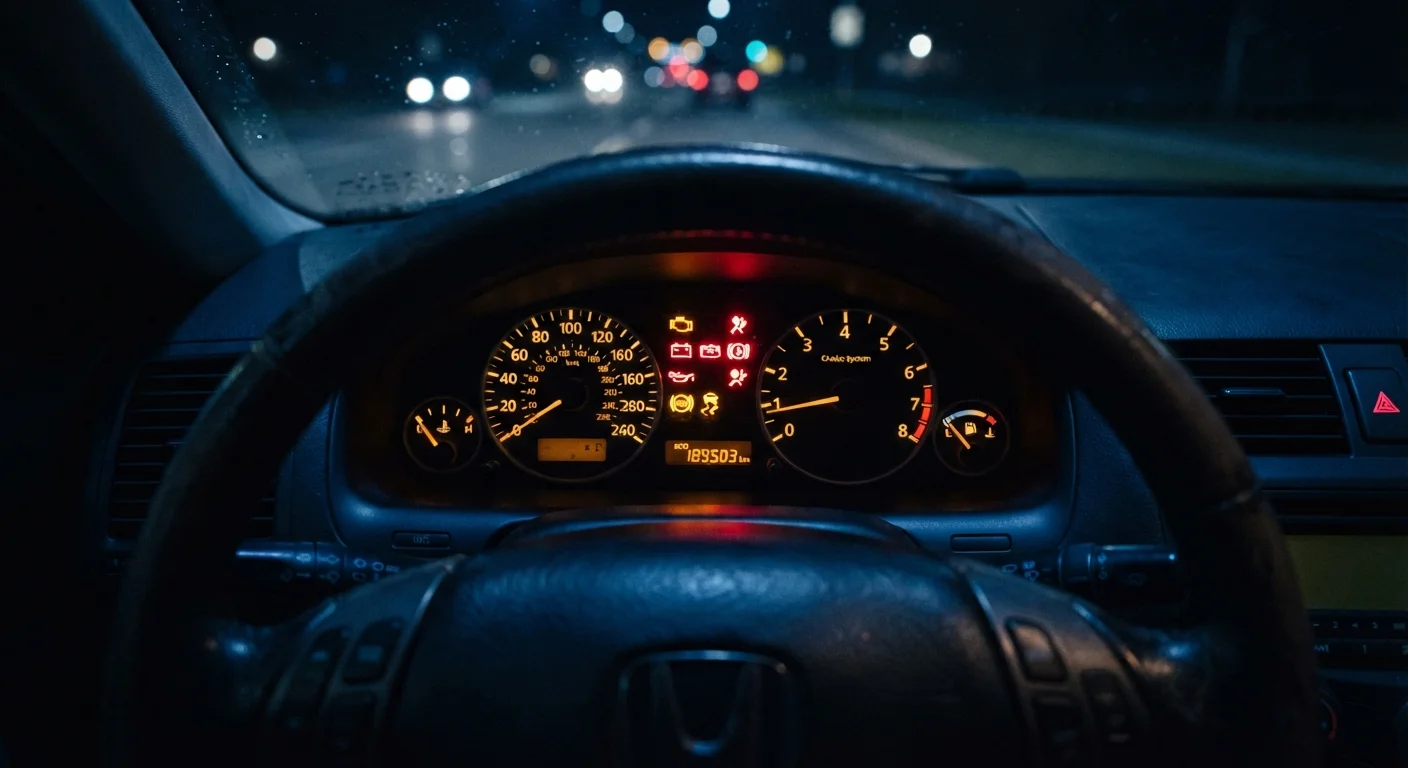
| Red warning light | Stop or pull over as soon as safely possible |
| Amber/yellow warning light | Schedule attention within days, not weeks |
| Flashing check engine light | More urgent than steady - avoid driving until diagnosed |
| Free fault code reading | Available at many auto parts retailers with a basic OBD-II scanner |
| Owner's manual | The definitive reference for your vehicle's specific warning symbols |
| Number of sensors monitored | Modern vehicles monitor dozens of systems via OBD-II |
Why Warning Lights Exist and How to Approach Them
Your car's dashboard is a continuous stream of information from the vehicle's onboard diagnostic system. When a sensor detects a condition outside its normal range, it triggers a warning light. The challenge for most drivers isn't a lack of concern - it's uncertainty about what each symbol actually means and whether it demands immediate action or can wait until the next service appointment.
The first rule: never ignore a warning light. Even lights that seem minor can indicate developing problems that become far more expensive when left unaddressed. As a general framework, red lights signal stop-now urgency, amber or yellow lights signal attention soon, and green or blue lights are informational confirmations rather than warnings.
For a broader foundation on how your vehicle's systems connect, see our jargon-free guide to understanding your car. And if you want to build the habit of catching problems before the dashboard speaks up, a simple pre-drive check is worth adding to your routine.
| Red warning light | Stop or pull over as soon as safely possible |
| Amber/yellow warning light | Schedule attention within days, not weeks |
| Flashing check engine light | More urgent than steady - avoid driving until diagnosed |
| Free fault code reading | Available at many auto parts retailers with a basic OBD-II scanner |
| Owner's manual | The definitive reference for your vehicle's specific warning symbols |
| Number of sensors monitored | Modern vehicles monitor dozens of systems via OBD-II |
The Most Common Warning Lights, Decoded
The lights below appear across most modern vehicles sold in the US. Exact symbols can vary slightly by manufacturer - always cross-reference your owner's manual when in doubt.
OBD-II
On-Board Diagnostics, second generation - a standardized system in vehicles sold in the US after 1996 that monitors engine and emissions performance and stores fault codes when a problem is detected.
Fault Code (DTC)
A Diagnostic Trouble Code stored by the OBD-II system when a sensor reading falls outside its acceptable range. Codes can be read with a scan tool to identify the specific system or component flagged.
TPMS
Tyre Pressure Monitoring System - a sensor-based system that alerts the driver when one or more tyre pressures drop significantly below the recommended level.
ABS
Anti-lock Braking System - a safety feature that prevents wheel lock-up during hard braking, helping the driver maintain steering control. A fault in this system disables the assistance but does not eliminate basic braking.
Alternator
The component driven by the engine belt that recharges the battery and powers electrical systems while the vehicle is running. A failing alternator can cause the battery warning light to illuminate.
Coolant
A fluid (also called antifreeze) that circulates through the engine and radiator to regulate operating temperature. Low or degraded coolant can lead to engine overheating.
Engine and Powertrain Lights
- Check Engine (amber engine outline): One of the most misunderstood lights on any dashboard. It can indicate anything from a loose gas cap to a misfiring cylinder. A steady amber light usually allows you to drive cautiously to a mechanic; a flashing check engine light means pull over when safe and avoid driving further until diagnosed.
- Engine Temperature Warning (thermometer in liquid): Your engine is overheating. Pull over safely, shut off the engine, and do not open the hood or coolant cap while hot. Driving through this warning can cause severe engine damage.
- Oil Pressure Warning (oil can outline, red): Low oil pressure - not simply low oil level - is a stop-immediately situation. Turn off the engine as soon as it is safe to do so.
Safety and Braking Systems
- Brake System Warning (exclamation mark in circle, red): Check whether the parking brake is still engaged first. If it isn't, this light points to low brake fluid or a fault in the braking system - have it inspected promptly.
- ABS Warning (letters ABS in amber): Your anti-lock braking system has detected a fault. Normal braking still functions, but ABS assistance during hard stops may not. Schedule a diagnostic check.
- Traction Control / Stability Control (car with skid lines, amber): When this flashes during driving, it means the system is actively working. If it stays on steadily, the system may be disabled or faulted.
Electrical and Fluid Lights
- Battery / Charging System (battery outline, red): The charging system isn't maintaining voltage. This could be a failing alternator or battery. Limit electrical loads and head to a mechanic - the car may not restart once switched off.
- TPMS - Tyre Pressure (flat tyre with exclamation mark, amber): One or more tyres are significantly under-inflated. This light can trigger for several reasons beyond a puncture, including temperature changes.
Acting on a Warning Light: A Practical Decision Framework
When a new light appears, run through this sequence:
- Identify the color. Red demands immediate attention; amber means monitor and act within a short window; blue/green is informational.
- Check for accompanying symptoms. Smoke, unusual noises, handling changes, or smells alongside any light escalate urgency significantly.
- Consult your owner's manual. Every vehicle includes a warning light index - it's the most authoritative source for your specific car.
- Get a diagnostic scan. Most auto parts retailers offer free code reading for check engine lights. This gives you the specific fault code before you visit a mechanic.
Ignoring warning lights - or assuming a light is a sensor glitch - is one of the habits that quietly inflates ownership costs over time. Common assumptions about car servicing covers this pattern in more detail.
If you are ever unsure whether it is safe to continue driving, the conservative answer is always to pull over and call for assistance. A tow is far less expensive than a seized engine or failed brake system.
When In Doubt, Don't Drive
If a red warning light appears alongside any physical symptom - unusual smell, smoke, loss of power, or pulling to one side - treat it as a stop-now situation regardless of how minor the light seems. Some faults escalate quickly once the vehicle is in motion. It is always reasonable to call a roadside assistance service rather than risk further damage or a safety incident.
This article is for general informational purposes only. Warning light meanings can vary by vehicle make, model, and year. Always consult your vehicle's owner's manual and a qualified mechanic for diagnosis and repair decisions specific to your car.