

Key Takeaways
What the TPMS Light Is Actually Telling You
The TPMS warning light is one of the most frequently misread indicators on a dashboard. For a plain-English guide to how it fits alongside other alerts, see Reading Your Dashboard Warning Lights Without Guessing.
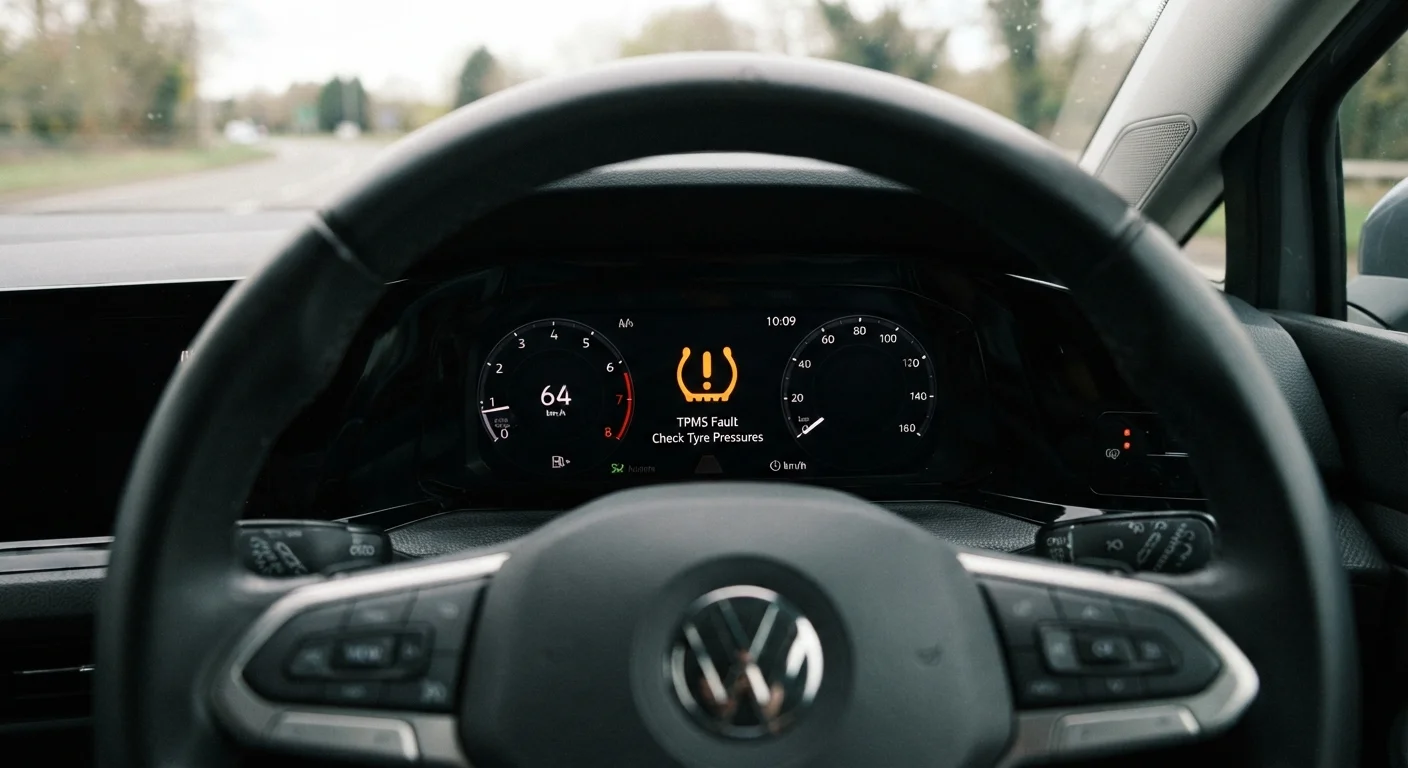
In short, there are two distinct signals to know. A steady light means one or more tyres are below the threshold - typically 25% under the recommended pressure. A flashing light (usually for 60-90 seconds before going steady) points to a sensor malfunction rather than a pressure issue. Treating both situations the same way is where most drivers go wrong.
1 PSI
Pressure lost per 10°F temperature drop
According to the U.S. Department of Energy, tyre pressure changes approximately 1 PSI for every 10-degree Fahrenheit shift in ambient temperature.
25%
Of vehicles on the road have at least one under-inflated tyre
The National Highway Traffic Safety Administration (NHTSA) has estimated that a significant share of vehicles in regular use carry at least one tyre below the recommended pressure.
Common Mistakes That Keep the Light Coming Back
A recurring TPMS warning is almost always the result of one of a handful of avoidable errors. Understanding why each one happens makes it much easier to break the cycle.
Adding air once and assuming the problem is solved.
Why it happens: Drivers often top up pressure and reset the light without investigating whether a slow leak is the underlying cause.
Inflating tyres to the pressure printed on the tyre sidewall rather than the vehicle placard.
Why it happens: The sidewall number is the tyre's maximum rated pressure, which many drivers reasonably - but incorrectly - treat as the target.
Ignoring the TPMS light during cold weather, assuming it will turn off once the car warms up.
Why it happens: Tyre pressure drops roughly 1 PSI for every 10°F decrease in temperature, so the light often appears on cold mornings and disappears after driving a few miles - training drivers to dismiss it.
Assuming a blinking TPMS light means low pressure and adding air.
Why it happens: Drivers naturally treat any tyre-related warning the same way - inflate first, ask questions later.
Forgetting to re-calibrate or replace TPMS sensors after fitting new or winter tyres.
Why it happens: TPMS sensors are mounted inside each wheel and must be transferred, reprogrammed, or replaced when tyres are swapped - a step that's easy to overlook at a tyre shop.
Don't Rely on Visual Inspection Alone
A tyre can lose 10-15 PSI and still look perfectly normal to the naked eye. Modern radial tyres are designed to hold their shape even when significantly under-inflated. Always use a calibrated tyre pressure gauge rather than trusting how the tyre looks or feels at low speeds.
Getting the Pressure Right - and Keeping It There
Consistent tyre pressure management comes down to two habits: checking pressure monthly and always using the vehicle's recommended figure, not the tyre's maximum. For a complete overview of pressure checks alongside tread depth, rotation, and alignment, Tyre Maintenance from the Ground Up covers every step a non-expert needs.
Never Ignore a Steady TPMS Light While Driving
A steady tyre pressure warning light means at least one tyre is significantly under-inflated, which affects braking distance, handling, and fuel efficiency. Continuing to drive on a severely under-inflated tyre can cause irreversible sidewall damage or a sudden blowout. Pull over safely at the earliest opportunity and check each tyre's pressure before proceeding.
Use a quality digital gauge and check tyres when they are cold - ideally before you've driven more than a mile. If you're constantly battling a light that returns within days of inflating, have a mechanic perform a submersion or spray test to locate a slow leak. Small punctures in the tread and degraded valve stems are the two most common culprits, and both are inexpensive fixes when caught early.
Treating the TPMS light as useful information rather than an inconvenient nuisance is the mindset shift that makes the difference. Each time it appears, take it as a prompt to check pressures properly - not just a signal to reach for the air pump and move on.