

Key Takeaways
The Stress Response
The stress response is your body's automatic reaction to any perceived threat or demand. It involves a coordinated surge of hormones and nervous system activity designed to help you act quickly. While this reaction is essential for survival, repeated or prolonged activation can affect nearly every organ system in your body.
The stress response is governed primarily by the hypothalamic-pituitary-adrenal (HPA) axis and the sympathetic nervous system, both of which regulate the release of cortisol and adrenaline (epinephrine).
The Biology Behind 'Fight or Flight'
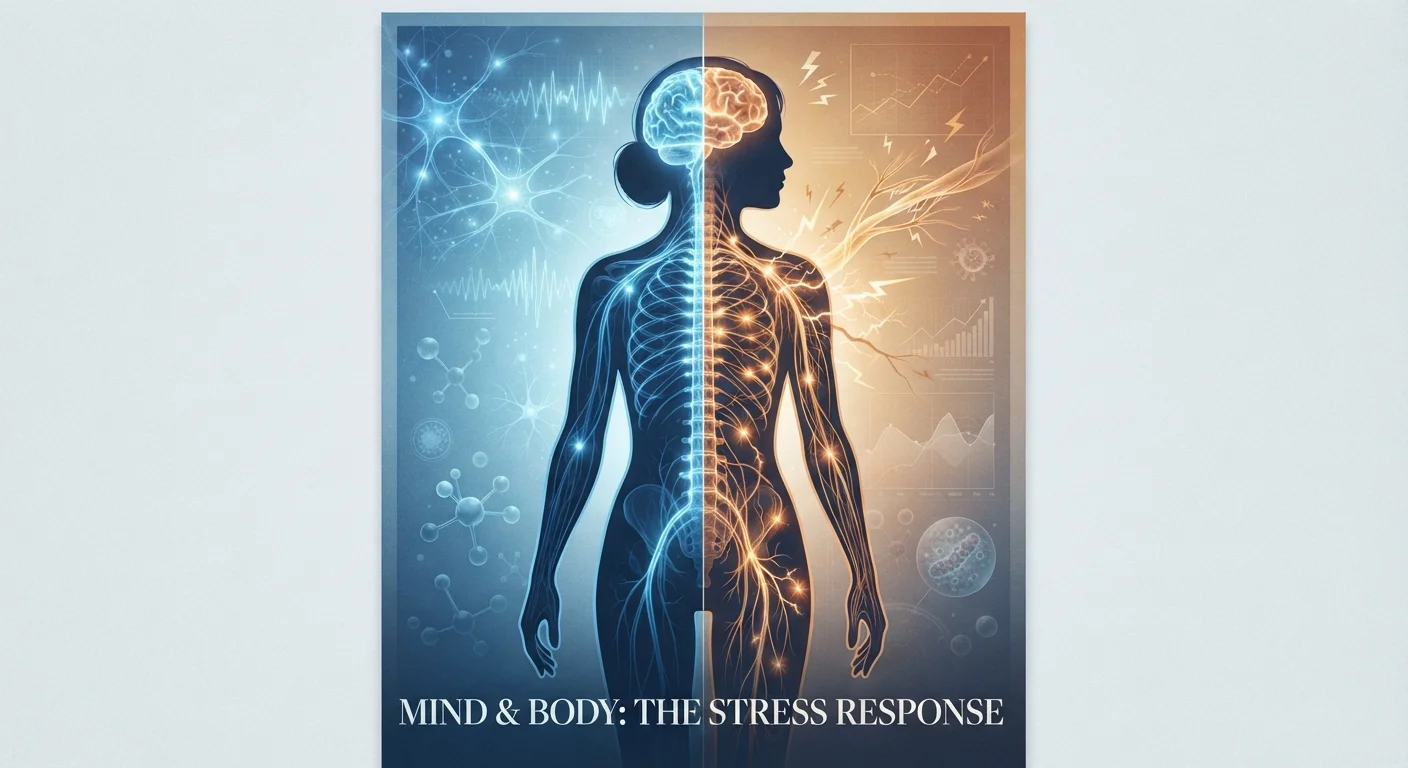
When your brain perceives a stressor — whether it's a looming deadline or a near-miss on the highway — it triggers a rapid, multi-system response. The amygdala, a small almond-shaped brain region involved in processing threat, sends an immediate distress signal. This activates the hypothalamus, which functions as a command center, signaling both the nervous system and the endocrine (hormonal) system to mobilize resources.
Within seconds, the adrenal glands release adrenaline (epinephrine), causing your heart rate to increase, breathing to quicken, and blood to be redirected toward muscles. Cortisol follows, sustaining the response by releasing stored glucose for energy and suppressing non-urgent processes like digestion and immune activity. This coordinated response is essential for short-term survival — but it was designed for brief, episodic threats, not the persistent pressures of modern daily life.
77%
Adults reporting physical stress symptoms
According to American Psychological Association survey data, a large majority of U.S. adults report experiencing physical symptoms they attribute to stress.
3x
Increased illness susceptibility under chronic stress
Research published in psychoneuroimmunology literature suggests chronically stressed individuals show significantly elevated vulnerability to common illnesses due to immune suppression.
20 min
Time for cortisol to begin declining post-stressor
Studies on acute stress recovery suggest cortisol levels typically begin returning toward baseline within 20–30 minutes after a stressor is resolved in otherwise healthy individuals.
What Chronic Stress Does to the Brain
When the stress response stays switched on for weeks or months, the brain pays a measurable cost. The hippocampus — a region central to learning and memory consolidation — is particularly sensitive to prolonged cortisol exposure. Research in the field of stress neuroscience has consistently linked chronically elevated cortisol to reduced hippocampal volume and impaired memory recall.
Equally significant is the impact on the prefrontal cortex, the part of the brain responsible for rational thinking, impulse control, and decision-making. Under sustained stress, this region becomes less active, while the amygdala becomes more reactive — a combination that can make it harder to think clearly, regulate emotions, or respond calmly to new challenges. Understanding this mechanism explains why chronic stress so often feels like mental fog rather than simply feeling worried.
“The brain is not hard-wired for stress. It is hard-wired for safety, connection, and learning — and chronic stress systematically undermines all three.”
— Robert Sapolsky, Professor of Neuroscience and Biology, Stanford University; author of research on stress and the brain
Sleep, Immunity, and the Domino Effect
Stress rarely affects just one body system in isolation. Cortisol follows a natural daily rhythm, peaking in the morning to aid wakefulness and tapering through the evening. Chronic stress can disrupt this rhythm, keeping cortisol elevated when it should be declining — directly interfering with sleep onset and quality.
Sleep deprivation then compounds the problem by raising stress sensitivity the following day, setting up a self-reinforcing cycle. Meanwhile, the immune system, which stress hormones suppress to redirect energy elsewhere, can become less effective over time. Studies suggest people under persistent psychological stress tend to show increased markers of systemic inflammation and may be slower to recover from illness. Digestive function, cardiovascular health, and even skin conditions can all reflect the downstream effects of a chronically activated stress response. For a deeper look at how movement breaks this cycle, see our article on how physical activity affects the nervous system.
Recognize Your Stress Signals Early
Physical cues like jaw clenching, shallow breathing, or a tight chest often appear before conscious awareness of stress sets in. Training yourself to notice these signals gives you an earlier opportunity to engage calming strategies — such as slow, deliberate exhalation — before cortisol climbs further. A brief body scan at transitions in your day (before a meeting, after a commute) can build this awareness over time.
Building Daily Resilience: What the Evidence Supports
The body's stress response is not a design flaw — it's a survival tool that can be better regulated with consistent, evidence-informed habits. Research consistently points to several practices that support the nervous system's recovery: regular physical movement, adequate and consistent sleep, diaphragmatic breathing techniques, social connection, and time spent in nature. These are not cures but inputs that help shift the body toward its parasympathetic ('rest and digest') state.
Mindfulness-based practices, including meditation and deliberate breathwork, have demonstrated measurable effects on perceived stress and cortisol levels in published research, though individual responses vary. Cognitive approaches — such as reframing how a stressor is interpreted — draw on the brain's neuroplasticity to reduce the amygdala's threat response over time. Physical activity and mental wellbeing are more tightly linked than many people realize, and structured movement is among the most researched tools available. For a broader framework, our comprehensive mental wellness resource offers practical guidance across every area of daily life.
This article is for general informational and educational purposes only and does not constitute medical advice. If you are experiencing persistent stress-related symptoms, please consult a qualified healthcare professional.