

Key Takeaways
Understanding Why Children Disengage
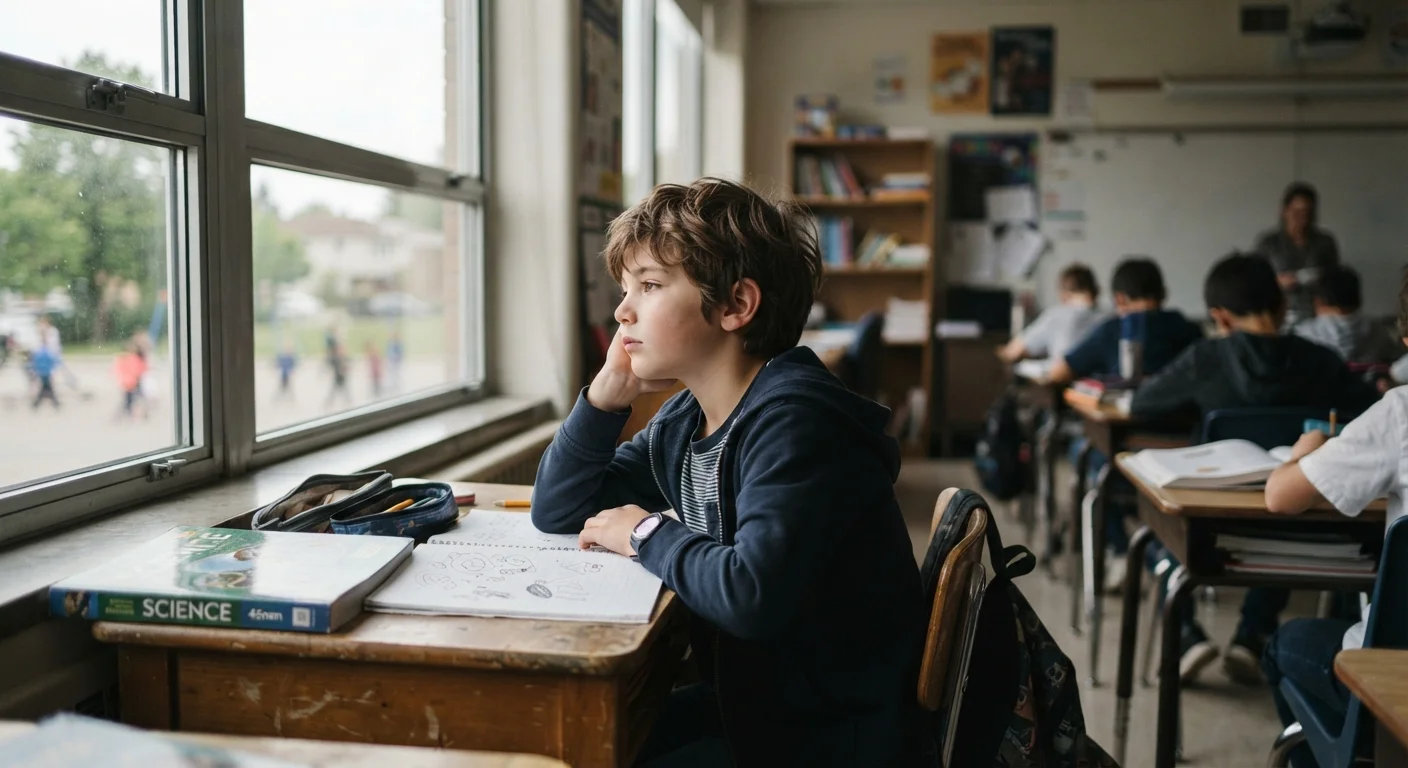
School disengagement rarely happens overnight. It typically develops through a gradual withdrawal — from effort, from participation, from any apparent interest in learning. Understanding what drives this process is the essential first step for any parent who wants to help.
Educational researchers distinguish between behavioural disengagement (not completing work, skipping class), emotional disengagement (feeling like school doesn't matter), and cognitive disengagement (not investing mental effort even when physically present). All three can occur simultaneously, and all three have different triggers.
Common causes include undiagnosed learning difficulties, social difficulties or bullying, a mismatch between a child's learning style and classroom delivery, anxiety, and — particularly at transition points — a sudden increase in academic expectations. The shift from primary to secondary school is one of the most reliably challenging periods for engagement, as children navigate new social environments and significantly more complex workloads simultaneously.
Disengagement Is Not a Character Flaw
Research consistently shows that school disengagement is a process, not a personality trait. Children do not choose to stop caring — they respond to unmet needs, unaddressed challenges, or environments that feel unsafe or irrelevant. Treating disengagement as a behavioural failing rather than a signal leads parents and schools to apply pressure where support is what's actually needed.
The Mistakes Parents Most Commonly Make — and What to Do Instead
When children pull back from school, parents are often working without a clear playbook. The instinct to act quickly is healthy, but the wrong responses can deepen the problem. The mistakes below represent the most common patterns — each identifiable, each avoidable.
Assuming disengagement is a phase that will pass on its own without any intervention.
Why it happens: Parents are often busy, and early signs — quieter evenings, vague answers about school — can seem minor. It's natural to hope the child will self-correct.
Responding to disengagement primarily with consequences, such as removing screen time or grounding.
Why it happens: When a child pulls back from school, it can look like defiance, which naturally triggers a disciplinary response. Parents may also feel pressure to act decisively.
Waiting too long to contact the school, assuming teachers will raise concerns first.
Why it happens: Many parents feel uncertain about when it's appropriate to reach out, or worry they'll be seen as overreacting. Some assume the school will flag any serious problems.
Overloading the child with extra work or tutoring before understanding why they've disengaged.
Why it happens: Academic anxiety is understandable, and adding more structured learning feels like a proactive fix. It can also relieve a parent's sense of helplessness.
Focusing exclusively on academic outcomes rather than the child's experience of school.
Why it happens: Grades are visible and measurable, making them the natural focal point for concerned parents. How school feels emotionally is harder to assess.
Avoid Waiting for a Crisis Point
Disengagement tends to build gradually — a pattern of missed homework here, a few absences there. By the time it becomes visible as a serious problem, the child may already have significant gaps in confidence and learning. If you notice a shift in your child's attitude toward school lasting more than two or three weeks, that's a reasonable point to reach out to their teacher rather than waiting for formal report cards.
One pattern worth highlighting separately: parents who do everything right at home but never communicate directly with the school. Teachers often have observations about a child that parents simply don't have access to. Building that communication channel early — before things become serious — is one of the most practical steps available.
What Actually Helps: Practical, Evidence-Informed Steps
Educational psychology offers a reasonably consistent picture of what supports re-engagement. The core elements are connection, autonomy, and perceived relevance.
- Connection: Children re-engage when they feel that someone — a parent, a teacher, a coach — is genuinely interested in them beyond their grades. Regular, low-stakes conversations about anything your child cares about build the relational trust that makes it easier to discuss school.
- Autonomy: Where possible, invite your child into decisions about their learning. Which subjects feel most interesting? What would make homework feel less like punishment? Even small choices increase ownership.
- Relevance: Help your child make connections between what they're learning and things they actually care about. This doesn't require deep subject knowledge — curiosity and questions are enough.
40%
Students reporting feeling disengaged at school
Gallup's ongoing research into student engagement has consistently found that roughly 40% of students describe themselves as 'not engaged' or 'actively disengaged' at school.
3x
Greater dropout risk for chronically disengaged students
Studies in educational psychology suggest chronically disengaged students face significantly higher risk of early school leaving compared to their engaged peers.
It's also worth recognising that the patterns driving school disengagement in children share meaningful overlap with those that affect adult learners. If you've ever wondered whether motivation and self-belief shape educational outcomes across the lifespan, the evidence in pieces like common myths about returning to education reflects the same underlying research.
Finally, be patient with the timeline. Re-engagement is a process, not a single breakthrough moment. Consistent, warm presence — combined with appropriate professional support where needed — gives children the best foundation for finding their way back to learning with confidence.