

Key Takeaways
Personal Budget
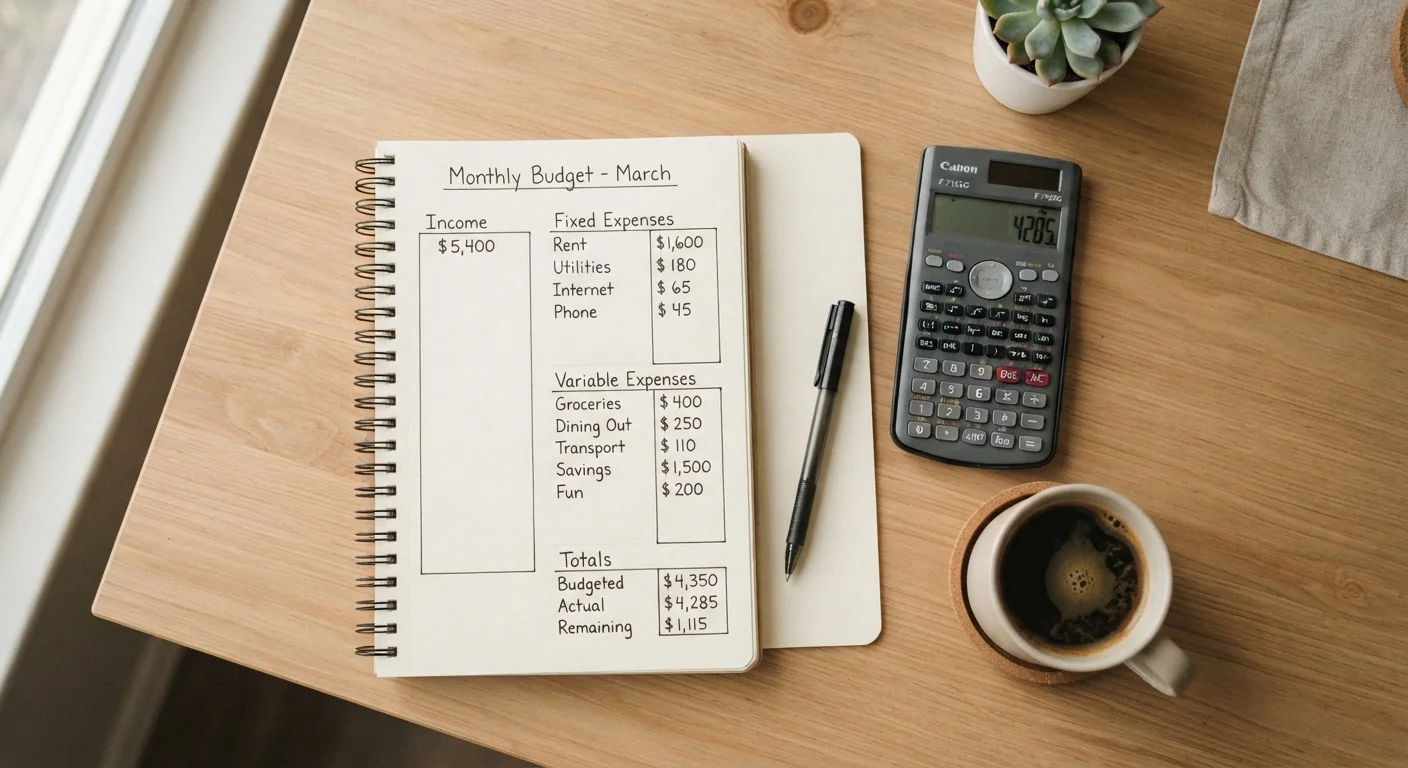
A personal budget is a plan that maps your income against your expenses over a set period — typically a month. It tells you how much money is coming in, where it's going, and how much, if anything, is left over. Think of it as a snapshot of your financial life that you can actually act on.
In personal finance, a budget is distinct from a financial plan — it focuses on short-term cash flow management rather than long-term wealth building, though the two work together.
What a Budget Actually Does
A budget does one core thing well: it converts your financial life from a blur into something you can see clearly. When you lay out your monthly income and expenses side by side, patterns emerge that are easy to miss when you're living inside them — a subscription you forgot, a grocery bill that quietly doubled, or the reality that your fixed costs leave almost nothing flexible.
That clarity is genuinely useful. It lets you make deliberate choices instead of reactive ones. If you know your rent, utilities, and loan payments together take up 65% of your take-home pay, you can plan the remaining 35% with intention rather than just hoping it stretches far enough. Unfamiliar with some of the terms that come up when you start building one? The plain-language glossary of budget terms covers everything from gross income to discretionary spending.
~33%
Americans with a detailed written budget
Gallup polling has consistently found that only about one in three Americans maintains a detailed household budget, despite widespread acknowledgment that budgeting is beneficial.
56%
Adults who say they couldn't cover a $1,000 emergency
According to Bankrate's annual emergency savings survey, more than half of U.S. adults would struggle to cover an unexpected $1,000 expense from savings alone.
What a Budget Can't Do
A budget is not a magic fix, and treating it as one sets people up for frustration. Here's what it genuinely cannot do:
- It can't create money that isn't there. If your essential expenses exceed your income, a budget makes that gap visible — but it can't close it on its own. Addressing an income shortfall requires action beyond the spreadsheet: finding ways to increase income, reduce fixed costs, or get outside help.
- It can't change behavior automatically. Knowing that you spent $400 on dining out doesn't mean you'll spend $200 next month. Behavior change requires repetition, realistic targets, and often some friction-reducing structure.
- It can't account for every surprise. Irregular expenses — a car repair, a medical bill, a broken appliance — fall outside most monthly budgets. Building a small buffer for these is possible within a budget, but the budget itself doesn't prevent them from happening.
Many of the frustrations people have with budgeting trace back to expectations that don't match what the tool actually does. The most common budgeting myths often reflect this mismatch.
Start With What You Already Spend
Rather than guessing at category targets, pull two or three months of bank and credit card statements first. Build your budget around actual spending patterns, then decide what you want to change. Realistic starting points make a budget far more likely to stick.
Where Budgets Work Best — and Where They Break Down
Budgets tend to work best for people with relatively predictable income and expenses. If your paycheck is consistent month to month and most of your bills are fixed, building and maintaining a budget is straightforward. The tool fits the situation.
They're more challenging for people with variable income — freelancers, gig workers, or anyone with irregular hours. In those cases, a budget still helps, but it requires more frequent adjustment and often a different structure, such as building a baseline budget around your lowest expected monthly income.
Budgets also tend to break down at specific structural points that have less to do with willpower than with how the plan was designed. The common reasons budgets fail are worth understanding before you build yours — prevention is easier than recovery.
Using a Budget as a Decision-Making Tool
The most practical way to think about a budget is as a decision framework, not a report card. When a financial choice comes up — a new monthly subscription, a home repair, a holiday trip — your budget tells you what's actually available and what trade-off you'd be making. That's more useful than guessing or avoiding the question.
If you want a broader view of how budgeting fits into managing your overall household finances, the complete picture of personal budgeting covers cash flow, windfalls, and shortfalls in one place. And if you're weighing how much structure to apply, the trade-offs of strict budgeting lays out both sides honestly.
A budget works when you use it consistently and adjust it when your circumstances change. Perfection isn't the point — a rough plan you actually follow is worth more than a detailed one you abandon.
This article is for general informational purposes only and does not constitute personalized financial advice. For guidance specific to your situation, consider consulting a qualified financial professional.