

Key Takeaways
Summary
22 items · 20–40 minutes
Why Pet First Aid Preparedness Matters
Accidents and sudden illness don't follow a schedule. A dog can swallow something toxic on a Sunday evening; a cat can suffer a deep laceration on a holiday weekend. In those moments, what you have on hand — and what you know how to do — directly affects how well your pet is stabilized before reaching veterinary care.
Pet first aid is not a replacement for a veterinarian. It is a bridge: a way to keep your pet stable, reduce pain and stress, and prevent a manageable situation from becoming critical while you arrange professional help. This checklist is designed to help you audit your current readiness, fill any gaps, and feel confident the next time something goes wrong.
For a broader look at your pet's overall health foundation, see our complete owner's health reference. And if you've ever wondered whether you waited too long before calling the vet, this article on delayed vet visits is worth reading alongside this one.
Kit Essentials
Information and Contacts
Restraint and Transport
Knowledge and Skills
Tools and Supplies You'll Need
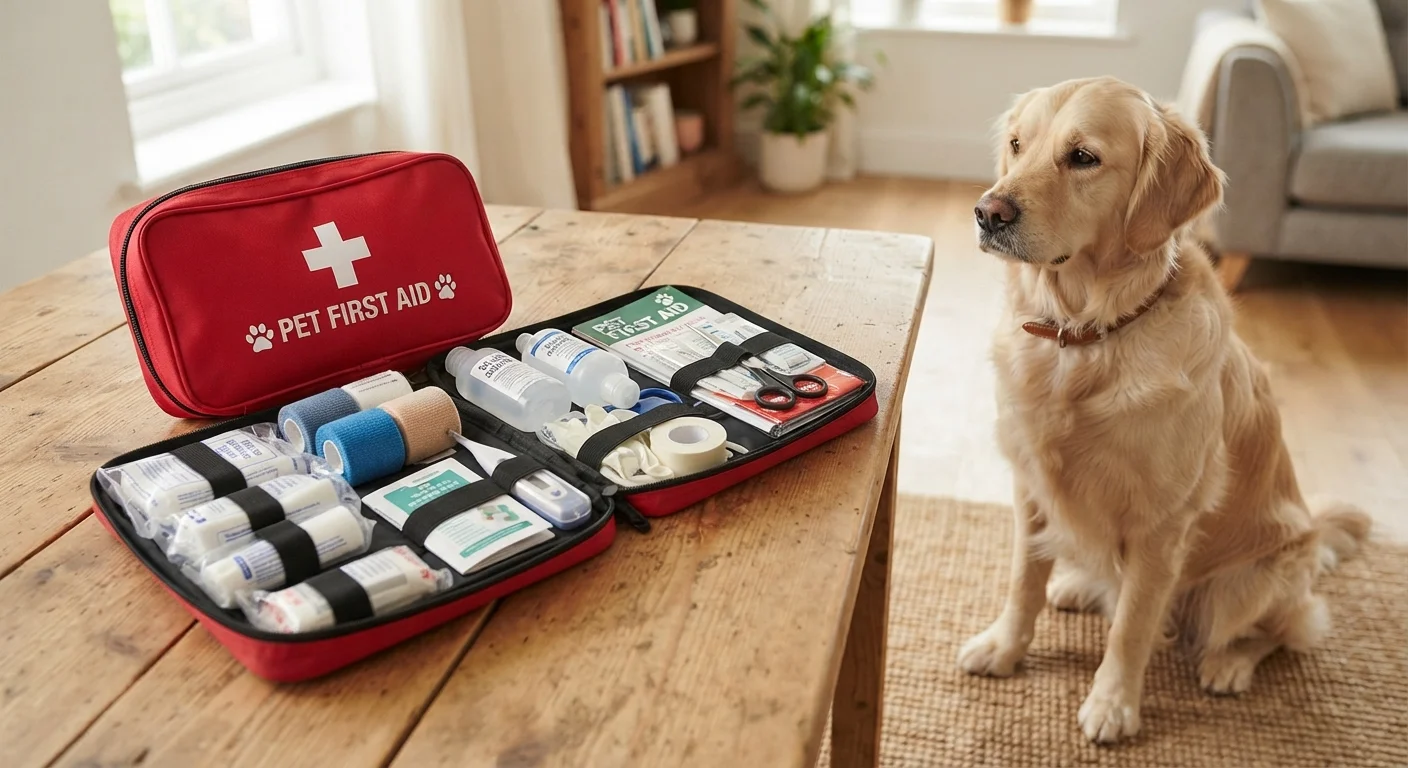
Before working through the checklist, gather or confirm you have the supplies below. Store everything in a labeled, waterproof container that is accessible to all adults in the household. Review contents every six months and replace anything expired or depleted.
Waterproof storage container
Keeps all supplies organized, protected from moisture, and easy to locate quickly.
Digital rectal thermometer
Accurately measures your pet's core temperature to detect fever or hypothermia.
Sterile saline solution
Safely flushes wounds, eyes, or debris without causing further irritation.
Self-adhesive bandage wrap
Secures dressings without sticking to fur or requiring tape on skin.
Blunt-tipped scissors and tweezers
Used for trimming bandages, cutting fur around wounds, and safely removing ticks.
Disposable examination gloves
Protects you and your pet from contamination during wound care.
Appropriately sized pet muzzle
Prevents biting during painful procedures — an important safety step even with calm pets.
Pet first aid reference card or booklet
Provides quick, step-by-step guidance when stress makes it hard to recall training.
When First Aid Isn't Enough: Recognizing a True Emergency
Some situations call for stabilization and monitoring. Others require you to head straight to an emergency veterinary clinic without delay. Knowing the difference is critical.
First Aid Never Replaces Veterinary Care
No matter how well-stocked your kit is or how confident you feel, pet first aid is a stabilizing measure only. Any pet that has experienced trauma, suspected poisoning, seizure, breathing difficulty, or loss of consciousness must be seen by a veterinarian as soon as possible — even if the animal appears to have recovered. Internal injuries and toxin effects are not always visible immediately.
Symptoms that warrant immediate emergency veterinary care include: difficulty breathing or choking; seizures or sudden collapse; suspected poisoning or toxin ingestion; uncontrolled bleeding; signs of extreme pain such as crying, guarding, or inability to move; suspected broken bones; loss of consciousness; pale, blue, or white gums; repeated vomiting or diarrhea with blood; and inability to urinate, especially in male cats.
For vomiting specifically, it can be tricky to judge severity on your own. Our vet-aligned guide to pet vomiting walks through what's routine versus what's urgent.
Never Give Human Medications Without Vet Guidance
Common over-the-counter human medications — including ibuprofen, acetaminophen, and certain antacids — can be severely toxic or even fatal to dogs and cats. Do not administer any medication to your pet without explicit direction from a licensed veterinarian. If you suspect ingestion of any substance, contact your vet or the ASPCA Animal Poison Control Center immediately.
This article is for general informational and educational purposes only and is not a substitute for professional veterinary advice, diagnosis, or treatment. Always consult a licensed veterinarian for guidance specific to your pet's health needs.