

Key Takeaways
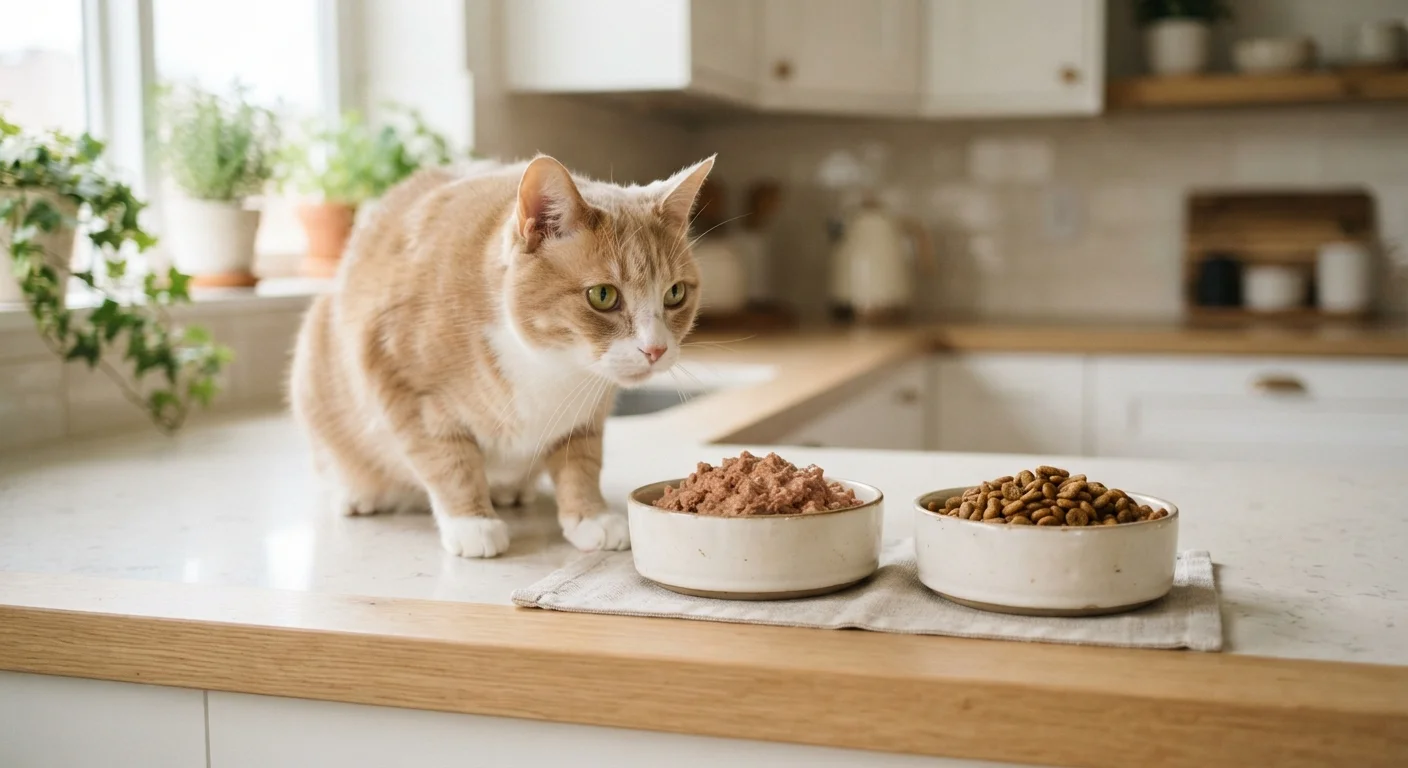
Option A
Wet Cat Food
The high-moisture, highly palatable option for cats with specific health needs.
Best for: Cats prone to urinary issues, seniors with reduced thirst drive, or picky eaters who need strong aroma and texture variety.
Option B
Dry Cat Food (Kibble)
The convenient, calorie-dense staple for routine daily feeding.
Best for: Multi-cat households or busy owners seeking convenience, longer shelf life, and easier portion control.
If your cat has a history of urinary crystals or kidney disease
Wet Cat Food
Higher moisture content directly increases urine volume and dilution, which is a key management goal for these conditions. Your vet can advise on specific dietary targets.
If convenience and long shelf life are your primary priorities
Dry Cat Food (Kibble)
Kibble stores easily, doesn't spoil quickly once opened, and allows free-feeding schedules that suit busy households.
If your cat is a picky eater or has a reduced appetite
Wet Cat Food
The stronger aroma and varied textures of wet food are generally more stimulating to cats' senses, making it easier to maintain food interest.
If you want to balance nutrition, hydration, and budget
Wet Cat Food
A mixed diet — wet food for hydration and palatability, supplemented with some kibble — is a practical middle ground supported by many feline nutritionists.
If managing caloric intake and weight is important
Dry Cat Food (Kibble)
Kibble's consistent calorie density makes portion measurement more straightforward, though measured wet food portions can also work well with veterinary guidance.
Hydration: Where Wet Food Has a Clear Advantage
Cats evolved as desert-adapted animals with a naturally low thirst drive, relying historically on prey moisture for the bulk of their fluid intake. This biology has direct implications for modern feeding. Wet cat food contains roughly 70–80% moisture, closely mimicking the water content of whole prey. Dry kibble, by contrast, typically contains only 8–10% moisture.
Cats fed exclusively on dry food tend to compensate only partially by drinking more water — often not enough to fully offset the difference. Chronically low fluid intake is associated with higher risk of feline lower urinary tract disease (FLUTD) and may accelerate kidney disease progression in predisposed cats. For cats with existing urinary or renal conditions, increasing dietary moisture is frequently one of the first recommendations veterinarians make.
If your cat currently eats only kibble, adding a water fountain or offering wet food at one meal daily are two practical steps — but always discuss significant dietary changes with your vet, particularly if your cat has a diagnosed health condition. For a broader look at how feline biology shapes nutritional needs, see our primer on feline nutritional biology.
| Criterion | Wet Cat Food | Dry Cat Food (Kibble) |
|---|---|---|
| Moisture content | 70–80% | 8–10% |
| Urinary/kidney health support | Strong — increases urine dilution | Weaker — lower fluid intake |
| Dental cleaning effect | Minimal | Minimal (dental formulas vary) |
| Palatability | Generally higher | Generally lower |
| Shelf life (opened) | 2–4 hours at room temp | Weeks to months |
| Cost per calorie | Higher | Lower |
| Portion control ease | Moderate | Easy |
Dental Health: Separating Fact from Marketing
A common claim is that dry kibble's crunchy texture scrubs tartar from cats' teeth. The reality is more nuanced. Most cats shear kibble rather than chew it, meaning the mechanical cleaning effect is minimal. Veterinary dentistry organizations note that diet alone — wet or dry — is not a substitute for active dental care such as tooth brushing or professionally recommended dental chews.
Some specialized dental-formula dry foods are designed with larger kibble pieces and specific textures to encourage chewing contact, and these have better evidence behind them than standard kibble. However, periodontal disease remains extremely common in cats regardless of diet type. Dental disease in pets is vastly underestimated, and dietary choice is just one small variable in a larger oral health picture.
The practical takeaway: do not choose dry food primarily for dental benefits without discussing the evidence with your veterinarian. Regular veterinary dental assessments remain the most reliable strategy for catching and managing feline oral disease early.
What About Dental-Formula Dry Foods?
Some dry foods carry a Veterinary Oral Health Council (VOHC) seal, indicating they have met specific standards for reducing plaque or tartar in studies. These are meaningfully different from standard kibble in terms of dental benefit. If dental health is a concern, ask your veterinarian whether a VOHC-accepted product might be appropriate for your cat — it should complement, not replace, regular professional dental care.
Palatability, Cost, and Practical Feeding Considerations
Wet food is nearly universally more palatable to cats. Its higher protein content, moisture, and aroma more closely resemble fresh prey, which aligns with cats' sensory preferences. This makes it particularly valuable for seniors whose appetite may decline, or for cats recovering from illness.
Dry food, however, offers real practical advantages. It is less expensive per calorie, easier to store, and can be left out without spoiling quickly — useful for owners who need to free-feed. Wet food left at room temperature for more than two to four hours can harbor bacterial growth and should be discarded.
Cost is a genuine consideration for many households. A mixed feeding strategy — wet food as a daily meal and kibble as a supplement — can help balance palatability, hydration, and budget. To prepare for a diet conversation with your vet, our annual pet nutrition audit checklist provides a useful framework for reviewing your cat's current feeding plan.
~70–80%
Moisture content in wet cat food
Compared to roughly 8–10% in dry kibble, wet food much more closely mirrors the hydration profile of whole prey that cats evolved to eat.
~50–90%
Adult cats affected by periodontal disease
Veterinary dental surveys consistently find that periodontal disease is one of the most prevalent health conditions in adult cats, largely independent of food type.
This article is for general informational and educational purposes only and does not constitute veterinary or medical advice. Always consult a licensed veterinarian before making significant changes to your cat's diet, especially if your cat has existing health conditions.