

Key Takeaways
Why Food Spending Gets Out of Control Abroad
Food is one of the fastest-growing line items in any travel budget — and often the most preventable. When travellers are tired, disoriented, or short on time, they default to the nearest option, which is almost always the most expensive one. Restaurants clustered around major landmarks typically price for convenience and captive audiences, not value.
The good news is that most destinations have a thriving, affordable food culture just slightly off the beaten path. Tapping into it doesn't require adventurousness so much as basic awareness of how locals actually eat. That awareness is what this article is designed to build.
For a broader view of where food fits within your overall travel spending, see our comprehensive budget travel guide.
Proven Practices for Eating Well on Less
The following practices are grounded in how experienced travellers consistently manage to eat satisfying, local meals without overspending. Apply as many as apply to your destination and travel style.
Eat your main meal at lunch rather than dinner.
In many countries, the same restaurant charges considerably less for the same food at midday than in the evening. Lunch specials and set menus are often designed specifically to attract local workers and residents, meaning they're priced competitively and typically reflect what the kitchen does best.
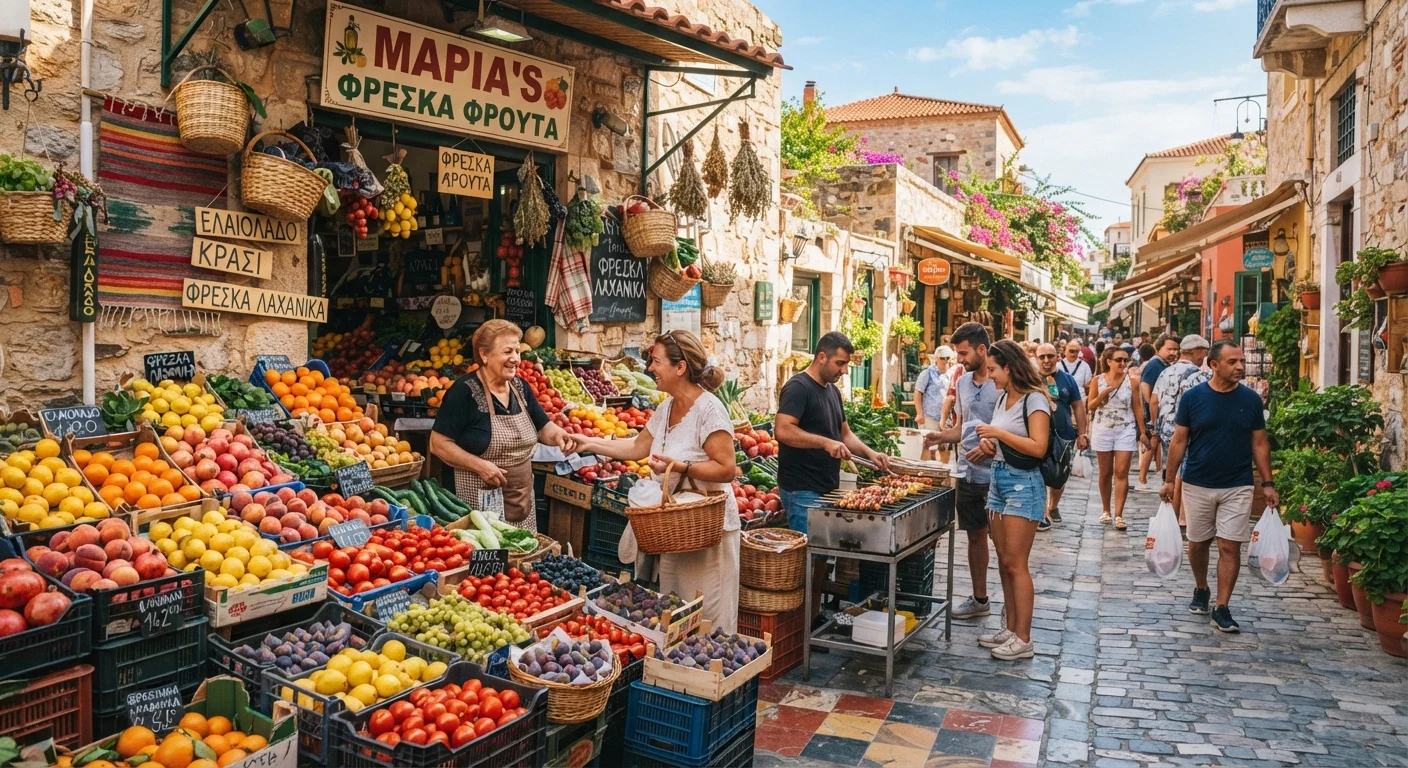
Shop and eat at local markets, not supermarkets or tourist-facing delis.
Covered markets and street markets give access to prepared foods — roasted meats, fresh bread, cheese, olives, cooked vegetables — at prices set for residents. The food is often higher quality and more representative of local cooking than most mid-range restaurants.
Move two streets away from major tourist sights before choosing a restaurant.
Restaurants directly adjacent to popular landmarks pay premium rents and know their customers are unlikely to return — both factors push prices up and quality down. A short walk in almost any direction finds establishments catering to locals instead.
Use grocery stores and prepared-food counters for at least one meal per day.
Most supermarkets in Europe and Asia carry a range of ready-to-eat prepared foods, fresh bread, and local snacks that make satisfying, cheap meals. This is especially practical for breakfast and lunch, freeing your restaurant budget for one well-chosen dinner.
Learn a handful of key phrases and local food vocabulary before arriving.
Being able to ask for "the menu of the day" or identify a dish as vegetarian, spicy, or contain allergens in the local language opens doors to menus and stalls that don't bother with English translations — which are often where the best value is found.
Eat street food deliberately, not impulsively.
Street food is often the most authentic and affordable option in a destination, but quality and hygiene vary. Look for stalls with high turnover, fresh ingredients prepared in front of you, and queues of local customers — these are reliable indicators of both quality and safety.
Quick Moves You Can Make Right Now
Even if you're already mid-trip, these actions can meaningfully reduce what you spend on food going forward.
Food Safety Abroad: A Brief Reminder
Street food and markets are generally safe when chosen thoughtfully — look for high turnover, visible food preparation, and local customers. That said, food safety standards vary by destination. If you have a compromised immune system, are pregnant, or have specific dietary medical needs, consult a healthcare professional before travelling and check current guidance from your government's travel health advisories. This article offers general travel food guidance, not personalised medical or dietary advice.
Understanding Menu Structures in Different Countries
One of the most underused tools for saving money on food abroad is understanding the meal structure of the country you're in. Many European countries, for example, offer a prix fixe (fixed-price) lunch — sometimes called menú del día in Spain or formule déjeuner in France — that includes multiple courses, a drink, and sometimes dessert for a fraction of what the same items cost ordered individually at dinner.
In Southeast Asia, the concept of ordering a "set" — a protein, rice or noodles, a small side, and a soup — at a local canteen (often called a kopitiam in Malaysia and Singapore, or a cơm bình dân shop in Vietnam) reliably produces a filling, cheap meal. These aren't tourist-facing menus; they're how working locals eat every day.
2–3×
Price premium near major tourist sights
Travel consumer researchers consistently document that restaurants within 200 metres of top-rated landmarks charge two to three times more than comparable establishments a short walk away.
40%
Typical saving from lunch vs. dinner menus
Hospitality pricing studies in several European markets suggest fixed-price lunch menus offer savings of roughly 30–50% compared with equivalent à la carte dinner orders at the same restaurant.
Knowing these patterns before you arrive lets you walk into a restaurant or stall with a clear plan rather than defaulting to whatever's easiest to read or point at. A small investment in destination-specific food research — even 20 minutes with a travel forum or local food blog — pays back many times over.
Pair food savings with smart activity choices: our guide to free and low-cost activities shows how to keep the full day affordable, not just meals.
“The most expensive meal of your trip is usually the first one — you're tired, you're hungry, and you haven't yet learned where locals actually eat. Give yourself one day to orient, and the food budget takes care of itself.”
— Travel Know-How Editorial Team, Travel planning editors with experience across budget travel research and destination reporting