

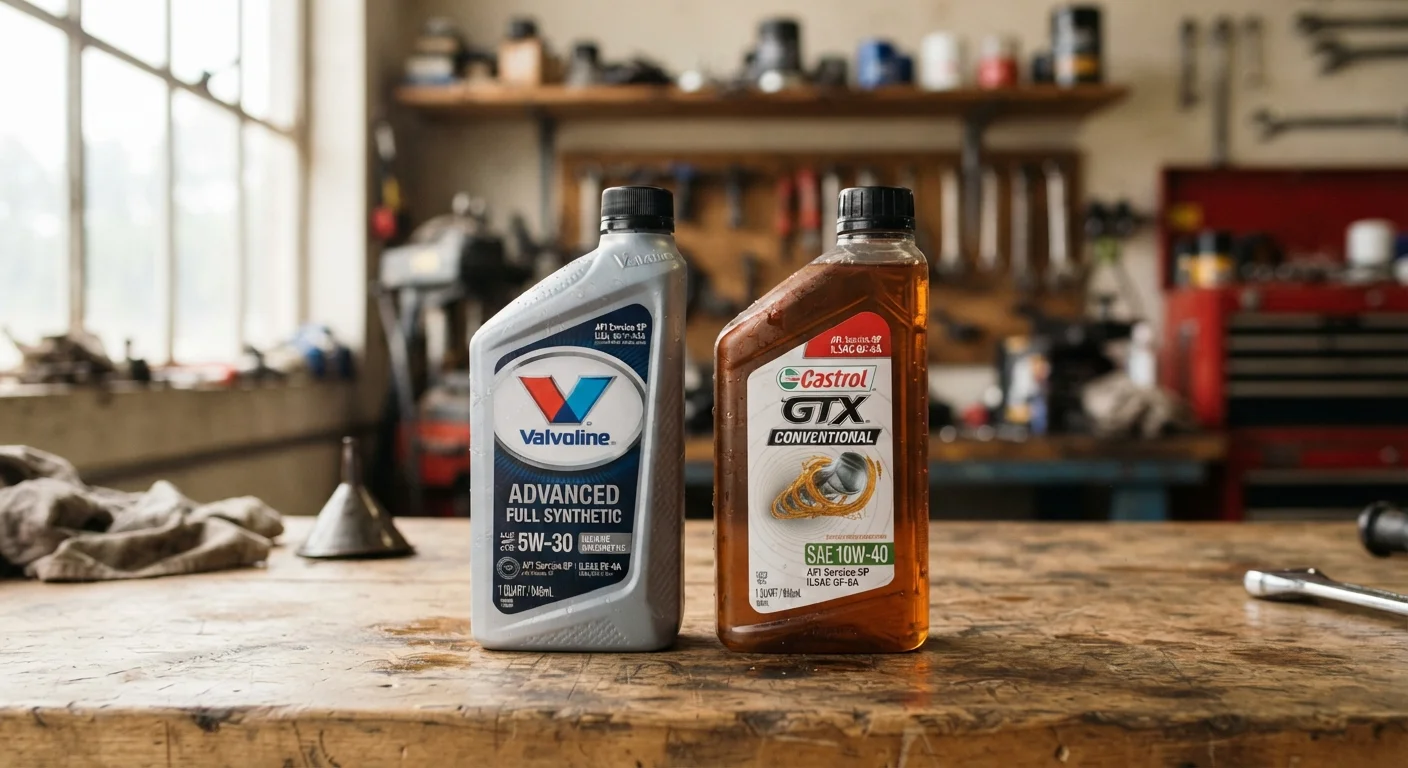
Key Takeaways
Option A
Synthetic Motor Oil
The engineered, high-performance option.
Best for: Drivers with newer vehicles, turbocharged engines, extreme climates, or longer intervals between oil changes.
Option B
Conventional Motor Oil
The time-tested, straightforward choice.
Best for: Owners of older, simpler engines with light-duty driving patterns and more frequent maintenance schedules.
If you drive a newer vehicle or one with a turbocharged engine
Synthetic Motor Oil
Modern engines - especially turbocharged ones - run hotter and with tighter tolerances. Synthetic oil's uniform molecular structure provides superior protection under those demanding conditions.
If you own an older, high-mileage vehicle on a tight maintenance budget
Conventional Motor Oil
Many older engines were designed around conventional oil's properties. It performs reliably in low-stress conditions and costs less per change, provided you change it on schedule.
If you live in a region with extreme seasonal temperatures
Synthetic Motor Oil
Synthetic oil flows better in deep cold and resists breakdown in intense heat, giving your engine more consistent protection across a wider temperature range.
If your vehicle has low annual mileage and simple driving needs
Conventional Motor Oil
For light-duty, lower-mileage use with regular change intervals, conventional oil delivers adequate protection without the added cost of synthetic.
What Makes These Two Oils Different
Both synthetic and conventional motor oils do the same fundamental job: lubricate your engine's moving parts, reduce friction, carry away heat, and suspend contaminants until your next oil change. The key difference is in how they're made - and that manufacturing distinction has real consequences for how they perform.
Conventional motor oil is refined directly from crude oil. The refining process removes many impurities, but the resulting molecules vary in size and shape. That variability affects how the oil behaves under heat and pressure.
Synthetic motor oil is chemically engineered - either built from scratch or highly refined from crude oil base stocks. The result is a more uniform molecular structure that holds up better under extreme conditions. Think of it as the difference between rough-cut lumber and precision-machined parts: both serve a purpose, but one is built to tighter tolerances.
To understand the viscosity ratings printed on every bottle - like 5W-30 or 10W-40 - see our guide to engine oil labels.
| Criterion | Synthetic Motor Oil | Conventional Motor Oil |
|---|---|---|
| Base material | Chemically engineered base stocks | Refined crude oil |
| Cold-weather flow | Flows readily at low temperatures | Thickens more in cold conditions |
| Heat resistance | Resists breakdown under high heat | Degrades faster at high temperatures |
| Typical change interval | Often 7,500-10,000+ miles (per manual) | Often 3,000-5,000 miles (per manual) |
| Cost per quart | Higher | Lower |
| Best engine fit | Modern, turbocharged, high-performance | Older, simpler, light-duty engines |
Performance, Longevity, and Real-World Trade-Offs
Synthetic oil generally outperforms conventional oil in three key areas: temperature resilience, oxidation resistance, and flow at startup. At cold temperatures, synthetic oil flows more readily through the engine before the vehicle fully warms up - a period when wear is disproportionately high. In high heat, it resists breaking down longer.
Because synthetic oil degrades more slowly, many manufacturers allow longer oil change intervals when using it - sometimes up to 7,500 to 10,000 miles or more, depending on the vehicle and oil specification. Conventional oil typically calls for more frequent changes, often in the 3,000 to 5,000-mile range, though many modern engines with conventional oil can go longer. The only reliable guide is your owner's manual - not the sticker on your windshield or a general rule of thumb.
~40%
Engine wear occurring at cold startup
Industry engineers widely cite cold startups as a disproportionate source of engine wear, underscoring why oil flow at low temperatures matters.
2-3×
Longer typical drain intervals vs. conventional
Many synthetic oil formulations are approved for drain intervals roughly two to three times longer than standard conventional oil, though manufacturers' specs vary.
One persistent myth worth addressing: the idea that once you switch to synthetic, you can never go back. That's not accurate. Switching between oil types is generally safe in most vehicles, as long as you use the correct viscosity. For more on that and other car care misconceptions, see common car maintenance myths we've broken down.
Cost is the most tangible trade-off. Synthetic oil costs more per quart than conventional oil. Depending on your change interval and vehicle, this may or may not translate to higher annual spending. For some drivers, the longer interval with synthetic roughly offsets the higher per-quart price.
How to Choose the Right Oil for Your Vehicle
Before anything else, open your glove box. Your owner's manual specifies the oil type and viscosity grade your engine requires - that recommendation comes directly from the engineers who designed it. Using the wrong type or viscosity can reduce protection, even if you're using a high-quality oil.
A few practical guidelines:
- Newer vehicles (roughly 2010 onward): Many are factory-filled with synthetic and engineered to require it. Check your manual to confirm.
- Turbocharged or high-performance engines: These run hotter and at higher pressure. Synthetic is widely considered the appropriate choice, and many manufacturers require it.
- Older or high-mileage engines: Some older engines may have seals and gaskets that perform better with conventional oil. A qualified mechanic can advise if you're unsure.
- Extreme climates: If you regularly face very cold winters or very hot summers, synthetic's wider temperature tolerance is a meaningful advantage.
Motor oil is just one of several fluids keeping your vehicle healthy. Our article on car fluids every driver should know covers coolant, brake fluid, and more - all worth understanding alongside engine oil.
When in Doubt, Ask a Qualified Mechanic
If your vehicle has had engine work done, is approaching high mileage, or has an unusual maintenance history, consult a licensed mechanic before switching oil types. They can inspect your engine's condition and recommend the right specification. This article provides general educational information - your specific vehicle may have different requirements.