

| Cold-Weather Viscosity Indicator | The number before the 'W' (e.g., 5 in 5W-30) (SAE J300 viscosity classification standard) |
| Operating-Temperature Viscosity | The number after the dash (e.g., 30 in 5W-30) (SAE J300 viscosity classification standard) |
| Current API Gasoline Engine Standard | SP (most recent API service category) (American Petroleum Institute) |
| High-Mileage Oil Threshold | Typically 75,000 miles or more (General industry guideline; varies by product) |
| Best Viscosity Source | Your vehicle's owner's manual |
What the Numbers on an Oil Label Actually Mean
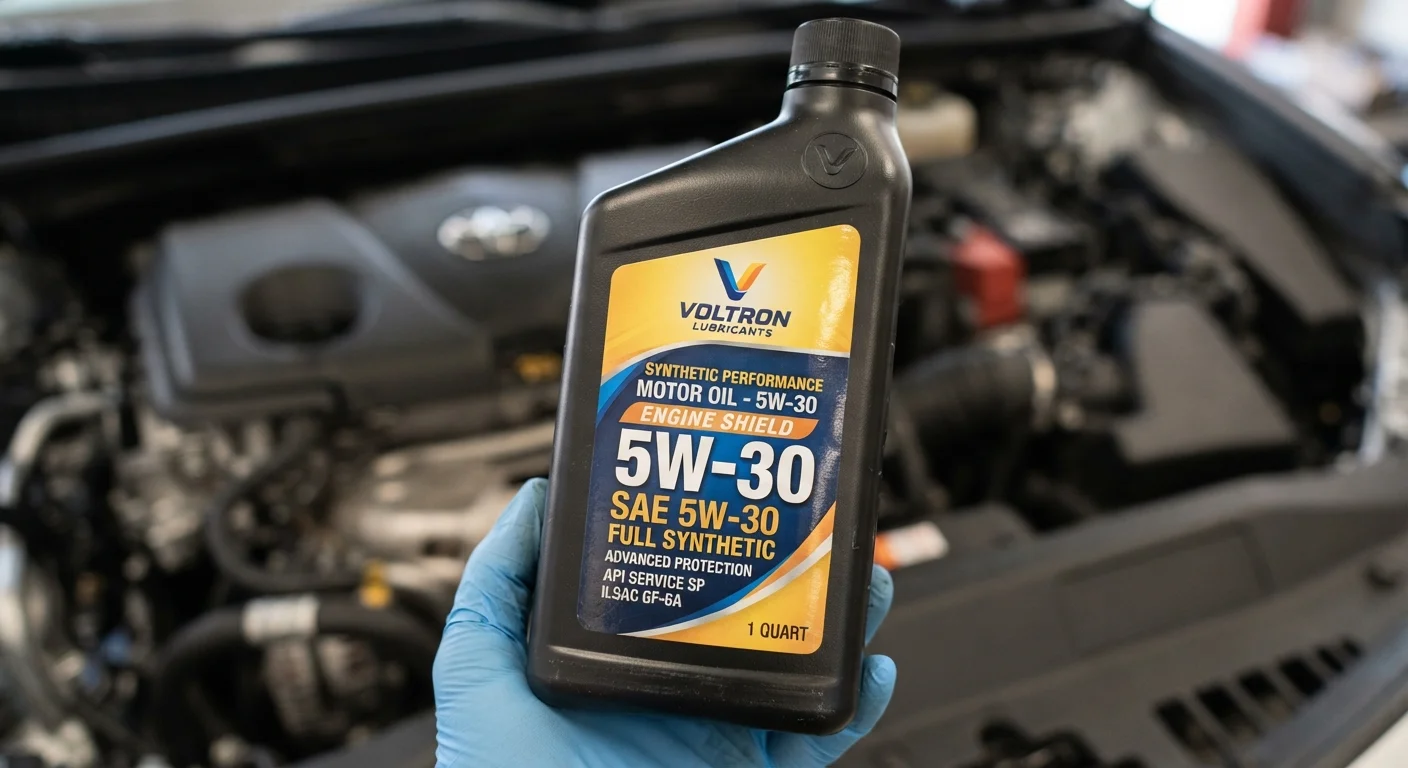
Pick up any bottle of motor oil and you'll see a code like 5W-30 or 10W-40 printed prominently on the label. These aren't arbitrary - they describe the oil's viscosity, which is its resistance to flow at different temperatures.
| Cold-Weather Viscosity Indicator | The number before the 'W' (e.g., 5 in 5W-30) (SAE J300 viscosity classification standard) |
| Operating-Temperature Viscosity | The number after the dash (e.g., 30 in 5W-30) (SAE J300 viscosity classification standard) |
| Current API Gasoline Engine Standard | SP (most recent API service category) (American Petroleum Institute) |
| High-Mileage Oil Threshold | Typically 75,000 miles or more (General industry guideline; varies by product) |
| Best Viscosity Source | Your vehicle's owner's manual |
The number before the W (which stands for Winter, not weight) tells you how the oil flows in cold conditions. A lower number means the oil stays thinner when cold, allowing it to circulate through the engine faster at startup - the moment when most engine wear actually occurs. The number after the dash describes viscosity at normal operating temperature (roughly 212°F / 100°C). A higher number here means the oil maintains a thicker film at heat, providing better protection under load.
So 5W-30 flows easily in cold weather and holds a moderate viscosity when the engine is hot. A 10W-40 is slightly thicker at startup and maintains a heavier film at operating temperature - often suited to older engines or warmer climates.
The right viscosity for your vehicle is always specified in your owner's manual. Using a grade outside that recommendation can reduce fuel efficiency or, in some cases, affect engine protection - so this isn't an area to guess on.
The Main Types of Engine Oil
Viscosity
A measure of how easily a liquid flows. In motor oil, viscosity determines how well the oil circulates through the engine at different temperatures - too thick and it won't flow quickly enough at startup; too thin and it may not maintain an adequate protective film at operating temperature.
SAE Grade
A classification system developed by the Society of Automotive Engineers that standardizes oil viscosity ratings. The numbers on an oil label (e.g., 5W-30) reflect SAE grades for cold and hot performance.
Full Synthetic Oil
Motor oil made from chemically engineered base stocks rather than crude oil. It offers more consistent molecular structure, better performance across temperature extremes, and typically longer service intervals than conventional oil.
API Service Category
A quality rating assigned by the American Petroleum Institute indicating the oil has passed standardized performance tests. The category (e.g., SP for gasoline engines) must match what your vehicle manufacturer specifies.
Synthetic Blend Oil
A motor oil that combines conventional (mineral) base oil with synthetic base stocks. It provides improved performance over straight conventional oil, particularly under heavier loads or temperature swings, at a moderate price point.
High-Mileage Oil
A formulation designed for engines with approximately 75,000 miles or more. It typically contains seal conditioners and antioxidants tailored to the wear characteristics of higher-mileage engines.
Beyond viscosity, oil labels also indicate the formulation type - how the base oil is made and what's been added to it. There are four main categories you'll encounter:
- Conventional (Mineral) Oil: Refined directly from crude oil. It's the traditional choice and works well in standard engines with straightforward driving patterns. Change intervals are generally shorter compared to synthetic options.
- Full Synthetic Oil: Engineered from chemically modified base stocks, offering superior temperature stability, lower volatility, and longer change intervals. It's commonly required in modern, high-performance, or turbocharged engines.
- Synthetic Blend Oil: A mix of conventional and synthetic base oils. It offers some of the benefits of full synthetic at a lower cost, and is a popular choice for trucks, SUVs, and vehicles under heavier loads.
- High-Mileage Oil: Formulated specifically for vehicles with roughly 75,000 miles or more. These oils typically include seal conditioners and additives designed to address the wear patterns common in older engines.
For a detailed look at how full synthetic and conventional oils compare in real-world use, see our guide to synthetic vs. conventional motor oil.
When in Doubt, Check Your Owner's Manual
Your vehicle manufacturer has already determined the ideal oil viscosity and specification for your engine - it's listed in the owner's manual and often on a sticker near the oil filler cap. Switching to a different grade or type without consulting that guidance isn't recommended, even if a higher-grade oil seems like an upgrade. Some modern engines are calibrated specifically for thinner oils to achieve fuel economy targets, and using a heavier grade can work against that design.
Reading the API Donut and Other Label Markings
In addition to the viscosity grade and oil type, most bottles carry certification marks you should recognize.
The API (American Petroleum Institute) Service Symbol - commonly called the "donut" - appears on oils that meet minimum performance standards. The top half shows the service category: SP is the current standard for gasoline engines (as of the most recent API revision), while CK-4 is a common category for diesel engines. Always match the API category to what your owner's manual specifies.
You may also see an API Starburst mark, which indicates the oil meets the current ILSAC (International Lubricant Standardization and Approval Committee) standard for fuel economy and engine protection - a useful signal for everyday passenger vehicles.
Some European vehicles call for oils meeting ACEA specifications or manufacturer-specific approvals (such as those from BMW, Mercedes-Benz, or Volkswagen). If your vehicle falls into this category, your owner's manual will list the exact approval codes required - don't substitute without checking.
Engine oil is just one of several fluids keeping your car running. Our article on identifying and checking car fluids walks you through what else lives under the hood and when to top up. And if you've ever wondered what really happens when oil changes are skipped, the consequences are worth understanding before your next service interval passes.
This article is for general informational purposes only. Always consult your vehicle's owner's manual and a qualified mechanic for maintenance decisions specific to your car.