

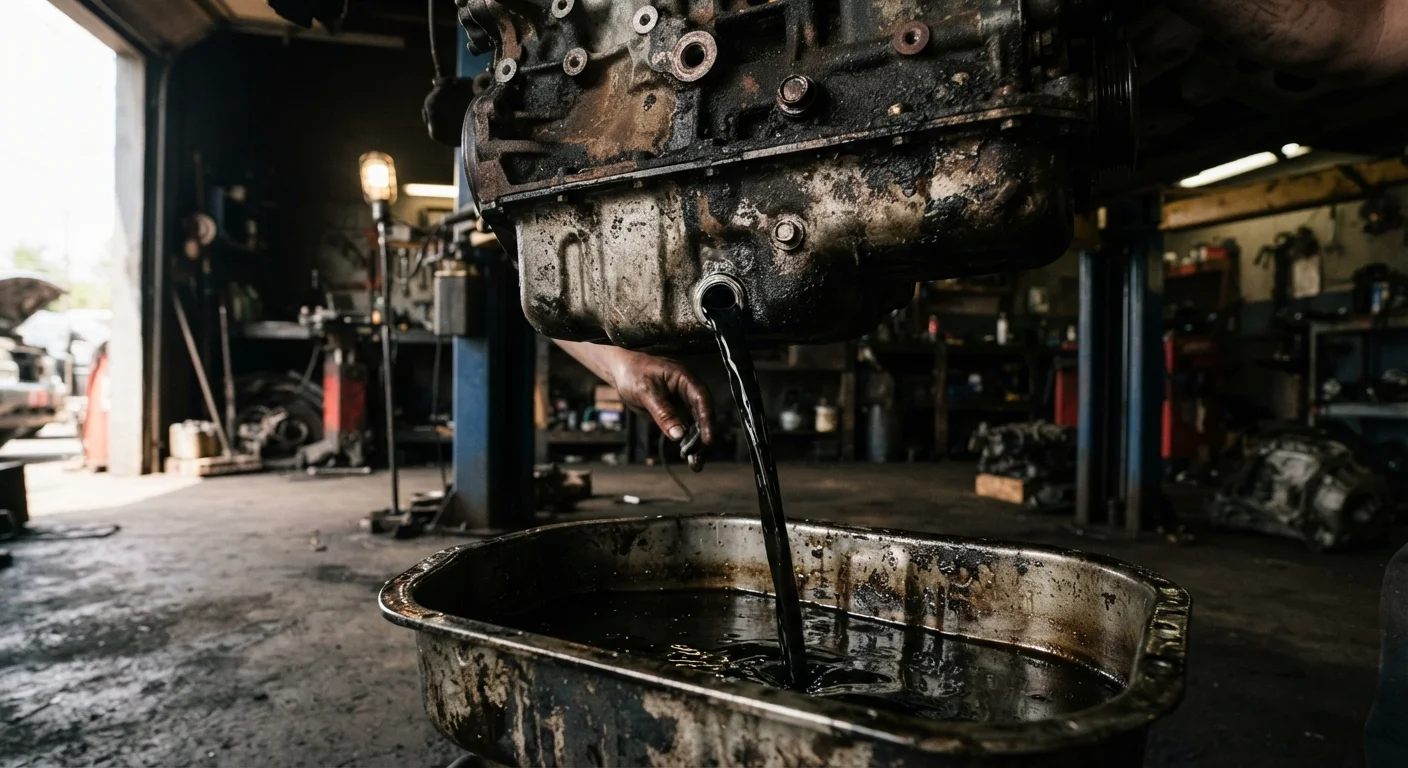
Key Takeaways
Oil Degradation
Over time and miles, engine oil breaks down chemically and becomes contaminated with combustion byproducts, metal particles, and moisture. When this happens, it can no longer effectively lubricate engine components or carry heat away from critical parts. The result is increased friction, wear, and eventually serious mechanical damage.
Motor oil contains an additive package - detergents, dispersants, and anti-wear agents - that depletes with use. Once these additives are exhausted, even oil that still looks liquid offers significantly reduced protection.
Why Engine Oil Has a Shelf Life
Engine oil does two jobs simultaneously: it lubricates moving metal parts to prevent friction damage, and it carries contaminants and heat away from the engine. Fresh oil handles both tasks well. But every mile you drive, the oil is exposed to combustion gases, extreme heat, and microscopic metal particles - all of which degrade its protective properties.
The additives in motor oil that do the heavy lifting - detergents, dispersants, viscosity modifiers - gradually break down. Once depleted, the oil becomes less effective at keeping engine components separated and clean. This is why oil changes exist: not because oil disappears, but because it wears out chemically.
Understanding this process matters because the consequences of skipping oil changes are not immediate - they're cumulative. See our maintenance schedule guide for context on how oil changes fit into your vehicle's broader service plan.
~$50-$100
Typical cost of a routine oil change
Compared to engine repair costs that can run into thousands of dollars, routine oil changes represent one of the highest-value maintenance investments a driver can make.
7,500-10,000 mi
Common synthetic oil change interval
Many modern vehicles using full synthetic oil are engineered for extended intervals - well beyond the outdated 3,000-mile recommendation still seen on some service stickers.
#1
Leading cause of premature engine failure
Lack of proper lubrication - often tied to neglected oil changes - is widely cited by automotive engineers as the most common cause of avoidable internal engine damage.
What Happens Inside Your Engine When Oil Gets Old
As oil degrades, its viscosity - its thickness and flow characteristics - changes. Contaminated oil thickens and can eventually turn into a gel-like substance called engine sludge. Sludge is particularly destructive because it clogs the narrow oil passages that feed bearings, camshaft components, and the valvetrain. When oil can't reach these parts, metal-on-metal contact begins.
Simultaneously, old oil becomes acidic. Combustion byproducts that blow past the piston rings introduce acidic compounds into the crankcase. Fresh oil's alkaline additives neutralize this acidity - but once those additives are exhausted, the acid attacks metal surfaces directly, causing corrosion from the inside out.
Low oil pressure is another downstream effect. Thickened, sludgy oil doesn't flow freely through the lubrication circuit, which means your oil pressure warning light may illuminate. If it does, that's a serious signal - not a suggestion.
“Oil is the lifeblood of an engine. When you neglect it, you're not just skipping a service - you're slowly withdrawing that protection, one mile at a time.”
— Automotive Basics Editorial Team, Editorial guidance based on established automotive engineering principles
The Stages of Neglect: From Minor to Major Damage
The damage from skipping oil changes tends to follow a progression:
- Increased engine wear: Degraded oil provides less of a protective film between moving parts. Over thousands of miles, this accelerates wear on bearings and cylinder walls.
- Sludge formation: Oil passages begin to clog, reducing lubrication flow. The engine may run noisier than normal - a ticking or knocking sound from the top end is a common early sign.
- Overheating: Oil assists in heat management. Degraded oil is less effective at transferring heat, contributing to higher operating temperatures and added stress on the cooling system.
- Component failure: In severe cases, oil starvation leads to spun bearings, scored cylinder walls, or a seized engine - repairs that can cost thousands of dollars or require a full engine replacement.
It's worth noting that common servicing assumptions - like thinking a newer car needs less attention - can quietly accelerate this progression.
Check Your Oil Between Changes
You don't have to wait for a service appointment to know where your oil stands. Pull the dipstick every month or so - it takes under a minute. Look for the level (between the min and max marks) and the condition (very dark or gritty oil means it's working hard). Catching a low level early can prevent serious damage between scheduled changes.
How to Stay on Track Without Overcomplicating It
The good news is that staying current on oil changes is one of the simplest and most cost-effective things you can do for your vehicle. Here's what actually matters:
- Follow your owner's manual, not the quick-lube sticker. Many modern vehicles - particularly those using full synthetic oil - have intervals of 7,500 to 10,000 miles or more. The old 3,000-mile rule is outdated for most cars on the road today. (For more on that, see our car maintenance myths guide.)
- Use your vehicle's oil life monitor if equipped. Most modern cars calculate remaining oil life based on actual driving conditions, not just mileage.
- Keep records. A simple log of dates and mileage protects you if a warranty claim ever arises.
- Don't neglect the filter. The oil filter traps contaminants - changing it with every oil change ensures it can do its job effectively.
New car owners in particular should review often-overlooked maintenance items to build a complete picture of what their vehicle actually needs.