

Key Takeaways
Start here
Why Motorways Feel So Different
Prepare
Before You Even Get On the Slip Road
Build skill
Joining, Lane Discipline, and Overtaking
Stay safe
Managing Speed, Space, and Fatigue
Be ready
What to Do If Something Goes Wrong
Why Motorways Feel So Different
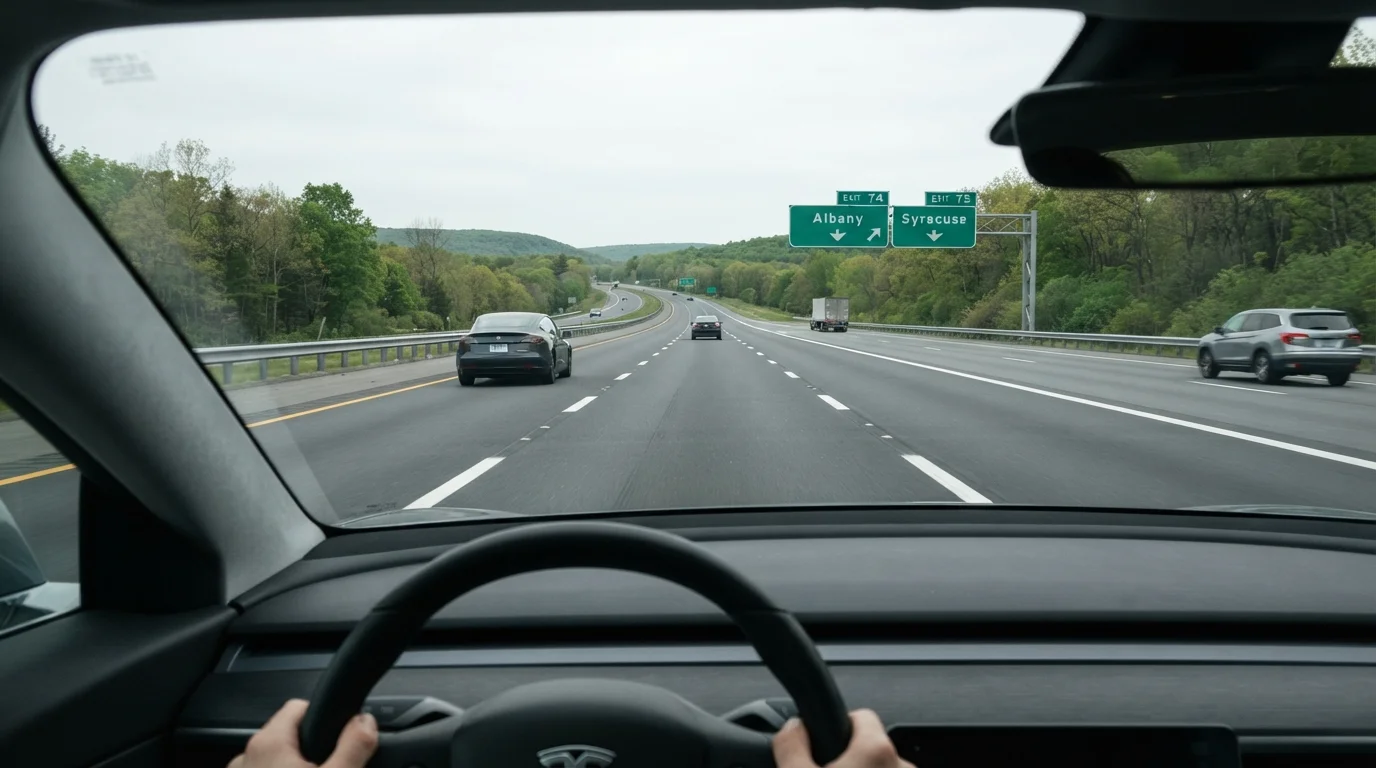
First-time motorway driving catches many new drivers off guard - not because the rules are harder, but because everything happens faster. At 65 mph, a gap that looks comfortable can close in under two seconds. Decisions that feel slow-paced on city streets need to be made in fractions of the time you are used to.
The core difference is that motorways remove the familiar reference points of urban driving: no traffic lights, no pedestrians, no side streets pulling your eye in every direction. That sounds simpler, but it demands a different kind of sustained concentration. For a deeper comparison of how your mental approach needs to shift between environments, see our guide on adapting your driving approach between urban streets and motorways.
Slip road
The short connecting road that leads onto a motorway or highway, designed to give drivers space to accelerate and merge with faster traffic.
Hard shoulder
A paved strip running along the left edge of a motorway, reserved for emergency stops and breakdowns - not for regular driving or parking.
Lane discipline
The practice of driving in the correct lane for your speed and direction, staying left unless overtaking, to keep traffic flowing safely and predictably.
Blind spot
The area around your vehicle that cannot be seen in your mirrors - typically to the rear sides. Always check over your shoulder before changing lanes.
Two-second rule
A safe following distance guideline: ensure at least two seconds pass between the vehicle ahead and your car reaching the same fixed point on the road.
Graduated driver licensing (GDL)
A staged licensing system used in most US states that introduces new drivers to progressively more complex driving conditions before granting full, unrestricted driving privileges.
Understanding this speed-and-space dynamic is the foundation everything else builds on. The good news: once you internalize it, motorway driving tends to feel calmer than city driving - there are fewer variables, and every driver is moving in the same direction.
Before You Even Get On the Slip Road
The biggest motorway mistakes are made before the journey starts. A mechanical issue that is merely inconvenient on a quiet road becomes genuinely dangerous at highway speeds. Before any motorway run, run through these basics:
- Tires: Check pressure and look for visible damage or uneven wear. Underinflated tires affect handling and braking distance significantly at speed.
- Fuel: Fill up before joining. Running low and hunting for a service area adds stress and can put you in a dangerous position.
- Mirrors: Adjust your side and rearview mirrors so you have clear sightlines with minimal blind spots. Do this before you move, not while merging.
- Route: Know your exit number and roughly where it falls on the route. Glancing at an unfamiliar GPS at 70 mph is a genuine distraction risk.
If you are still building familiarity with your vehicle's controls - especially if you recently switched transmission types - revisit what changes between manual and automatic driving technique before your first high-speed run. Confident, automatic control inputs matter more at motorway speeds.
Plan Your First Trip for Low-Traffic Conditions
Choose a quiet time for your first solo motorway run - mid-morning on a weekday typically means lighter, more predictable traffic than rush hour or weekend afternoons. A shorter, familiar route (rather than a long unfamiliar one) also helps you build confidence without adding navigation pressure on top of driving demands.
Joining, Lane Discipline, and Overtaking
The slip road (or on-ramp) is not just a gentle introduction to the motorway - it is your only window to reach motorway speed before you are expected to merge with fast-moving traffic. Use its full length. Signal early, accelerate steadily, and aim to match the speed of vehicles in the left lane before your lane ends. Do not stop at the end of a slip road unless there is genuinely no gap - this is both dangerous and unnecessary on most entries.
Once on the motorway, keep left unless you are overtaking. This is both a legal requirement and a practical safety rule - vehicles approaching faster from behind need predictable behavior from drivers ahead. Sitting in the middle or right lane when the left is clear (sometimes called lane hogging) disrupts traffic flow and is a common cause of frustration and tailgating.
When overtaking, use the mirror-signal-maneuver sequence: check mirrors, indicate, check your blind spot, then move. After passing, signal left and return to the left lane when it is safe - do not cut back in sharply. Avoid undertaking (passing on the right in right-hand-traffic countries, or on the left in left-hand-traffic countries where this applies); it is unsafe and, in many places, illegal.
Never Stop at the End of a Slip Road Unnecessarily
Stopping at the end of an on-ramp forces you to accelerate from zero into 70 mph traffic with no buffer - one of the most dangerous positions you can be in on a motorway. Use the full length of the ramp to reach motorway speed. If there is genuinely no safe gap, slow down and time your entry rather than stopping completely whenever possible.
Managing Speed, Space, and Fatigue
Speed on a motorway is not just about the number on your speedometer - it is about the gap you maintain and how quickly you can respond to what happens ahead. The two-second rule is a practical starting point: pick a fixed point on the road, and make sure two full seconds pass between the vehicle ahead crossing it and you reaching it. In rain, fog, or at night, extend this to four seconds or more.
Fatigue is the threat that catches new motorway drivers most by surprise. The steady hum of motorway driving - low visual variation, constant speed, few decisions - can induce drowsiness faster than stop-and-go traffic. On any journey over 90 minutes, plan a break. If you feel your concentration dipping, pulling into a service area for 15 minutes is always the right call. Keeping your vehicle in good mechanical shape also reduces unexpected stress on long runs - the car maintenance hub covers the routine checks that matter most.
Be especially alert when leaving the motorway. After extended driving at speed, 40 mph on an exit ramp can feel deceptively slow - check your speedometer rather than relying on how the speed feels.
What to Do If Something Goes Wrong
Breakdowns, tire blowouts, and sudden warning lights happen to experienced drivers too. Knowing what to do in advance takes the panic out of the moment.
If your vehicle develops a problem, signal left immediately and move to the hard shoulder or an emergency refuge area as safely as possible. Do not attempt to change a tire or carry out repairs on the hard shoulder - it is one of the most dangerous places to be on any road. Get yourself and any passengers out of the vehicle via the left-hand doors, move well behind the barriers away from traffic, and call your roadside assistance service or emergency services.
If you cannot reach a hard shoulder and must stop in a live lane, switch on your hazard lights, call emergency services immediately, and stay in your vehicle with your seatbelt on until help arrives. Exiting into moving traffic is almost always more dangerous than remaining inside.
For a broader look at how lane discipline and road feature awareness reduce the chance of getting into a difficult situation in the first place, our guide on navigating roundabouts, filter lanes, and box junctions covers habits that carry directly onto faster roads.
Motorway Rules Vary by Jurisdiction
Speed limits, lane rules, hard shoulder usage policies, and minimum age requirements for unsupervised highway driving differ between US states and countries. What applies in one state may not apply in another. Always verify the specific rules for the roads you plan to drive before your journey.
This article provides general driving education only. Always follow the highway code and traffic laws applicable in your state or jurisdiction. If you are unsure about your licensing requirements or vehicle roadworthiness, consult your state DMV or a qualified mechanic before driving on high-speed roads.