

Key Takeaways
Defensive Driving
Defensive driving is a set of skills and habits that help you anticipate hazards before they become emergencies. Rather than simply reacting to events, a defensive driver reads the road ahead, accounts for the behavior of other drivers, and adjusts speed and position accordingly. The goal is to reduce collision risk regardless of what other road users do.
Defensive driving frameworks are codified by organizations such as the National Safety Council (NSC) and form the basis of many state-approved driver improvement courses.
More Than Just Being Careful
Most drivers think of themselves as careful. But defensive driving goes beyond caution - it is a systematic, deliberate approach to operating a vehicle that treats every trip as a dynamic problem to be managed. The core distinction is proactive versus reactive: a cautious driver brakes when danger appears; a defensive driver positions themselves so they rarely need to brake hard at all.
The concept is built on a straightforward premise: you can control your own behavior but not anyone else's. Defensive driving accounts for that reality by maintaining enough time and space to handle unpredictable events - a distracted driver drifting lanes, a child running into the street, or a car stopping without warning. The techniques are practical and learnable by any driver, regardless of experience level.
Practice the Commentary Drive
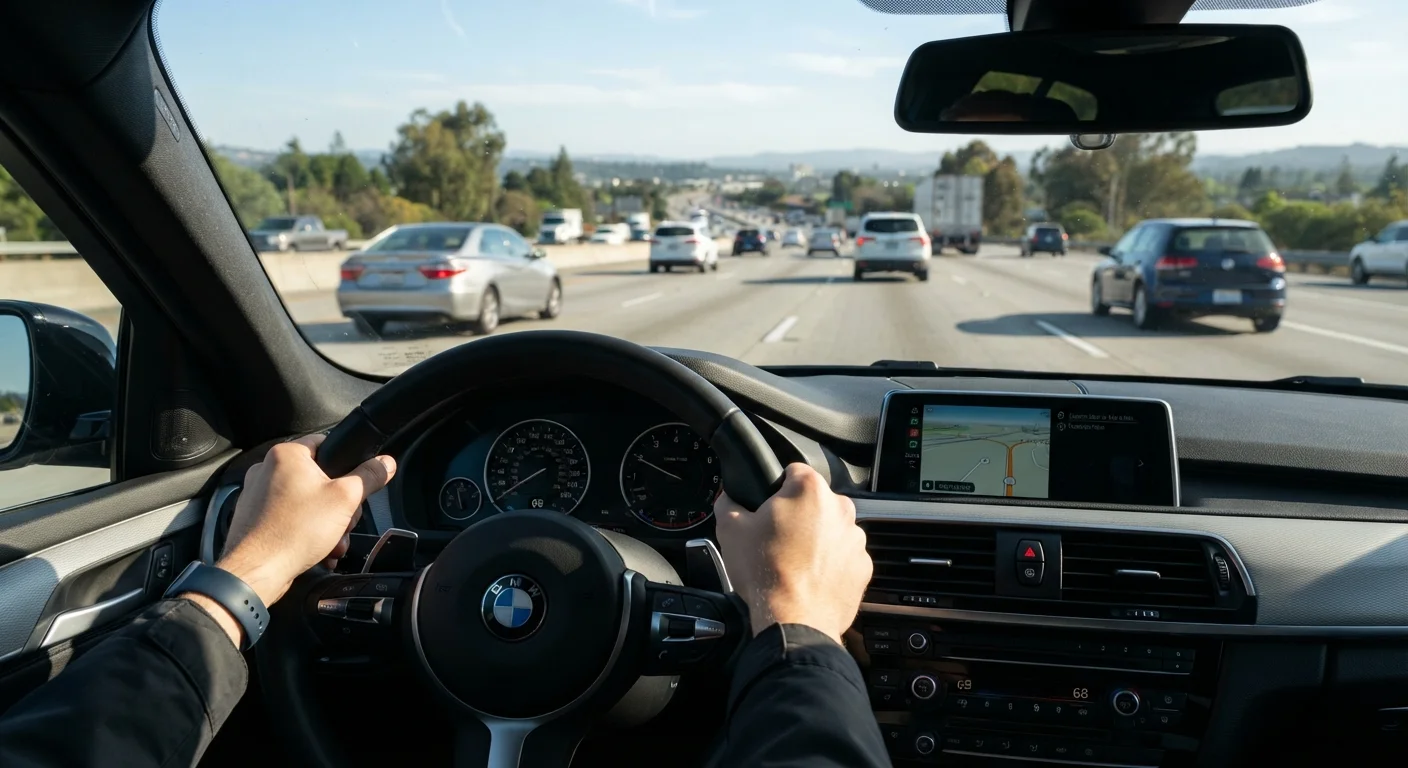
A technique used in driver training is the "commentary drive" - quietly narrating what you see as you drive. For example: "Car merging on my right, brake lights two vehicles ahead, pedestrian near the corner." This habit forces active scanning and keeps attention from drifting to passive autopilot.
The Core Principles in Practice
Defensive driving rests on a handful of interconnected habits that reinforce each other:
- Scanning ahead, not just ahead of you. Effective drivers look 10-15 seconds down the road - roughly a city block at urban speeds - rather than fixating on the vehicle directly in front. This gives your brain time to process developing hazards and choose a response before things go wrong.
- Maintaining a safe following distance. Tailgating is one of the leading contributors to rear-end collisions. A gap of at least three seconds under ideal conditions - and more in adverse weather - creates the reaction time you actually need.
- Managing speed for conditions. Posted speed limits reflect ideal conditions. Rain, fog, construction zones, and heavy traffic all warrant a deliberate reduction in speed, independent of what surrounding traffic is doing.
- Staying out of blind spots. Other drivers cannot respond to what they cannot see. Minimizing time spent in a neighboring vehicle's blind zone reduces your exposure to lane-change collisions.
- Expecting the unexpected. Treating every intersection, merge, and parking lot exit as a potential conflict point keeps attention focused where mistakes are most likely to occur.
~94%
Crashes involving human error
The National Highway Traffic Safety Administration (NHTSA) has attributed approximately 94% of serious crashes to human choice or error, underscoring why driver behavior is the primary safety variable.
3 seconds
Recommended minimum following distance
Safety organizations including the NSC recommend a minimum three-second gap in ideal conditions, with greater margins advised in rain, darkness, or heavy traffic.
40%
Fatal crashes occurring at intersections
According to NHTSA data, roughly 40% of all traffic fatalities involve intersection-related incidents, making intersection awareness a focal point for defensive driving instruction.
Conditions That Demand More from Every Driver
Defensive driving is not a fixed formula - the required level of adjustment changes with conditions. Darkness significantly changes the driving environment: visibility drops, reaction times effectively compress, and fatigue becomes a factor after extended hours. A driver applying defensive principles at night will reduce speed, increase following distance, and take more deliberate care at intersections.
Weather compounds every risk. Wet or icy pavement extends stopping distances well beyond what most drivers intuitively expect - a detail covered in depth in our stopping distances explainer. The same car doing 60 mph on dry pavement and on wet pavement will take meaningfully different distances to stop.
Interestingly, the habits that make driving safer also tend to reduce fuel consumption. Smooth acceleration and anticipating traffic flow reduce the stop-and-go behavior that strains both your brakes and your fuel budget. Defensive driving and economical driving are more aligned than most people realize.
Building the Habit Over Time
The most effective way to internalize defensive driving is to treat it as an active practice during every trip - not a mode reserved for bad weather or heavy traffic. Start with one habit: scan farther ahead than feels natural. Once that becomes automatic, layer in deliberate following distance management, then blind spot awareness. Small, consistent practice builds durable skill.
Formal defensive driving courses, offered through organizations like the National Safety Council, provide structured instruction and - in some states - may qualify participants for an insurance discount. Check with your state's DMV or your insurer to understand what applies in your situation. These courses are worth considering whether you are a new driver or one who has been behind the wheel for decades. Complacency is itself a risk factor, and a structured refresher challenges assumptions that may have drifted over years of routine driving.
It is also worth remembering that defensive driving is not about mistrusting every other road user or approaching driving with anxiety. It is about being informed, prepared, and consistently positioned to handle what the road sends your way - which is exactly the kind of confidence worth building.
Defensive Driving Courses and Insurance
Some auto insurers offer a premium discount for drivers who complete an approved defensive driving course. Eligibility, course requirements, and discount amounts vary by state and provider. Contact your insurer directly and verify course approval with your state's DMV before enrolling with that benefit in mind.