

Key Takeaways
Why Busy Schedules Make Good Eating Harder
For most busy adults, the challenge isn't knowing that vegetables and whole grains are good for you — it's finding a realistic way to eat them consistently when the day is already overloaded. When time runs short, food decisions tend to default to whatever is fastest and most accessible, which rarely aligns with nutritional goals.
Decision fatigue plays a real role here. Research in behavioral science suggests that willpower and decision-making capacity deplete as the day goes on. By evening, a person who has made hundreds of micro-decisions at work has far less mental bandwidth to plan and cook a balanced meal. The result isn't a lack of motivation — it's an exhausted brain reaching for the path of least resistance.
Understanding this dynamic is the first step toward designing an eating system that doesn't rely on motivation alone. And if you're unsure where your own habits are quietly slipping, common patterns that undermine good nutrition are worth reviewing alongside any new habits you build.
This Is General Information, Not Medical Advice
The guidance in this article reflects broadly accepted principles from established nutrition science and is intended for healthy adults. Individual nutritional needs vary depending on age, health status, medications, and other factors. If you have a specific health condition, are pregnant, or are managing a chronic illness, please consult a registered dietitian or your healthcare provider before making significant changes to your diet.
Proven Practices for Eating Well Under Time Pressure
The practices below are grounded in general dietary guidance from registered dietitians and established nutrition research. None require a complete lifestyle overhaul — each is designed to slot into an existing routine with minimal friction.
Plan two to three meals per week before grocery shopping
Having even a partial meal plan before you shop reduces the number of real-time decisions you face on weeknights. It also cuts food waste, since purchases are tied to actual meals rather than optimistic intentions.
Build each meal around a protein source first
Protein supports satiety more effectively than carbohydrates or fat alone, helping reduce the mid-afternoon energy dip and impulsive snacking. Dietitians commonly recommend centering meal planning on a protein anchor, then adding vegetables and a whole grain.
Dedicate one hour per week to batch cooking staples
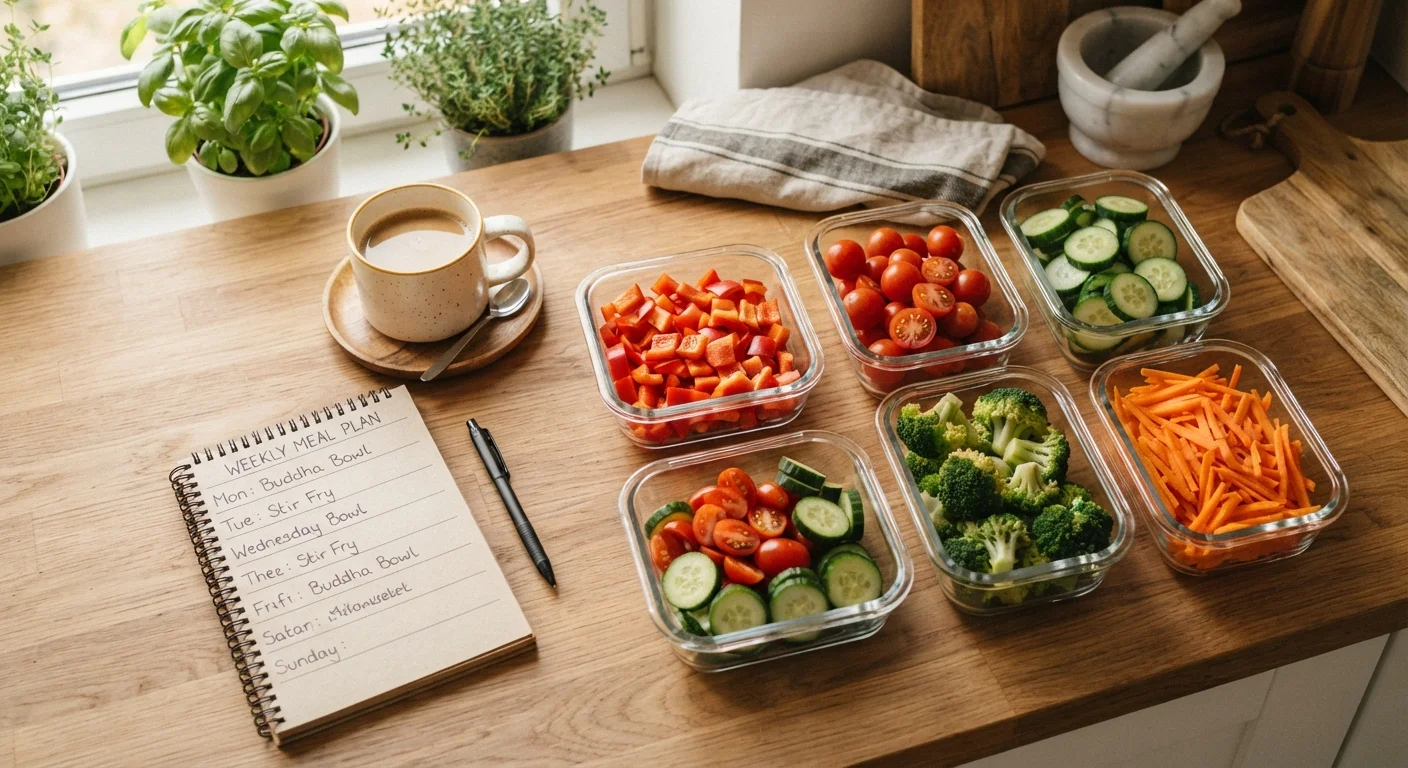
Batch-prepping items like grains, roasted vegetables, or hard-boiled eggs creates ready-to-assemble components that reduce weekday cooking time significantly. This approach works because it shifts food labor to a time when you're less depleted.
Keep one or two nutritious convenience foods on hand at all times
Restricting yourself only to home-cooked meals is an unrealistic standard for most busy adults. Stocking a small set of nutrient-dense convenience options prevents a hungry, time-pressed moment from defaulting to a less nutritious choice.
Eat without screens or distractions at least once per day
Distracted eating is associated with reduced meal satisfaction and increased total calorie intake, according to research reviewed in appetite and eating behavior literature. A single mindful meal per day can help recalibrate hunger and fullness cues.
For a complementary perspective on keeping energy steady throughout the day, see our guide on why energy crashes after meals happen and how meal composition plays a role.
Quick Wins You Can Start Today
Not every improvement requires a weekend of planning. Some of the most impactful shifts in eating quality come from small, immediate changes that take under five minutes to implement. The following actions are practical starting points — not a complete program, but a way to build momentum.
Pairing better eating habits with more movement can amplify the benefits of both. Our article on fitting exercise into a full day offers similarly low-friction strategies for physical activity.
Making Habits Stick Over the Long Term
Short-term motivation gets habits started; structure keeps them alive. Habit researchers broadly agree that attaching a new behavior to an existing one — a concept called habit stacking — dramatically improves follow-through. For example, setting out tomorrow's lunch ingredients while cleaning up after dinner takes less than two minutes and removes a morning decision entirely.
“The goal is not to eat perfectly — it's to eat well more often than not. Small, consistent changes in food habits outperform dramatic short-term interventions in virtually every long-term dietary study.”
— Walter Willett, Professor of Epidemiology and Nutrition, Harvard T.H. Chan School of Public Health
It also helps to do a regular honest check-in with your eating patterns. A weekly nutrition self-check can surface gaps in variety, hydration, or meal timing that are easy to miss in day-to-day busyness. Consider pairing that audit with attention to fiber intake, one of the most commonly undereaten nutrients in American diets.
36%
US adults who eat fast food on any given day
According to the CDC's National Center for Health Statistics, roughly one in three American adults consumes fast food on a typical day, underscoring how common time-driven food choices are.
90%
Americans falling short of vegetable intake recommendations
The Dietary Guidelines for Americans report that approximately 90% of Americans do not meet daily vegetable intake recommendations, a gap that practical habit-building is well-positioned to address.
This article provides general nutrition information and education only. It is not a substitute for personalized advice from a registered dietitian or qualified healthcare provider. If you have specific health conditions or dietary concerns, please consult a licensed professional.