

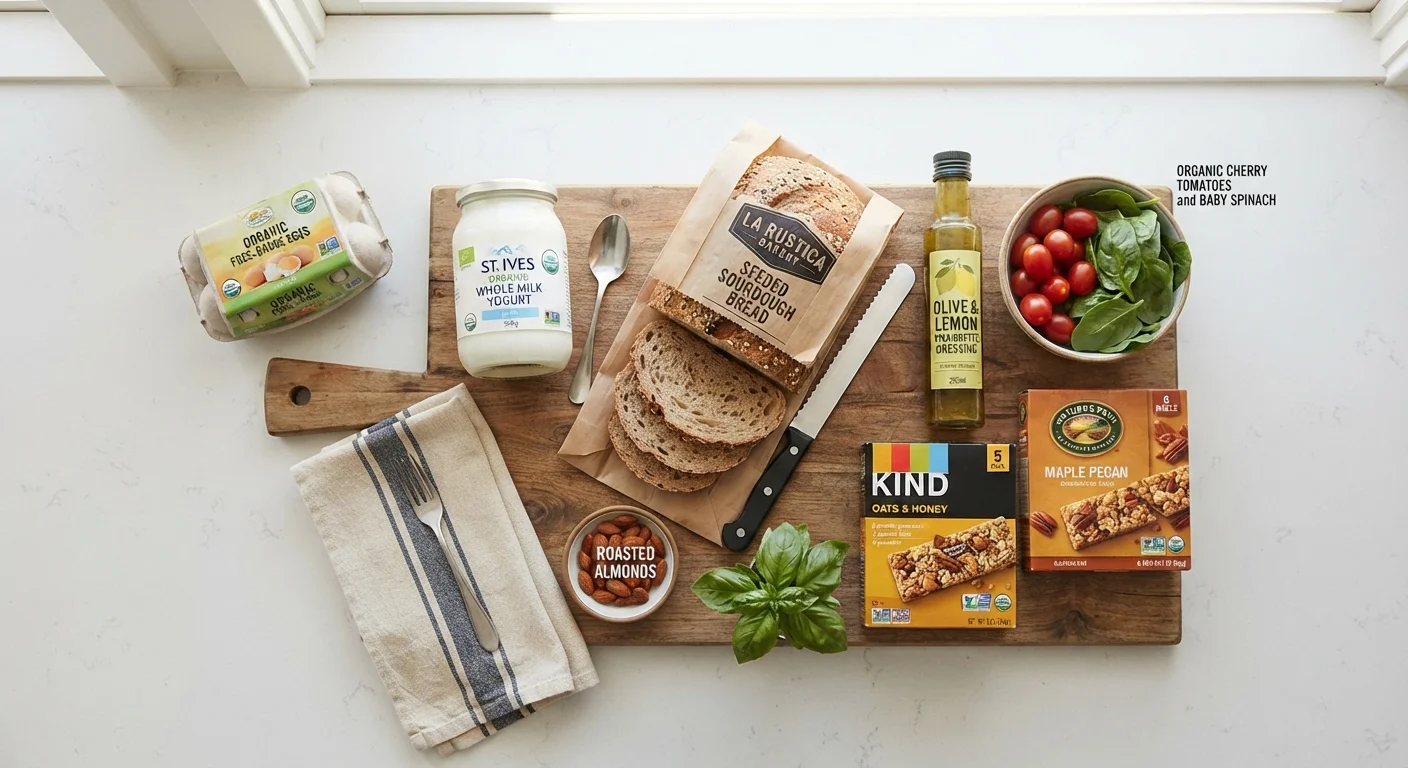
Key Takeaways
Why Added Sugar Is So Hard to Spot
Most adults are aware that soda and candy contain a lot of sugar. What's less obvious is how consistently added sugar shows up in foods that carry a health halo — items like multigrain bread, flavored oatmeal, and low-fat yogurt. Understanding where it hides, and why it's added in the first place, is the foundation of making more informed choices.
Manufacturers add sugar for reasons beyond sweetness: it extends shelf life, improves texture, enhances browning, and balances acidic or bitter flavors. That functional role is why it ends up in savory products just as often as sweet ones.
The updated Nutrition Facts panel now requires a dedicated "Added Sugars" line beneath total sugars, expressed both in grams and as a percentage of the Daily Value. The FDA set the Daily Value for added sugars at 50 grams per day for a 2,000-calorie diet — a reference point, not a personal target. For a plain-language guide to navigating the entire label, see our guide to reading a nutrition label.
The list below covers the food categories where added sugar most reliably appears — and what to look for when you pick up the package.
Flavored Yogurt
Plain yogurt contains naturally occurring lactose, but flavored varieties — fruit-on-the-bottom, vanilla, or "light" options — often have substantial added sugar. A single 5.3-oz container can contain anywhere from 12 to 20 grams of added sugar depending on the brand and flavor. Look for "cane sugar," "fruit juice concentrate," or "honey" listed early in the ingredients. Choosing plain yogurt and adding fresh fruit gives you control over sweetness without sacrificing convenience.
A single flavored yogurt container can contain up to 20 grams of added sugar.
Bread and Baked Goods
Commercial bread — including varieties labeled multigrain, wheat, or whole-grain — routinely contains added sugar. Manufacturers use it to promote yeast activity, improve crumb texture, and balance the slightly bitter notes in whole-grain flours. Ingredients to scan for include high-fructose corn syrup, molasses, honey, and dextrose. A single slice of some commercial breads contains 2–4 grams of added sugar, which adds up quickly across sandwiches and toast.
Even whole-grain bread often contains added sugar to improve texture and yeast activity.
Salad Dressings and Condiments
Bottled salad dressings — especially low-fat and fat-free versions — frequently compensate for reduced fat by increasing sugar content. Ketchup, barbecue sauce, and teriyaki-style sauces can each deliver 4–8 grams of added sugar per serving. Because condiment servings are small (often 2 tablespoons), the sugar can appear modest in isolation but compounds quickly in real portions. Check the ingredient list for corn syrup, glucose, and agave nectar.
Low-fat dressings often replace fat with sugar, making them an unexpected source.
Granola, Cereal, and Breakfast Bars
Granola and packaged breakfast cereals vary enormously in added sugar content, even among those marketed to health-conscious consumers. Some granolas contain 12 or more grams per half-cup serving — before milk is added. Cereal bars and protein bars can function more like confections than nutritional supplements. Multiple forms of sugar — brown rice syrup, cane juice, and honey — are sometimes used simultaneously, each appearing separately on the label and therefore further down the ingredients list than their combined presence would suggest.
Multiple sugar aliases can appear separately, disguising how much total sugar a product contains.
Pasta Sauces and Canned Tomato Products
Tomatoes are naturally acidic, and added sugar is a common way manufacturers balance that sharpness in jarred sauces. A half-cup serving of marinara sauce can contain 6–12 grams of added sugar depending on the formulation. Canned baked beans and some canned soups similarly use sugar for flavor balancing. Look for sucrose or corn syrup in the ingredients, and compare across options — the added sugar content in this category varies widely even within the same product line.
Jarred pasta sauce often uses added sugar to counteract the natural acidity of tomatoes.
Flavored Oatmeal and Instant Breakfast Products
Instant oatmeal packets marketed as "maple brown sugar" or "peaches and cream" typically deliver 12–15 grams of added sugar per packet, compared with zero in plain rolled oats. Similarly, flavored instant oatmeal cups and ready-to-eat breakfast drinks often list sugar as the second or third ingredient. The base ingredient (oats, grain) may be nutritious, but the added sugar load transforms the product's nutritional profile. Plain oats with added fruit and a small drizzle of honey let you calibrate sweetness yourself.
Flavored instant oatmeal can contain as much added sugar as a small dessert.
Putting It All Together
Hidden sugar accumulates quietly across a day. A flavored yogurt at breakfast, a store-bought salad dressing at lunch, a granola bar as a snack, and a jarred pasta sauce at dinner can collectively deliver a substantial added-sugar load before a single obvious sweet treat is consumed.
Scan Ingredient Lists for Sugar Aliases
Added sugar appears under more than 60 names on U.S. food labels. Common aliases include high-fructose corn syrup, maltose, dextrose, evaporated cane juice, barley malt, brown rice syrup, and fruit juice concentrate. When multiple aliases appear in a single ingredient list, their combined contribution may be significant even if no single one appears near the top. Ingredients are listed by weight in descending order — if several sugar forms appear in the first five ingredients, that's a useful signal.
Awareness — not elimination — is the goal. Whole foods naturally contain sugars (lactose in dairy, fructose in fruit) that behave differently from added sugars and come packaged with fiber, vitamins, and other nutrients. Reading ingredient lists with an eye for the aliases below is a straightforward first step. If you're noticing patterns in your overall eating habits that may be working against your nutrition goals, our article on eating patterns that undermine good nutrition explores those subtle dynamics further.
This article is for general informational and educational purposes only and is not a substitute for personalized medical or dietary advice. Consult a registered dietitian or qualified healthcare professional for guidance specific to your health situation.