

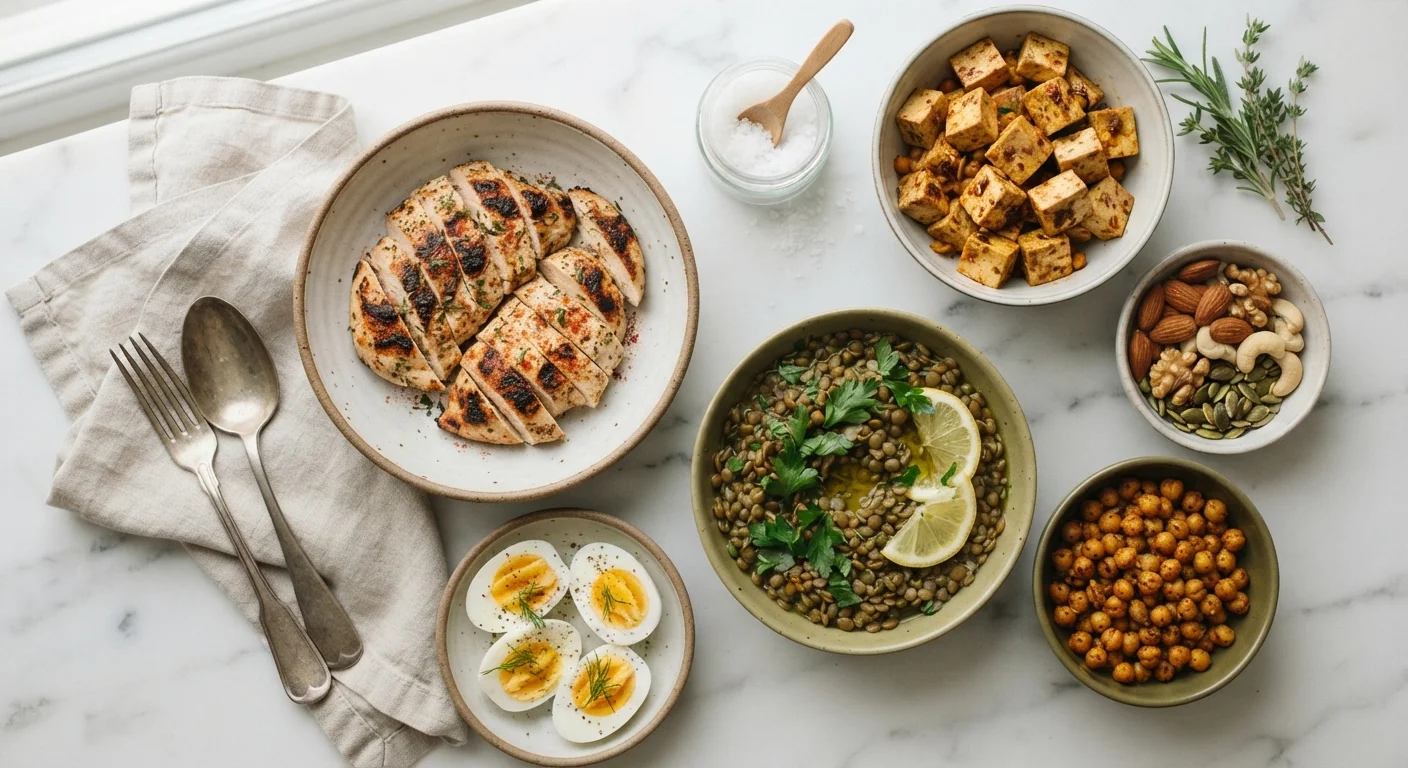
Key Takeaways
Option A
Plant-Based Protein
The fiber-rich, environmentally conscious protein source.
Best for: People seeking to increase fiber intake, reduce saturated fat, or incorporate more whole-food variety into their diet.
Option B
Animal Protein
The complete, highly bioavailable protein source.
Best for: People who want straightforward access to all essential amino acids and nutrients like B12, heme iron, and zinc in one source.
If you want complete amino acids with minimal dietary planning
Animal Protein
Animal proteins supply all essential amino acids in a single source, along with nutrients like vitamin B12 and heme iron that are harder to obtain elsewhere.
If you want to improve heart health and increase fiber
Plant-Based Protein
Plant proteins are naturally lower in saturated fat and come packaged with dietary fiber and phytonutrients that support cardiovascular health.
If you follow a vegetarian or vegan lifestyle
Plant-Based Protein
With intentional variety — legumes, grains, nuts, seeds, and soy — plant sources can meet full protein requirements without animal products.
If you are an older adult concerned about muscle preservation
Animal Protein
Research suggests animal proteins, particularly those rich in leucine such as dairy and eggs, may support muscle protein synthesis more efficiently as we age.
If you want a balanced, sustainable long-term eating pattern
Animal Protein
A Mediterranean-style approach combining lean animal proteins with abundant plant foods has one of the strongest evidence bases for long-term health outcomes.
The Core Difference: Complete vs Incomplete Proteins
Proteins are built from amino acids — 20 in total, nine of which are classified as essential because the human body cannot produce them on its own. These must come from food. This distinction is at the heart of the plant vs animal protein debate.
Animal proteins — including meat, poultry, fish, eggs, and dairy — are considered complete proteins. They contain all nine essential amino acids in proportions that closely mirror what the human body requires. Plant proteins, by contrast, tend to be low in at least one essential amino acid. Beans are low in methionine; grains are low in lysine. Soy and quinoa are notable exceptions, providing a complete amino acid profile from a plant source.
Importantly, this doesn't mean plant-based eaters are destined for protein deficiencies. Eating a variety of plant proteins throughout the day — not necessarily at every meal — allows the body to assemble a full complement of essential amino acids. This is consistent with guidance from the Academy of Nutrition and Dietetics, which recognizes well-planned plant-based diets as nutritionally adequate.
| Criterion | Plant-Based Protein | Animal Protein |
|---|---|---|
| Amino acid completeness | Often incomplete (soy & quinoa are exceptions) | Complete — all 9 essential amino acids |
| Bioavailability (DIAAS) | Moderate — varies by preparation method | Generally high |
| Saturated fat content | Generally low | Varies; can be high in red/processed meats |
| Dietary fiber | Present — supports gut health | Absent |
| Vitamin B12 | Not present (supplementation needed) | Naturally present |
| Iron type | Non-heme iron (lower absorption) | Heme iron (higher absorption) |
| Phytonutrients & antioxidants | Rich in plant compounds | Minimal |
Bioavailability: How Much Protein Does Your Body Actually Use?
The quantity of protein in a food is only part of the story. Bioavailability — how efficiently the body digests and absorbs that protein — matters just as much. Nutritionists use a measure called the PDCAAS and a newer metric, the DIAAS, to assess this.
Animal proteins generally score higher on both scales. Eggs, for example, score near the maximum on PDCAAS. Plant proteins, particularly from legumes, whole grains, and nuts, tend to score lower — partly because plant cell walls and naturally occurring compounds like phytates can reduce digestibility. However, food preparation methods such as soaking, fermenting, and cooking can meaningfully improve the bioavailability of plant proteins.
~20%
Lower protein digestibility in some legumes vs animal sources
Research comparing DIAAS scores suggests legume proteins may be digested roughly 20% less efficiently than egg or dairy protein, though cooking and processing narrow this gap.
~0.8g/kg
General adult daily protein recommendation
The Dietary Reference Intake established by the National Academies suggests approximately 0.8 grams of protein per kilogram of body weight per day for average healthy adults.
29%
Of U.S. adults actively trying to eat more plant protein
According to the International Food Information Council's Food and Health Survey, a growing share of Americans are intentionally incorporating more plant-based protein into their diets.
For most healthy adults eating adequate total calories and varied foods, bioavailability differences are unlikely to result in deficiency. The gap becomes more relevant for people with elevated protein needs — older adults, athletes, or those recovering from illness — and is worth discussing with a healthcare provider or registered dietitian.
Beyond Protein: The Nutritional Package Each Source Delivers
Protein rarely travels alone. The foods that deliver it also carry fats, micronutrients, and bioactive compounds — and that broader nutritional context matters enormously.
Animal protein sources provide nutrients that are difficult to obtain in meaningful amounts from plants: vitamin B12 (essential for nerve function), heme iron (absorbed more readily than non-heme plant iron), zinc, and omega-3 fatty acids from fatty fish. These are genuine nutritional advantages, particularly for people with higher needs.
On the other side, plant protein sources arrive bundled with dietary fiber, which animal products entirely lack. Fiber feeds beneficial gut bacteria, supports digestive regularity, and is associated with lower risks of heart disease and type 2 diabetes. Plant foods also deliver antioxidants and phytonutrients with their own evidence base for health. Additionally, most plant proteins contain little to no saturated fat — a consideration for cardiovascular health.
For a deeper look at how the broader food environment shapes nutritional outcomes, see our guide to whole foods vs processed foods, which contextualizes protein sources within the larger food quality spectrum.
Special Populations Deserve Extra Care
Pregnant individuals, older adults, growing children, and people managing chronic conditions may have protein needs or absorption considerations that differ significantly from general guidelines. The information in this article reflects broad nutritional science and is not a substitute for individualized guidance. If you fall into one of these groups, please speak with a registered dietitian or your healthcare provider before making significant changes to your protein intake or dietary pattern.
Practical Takeaways for Your Plate
Nutrition science doesn't position plant and animal proteins as opponents — the evidence increasingly points toward dietary patterns rather than isolated nutrients as the key to long-term health. Here's how to translate the science into everyday eating:
- If you eat animal products: Lean toward fish, poultry, eggs, and low-fat dairy. Limit processed and red meats, where consistent evidence links high intake to elevated health risks.
- If you eat primarily plants: Prioritize variety. Combine legumes, whole grains, nuts, seeds, and soy products. Consider a B12 supplement — this is one nutrient reliably absent from unfortified plant foods.
- If you eat both: Use plant proteins as a foundation — beans, lentils, tofu — and layer in animal proteins strategically. This pattern is consistent with some of the most evidence-supported dietary approaches in the world.
There is no single universally correct answer. Individual health status, activity level, food culture, and personal values all shape the right approach for each person. What the evidence does consistently support is quality over rigidity — whole-food protein sources, minimally processed, consumed in the context of a varied diet.
This article is for general informational and educational purposes only and does not constitute medical or nutritional advice. Please consult a qualified healthcare provider or registered dietitian for guidance tailored to your individual health needs.