

Key Takeaways
Soil pH
Soil pH is a measure of how acidic or alkaline your soil is, expressed on a scale from 0 to 14. A reading of 7.0 is neutral — values below that are acidic, and values above are alkaline. Most garden plants grow best somewhere in the 6.0–7.0 range, where the nutrients they need are most accessible.
pH stands for 'potential of hydrogen' and reflects the concentration of hydrogen ions in the soil solution. This chemistry directly governs which nutrients dissolve into forms plant roots can absorb.
What Soil pH Actually Does
When gardeners talk about soil health, they often focus on fertilizer, watering, and sunlight — all legitimate concerns. But soil pH sits quietly underneath all of it, acting as a gatekeeper for every nutrient your plants try to access.
Think of pH as a lock on a door. Even if the nutrients are present in your soil, the wrong pH keeps that door shut. Nitrogen, phosphorus, potassium, iron, and magnesium all become more or less available depending on where your soil falls on the 0–14 scale. In strongly acidic or strongly alkaline conditions, certain nutrients become chemically bound and unavailable, no matter how generously you fertilize.
This is why plants in nutrient-rich soil can still look starved. The problem isn't deficiency — it's chemistry. And until pH is addressed, no amount of added fertilizer will fully solve it.
6.0–7.0
Optimal pH range for most vegetables
University extension guidelines broadly agree that this range supports the widest nutrient availability for common food crops.
~5.5
pH at which aluminum toxicity can emerge
Soil scientists note that below pH 5.5, aluminum and manganese can reach levels harmful to sensitive plant species.
3–6 months
Typical time for lime to fully react
According to extension agronomists, ground limestone can take several months to fully alter soil pH, depending on soil moisture and temperature.
Signs Your Soil pH May Be Off
pH problems rarely announce themselves clearly. Instead, they mimic other issues — which is part of what makes them frustrating to diagnose without a test.
- Yellowing leaves (chlorosis): When iron or manganese becomes unavailable in alkaline soil, leaves turn yellow between the veins while veins stay green.
- Stunted, slow growth: Phosphorus locks up at both pH extremes, slowing root development and overall plant vigor.
- Poor fruiting or flowering: Calcium and magnesium deficiencies — both tied to pH — can affect fruit set and bloom quality.
- Fertilizer that seems to do nothing: If amendments don't produce results, pH is often the underlying barrier.
If you're seeing these symptoms and can't trace them to watering or light issues, a soil test is the logical next step. Ongoing watering habits can compound the problem too — see common watering mistakes that stress plants for related context.
Test Before You Treat
Never add lime or sulfur based on guesswork alone. Over-correcting pH is just as problematic as ignoring it — and can create new nutrient imbalances. Always test first, calculate amendments based on results, and retest before applying a second round.
How to Test and Interpret Your Soil pH
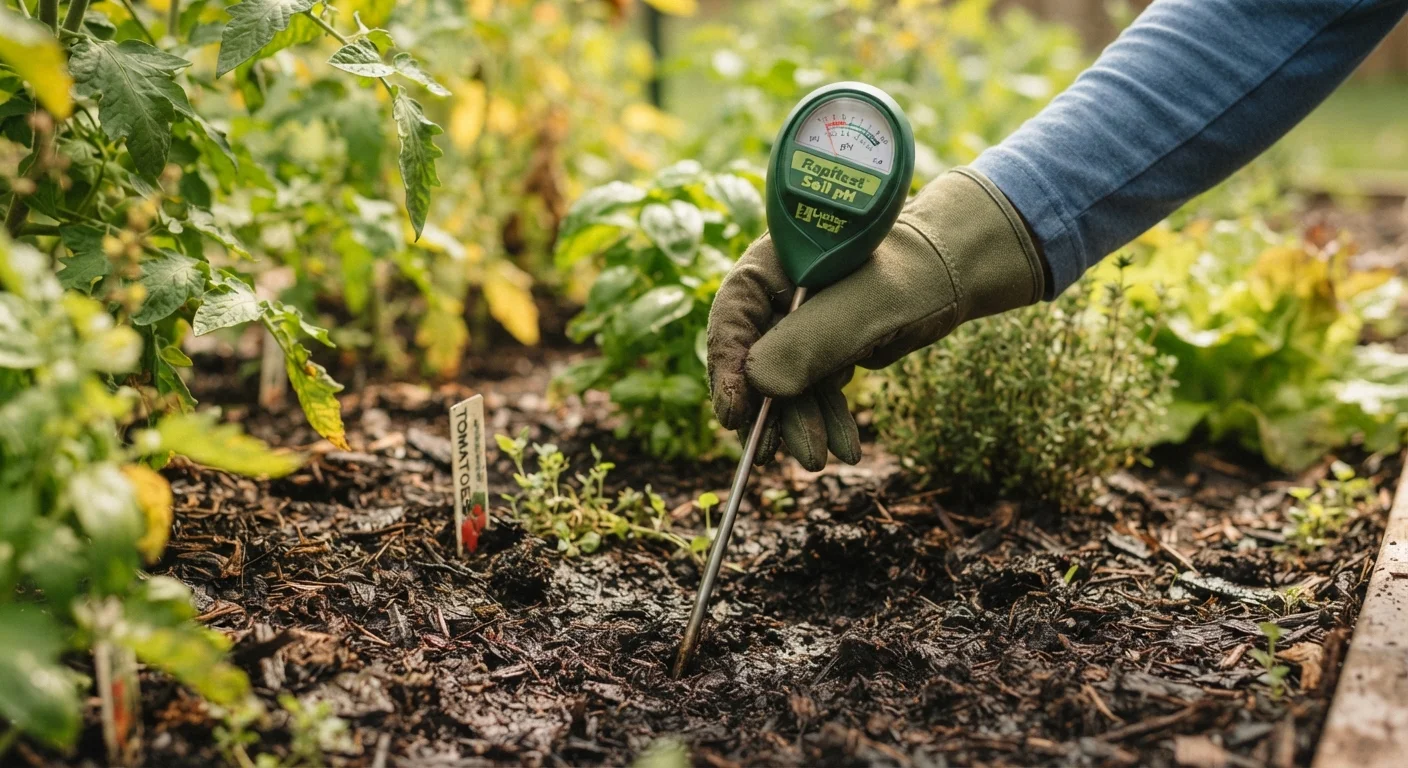
Soil testing is straightforward and doesn't require specialized skills. You have two main options:
- Home test kits: Available at garden centers, these use a color-change reaction to indicate pH. They're fast and inexpensive, giving a workable estimate for most gardeners.
- Cooperative extension lab testing: Your state's land-grant university extension service typically offers low-cost testing. Results are more precise and often include amendment recommendations tailored to your specific readings and target crops.
When collecting samples, take small amounts from several spots in the bed, mix them together, and test the combined sample. This accounts for natural variation across the planting area.
Once you have a reading, compare it to the needs of what you're growing. Most vegetables and annuals prefer 6.0–7.0. Acid-lovers like blueberries need 4.5–5.5. Knowing your target range tells you whether — and how much — you need to adjust. If you're planning a new planting setup, it's also worth considering how your growing method affects pH management, as discussed in our look at raised beds versus in-ground gardening.
Adjusting pH: Practical Steps
Once you have a clear reading and a target range, you can make informed amendments. The two most common approaches are:
To Raise pH (Make Soil Less Acidic)
Ground limestone — either calcitic or dolomitic — is the standard amendment. Dolomitic lime also adds magnesium, which can be helpful if your soil is deficient. Work it into the top several inches of soil, and give it at least a few weeks to react before retesting.
To Lower pH (Make Soil More Acidic)
Elemental sulfur is the most reliable option. Soil bacteria convert it into sulfuric acid over time, gradually lowering pH. Acidifying fertilizers and pine needle mulch can help maintain acidity in beds for acid-preferring plants, but they work more slowly than sulfur.
Amendment rates depend on your current pH, your target, and your soil type — clay soils require more material to shift than sandy ones. Avoid large, sudden adjustments. Gradual changes are safer for soil biology and plant roots.
Clay vs. Sandy Soil: Amendment Rates Differ
Clay soils have a higher buffering capacity, meaning they resist pH change and require larger amounts of amendment to shift. Sandy soils move more readily but also revert faster. Always follow the amendment rate guidance that comes with your soil test results, or consult your local extension office for region-specific advice.
For those starting from scratch, understanding pH from the beginning makes a real difference. Our guide on starting a vegetable garden from nothing covers soil prep as part of the full setup process.