

Key Takeaways
Option A
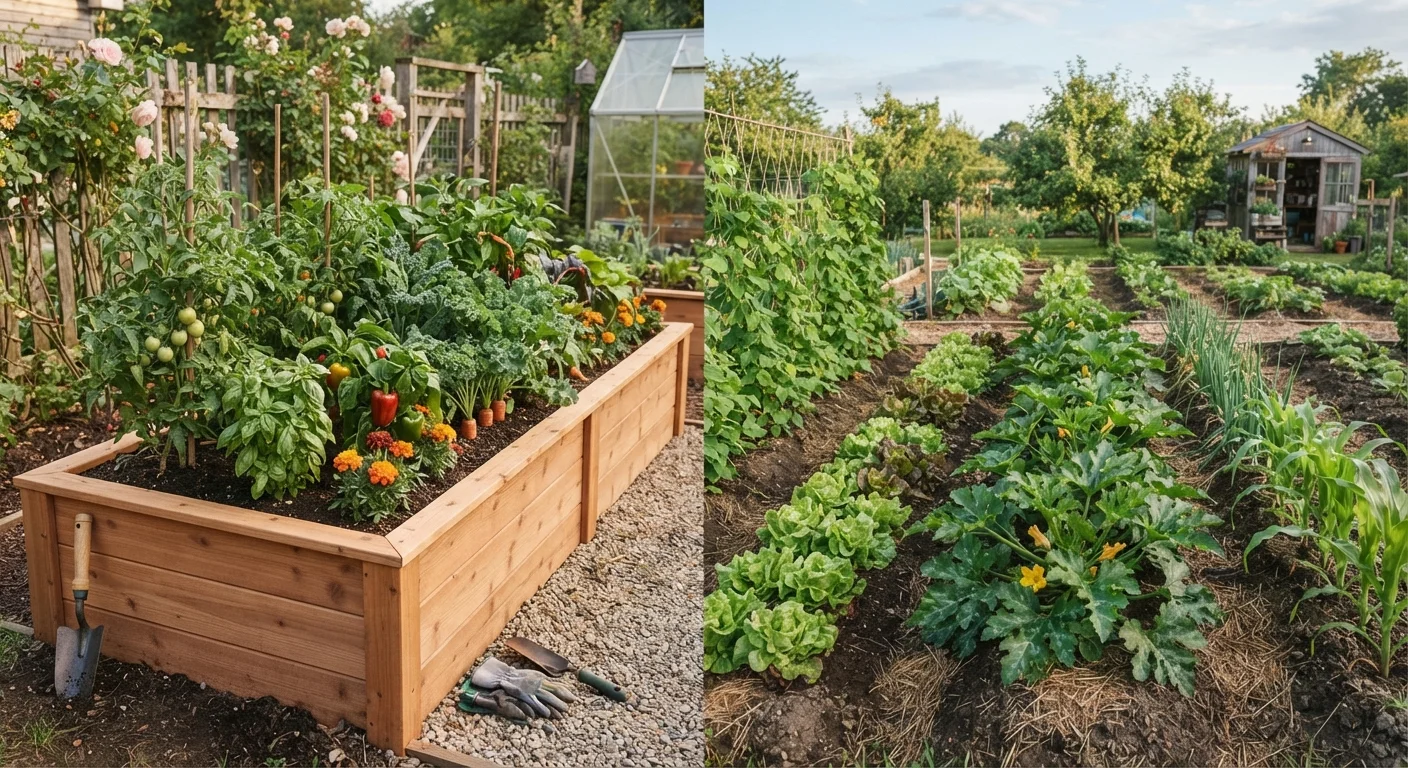
Raised Bed Gardening
The controlled, accessible solution for challenging conditions.
Best for: Homeowners dealing with poor native soil, limited mobility, or wanting precise control over growing conditions.
Option B
In-Ground Planting
The traditional, large-scale approach rooted in simplicity.
Best for: Gardeners with decent native soil, ample space, and plans to grow crops at a larger scale without high upfront costs.
If your yard has clay-heavy, compacted, or poor-draining soil
Raised Bed Gardening
Raised beds let you bypass native soil entirely by filling with a custom mix, so you're not fighting the ground beneath you from day one.
If you want to grow a large volume of crops on a tight budget
In-Ground Planting
In-ground gardening has almost no materials cost to get started, and it scales easily to cover a much larger area than raised beds typically allow.
If you or someone in your household has mobility or bending limitations
Raised Bed Gardening
A raised bed built at the right height eliminates the need to kneel or crouch, making gardening far more comfortable and sustainable long term.
If you're growing deep-rooted crops like corn, winter squash, or asparagus
In-Ground Planting
Deep-rooted crops benefit from unrestricted downward growth that a shallow raised bed can't always accommodate without significant added depth.
If you're a first-time gardener who wants fast, encouraging results
Raised Bed Gardening
Fresh, well-structured soil in a small raised bed is highly forgiving — it drains well, warms quickly, and tends to produce strong early results that build confidence.
The Core Difference: Soil Control vs. Scale
The choice between raised beds and in-ground planting ultimately comes down to one question: how much control do you need over your growing environment? Raised beds are essentially self-contained growing boxes filled with soil you choose. In-ground planting means working with — and improving — whatever exists beneath your lawn.
If you're starting a vegetable garden from scratch, your native soil quality will likely be the deciding factor. Soil that drains poorly, compacts easily, or has a history of heavy chemical use is a strong argument for raised beds. Soil that's naturally loamy, well-structured, and not contaminated is a foundation worth working with in the ground.
Scale matters too. A single 4×8 raised bed runs anywhere from $50 to $200 or more depending on materials. Covering a 400-square-foot growing area in-ground costs comparatively little. Raised beds win on precision; in-ground wins on economy.
| Criterion | Raised Beds | In-Ground Planting |
|---|---|---|
| Upfront cost | Moderate to high | Low |
| Soil control | Full — you choose the mix | Dependent on native soil |
| Drainage | Excellent by design | Varies by yard |
| Season extension | Warms faster in spring | Standard season timing |
| Weed pressure | Lower initially | Higher without management |
| Scalability | Limited by frame cost | Easily expanded |
| Root depth | Limited by bed depth | Unrestricted |
| Accessibility | High if built tall enough | Requires kneeling or bending |
| Watering needs | More frequent | Less frequent |
| Long-term fertility | Needs periodic topping-up | Builds naturally with amendments |
What Raised Beds Do Better
Raised beds excel in three specific areas: drainage, soil customization, and season extension. Because you fill them with a mix of topsoil, compost, and other amendments, you're not at the mercy of the ground. Poor drainage — one of the most common reasons vegetable gardens underperform — is largely eliminated.
Raised beds also warm up faster in spring. Soil enclosed on all sides absorbs heat more quickly than open ground, which can push your planting window forward by two to four weeks in cooler climates. For gardeners in the northern US, that's a meaningful advantage.
Weed pressure is genuinely lower in a well-built raised bed, at least in the first few seasons. Starting with fresh soil means a clean slate. Pair that with a proper layer of mulch and you'll spend noticeably less time pulling weeds.
Accessibility is another real benefit. A bed built at 18 to 24 inches tall allows gardening without kneeling — something that matters significantly to older adults or anyone managing joint pain.
2–4 weeks
Earlier planting season with raised beds
Raised bed soil can warm significantly faster than open ground in spring, giving gardeners in cooler climates a meaningful head start on the growing season.
~50%
Reduction in water use with drip irrigation
The U.S. Environmental Protection Agency notes that drip irrigation systems can use significantly less water than conventional overhead watering, which is especially relevant for raised bed setups.
6–8 inches
Minimum raised bed depth for most vegetables
Most vegetable crops need at least 6 inches of quality soil depth; root crops like carrots and parsnips typically benefit from 12 inches or more.
Where In-Ground Planting Holds Its Own
In-ground planting is not the inferior option — it's the traditional default for good reason. Established garden soil, amended over multiple seasons with compost, can become deeply productive. The root zone is unlimited, which is particularly valuable for crops like tomatoes, squash, and asparagus that benefit from growing deep.
Cost is the most straightforward advantage. Beyond a shovel, some compost, and seeds or transplants, there's no materials investment required. For a homeowner working with a large yard and reasonable soil, in-ground beds can be expanded incrementally without rebuilding infrastructure.
In-ground gardens also interact naturally with the broader ecosystem. Earthworms, beneficial insects, and soil microbes move freely through native soil, contributing to long-term fertility in ways that a contained raised bed can't always replicate. If you're interested in attracting pollinators to your garden, an in-ground setup with open borders can make that easier.
Understanding your soil pH and nutrient balance is especially important for in-ground gardeners, since you can't simply swap out the growing medium when problems arise.
Combining Both Methods Is a Valid Strategy
Many experienced home gardeners use raised beds for high-value crops like salad greens, herbs, and tomatoes, while using in-ground space for sprawling plants like squash, corn, or flowers. There's no rule requiring you to commit to one approach entirely. Mixing both lets you match the growing method to the crop's specific needs and your available space. You may also find that your preference shifts after one or two seasons of hands-on experience.
Watering, Maintenance, and Long-Term Considerations
Raised beds dry out faster than in-ground soil because air circulates around all sides of the frame. This means more frequent watering — a real consideration during hot summers. Drip irrigation is often a practical solution; our comparison of drip irrigation vs. sprinkler systems can help you evaluate the options.
In-ground gardens hold moisture longer but can suffer from compaction if walked on regularly. Defining clear paths between rows and never stepping on planting areas helps preserve soil structure over time.
Both approaches benefit from consistent composting. Whether you're topping off a raised bed or working amendments into native soil, finished compost is one of the most reliable improvements you can make. Our guide to composting at home covers the full process from start to finish.
Over multiple years, raised beds may need occasional topping-up as organic matter breaks down and soil settles. In-ground gardens evolve more slowly but can deepen in fertility with consistent care. Neither method is maintenance-free — they just require different kinds of attention.