

Key Takeaways
Why Pollinators Belong in Your Garden
Pollinators — including bees, butterflies, moths, beetles, and some flies — are responsible for fertilizing a significant share of the flowering plants in North American ecosystems. In a suburban yard, their presence isn't just a pleasant bonus: it directly improves fruit set in vegetable gardens, supports local plant diversity, and contributes to a healthier neighborhood environment.
The good news is that attracting pollinators doesn't require a large property or a complex landscape overhaul. Strategic planting, a few habitat additions, and some changes to routine garden care can transform even a modest backyard into a reliable stopping point on a pollinator's daily route. The strategies below are practical, low-cost, and suited to the realities of everyday home gardening.
If you're thinking about how your garden's overall design can support these goals, the garden design principles for small spaces article is a helpful companion — layering and plant grouping principles apply directly to pollinator-friendly layouts.
Prioritize Native Plants
Native flowering plants have co-evolved with local pollinators over thousands of years, making them far more attractive and nutritionally valuable than many ornamental exotics. Native bees in particular are often highly adapted to specific native plant species — some are even specialists that rely on a single plant genus.
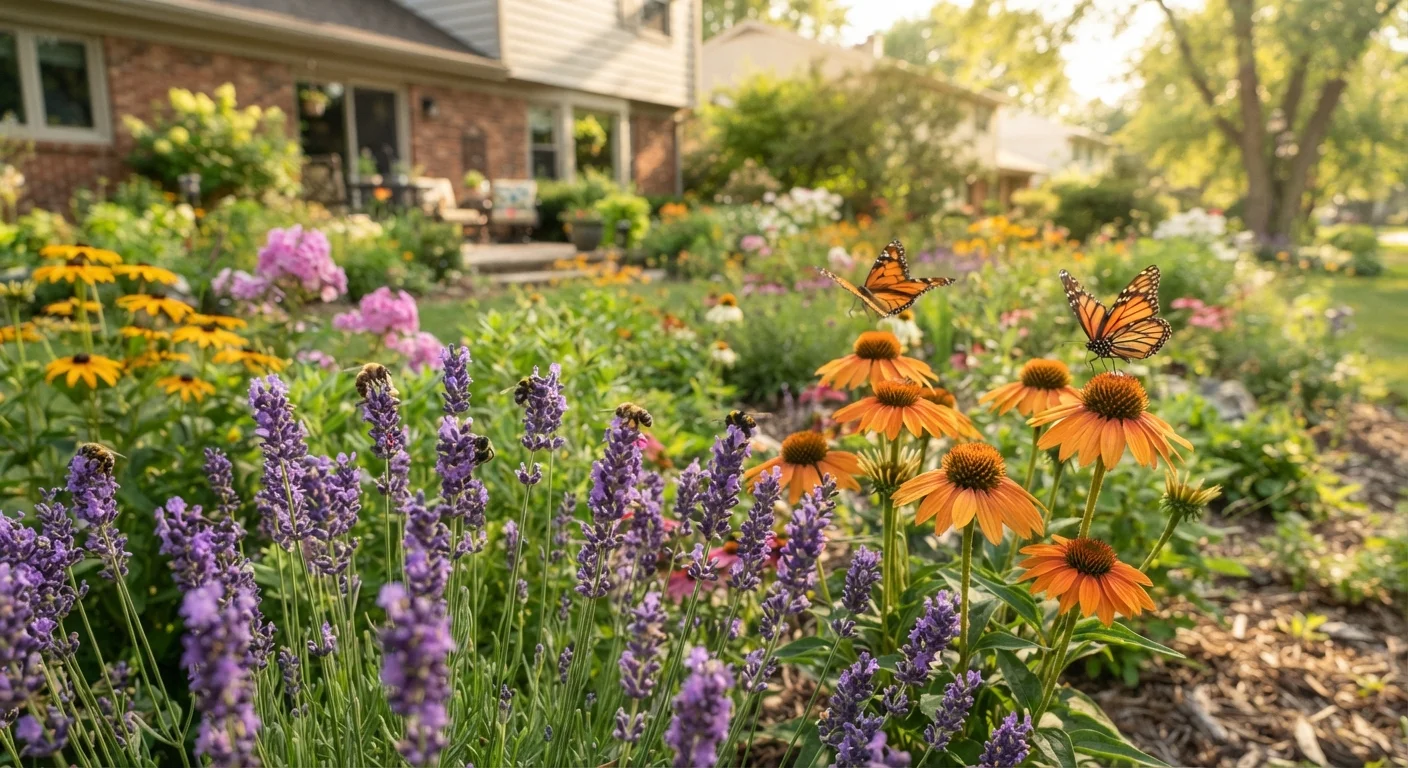
Good starting points for most US regions include coneflowers (Echinacea), black-eyed Susans (Rudbeckia), milkweed (Asclepias), goldenrod (Solidago), and wild bergamot (Monarda fistulosa). Your local cooperative extension office can recommend regionally appropriate natives. The annuals vs. perennials guide can help you decide how to balance native perennials with seasonal fillers.
Native plants offer pollinators the nutritional match that most ornamental exotics simply cannot provide.
Aim for Continuous Bloom from Spring Through Fall
A garden that flowers only in midsummer leaves pollinators without resources during critical early- and late-season periods. Early bloomers like crocuses, willows, and serviceberry provide nectar when queens first emerge in spring. Late bloomers like asters, goldenrod, and sedum support migrating monarchs and colonies building winter reserves.
Map your current garden's bloom times and identify gaps. Even one or two well-chosen additions can close a window that's currently leaving pollinators without a food source in your yard.
Closing seasonal bloom gaps is one of the most effective — and overlooked — ways to support pollinators.
Group Plants in Clusters, Not Scattered Individuals
Pollinators forage more efficiently when flowers of the same species are grouped together. A cluster of seven lavender plants will attract significantly more bee activity than seven individual plants scattered across a border. Research on foraging behavior consistently shows that pollinators favor patches over isolated blooms.
Aim for groupings of at least three to five plants of the same species. This is also a strong design principle — clusters read more clearly in the landscape than a single specimen. The companion planting guide has additional context on how plant arrangement affects garden ecology.
Clusters of the same flowering species are dramatically more effective at attracting pollinators than scattered plantings.
Add Habitat Features Beyond Plants
Many gardeners focus entirely on flowers while overlooking the nesting and shelter needs of pollinators. Approximately 70% of North American native bee species are ground-nesting — they need patches of bare or sparsely vegetated, well-drained soil to excavate nest tunnels. Leaving a small area of undisturbed, sunny soil can support a surprising number of solitary bees.
Above-ground nesters, including mason bees and leafcutter bees, use hollow plant stems and pre-drilled wood. A simple wooden block with holes of varying diameters (3–8 mm) mounted in a sheltered, east-facing spot provides suitable nesting habitat. Avoid sealed or painted blocks, which can trap moisture and harm inhabitants.
Most native bees nest in the ground — a patch of bare, sunny soil is valuable habitat in its own right.
Reduce or Eliminate Pesticide Use
Insecticides — including many labeled as organic or "natural" — can be harmful or lethal to pollinators when applied to or near flowering plants. Systemic pesticides absorbed by plant tissue are especially problematic because they can be present in pollen and nectar long after application.
The most effective approach is to minimize pesticide use overall, apply any necessary treatments in the evening when most bees are inactive, and never spray open flowers. Integrated pest management (IPM) — which emphasizes prevention, monitoring, and targeted intervention — is widely recommended by university extension programs as a safer approach for pollinator-friendly gardens.
Avoiding pesticides on or near flowering plants is one of the single highest-impact actions a home gardener can take.
Provide a Reliable Water Source
Pollinators need water, especially during hot, dry summers. A shallow dish with pebbles or marbles that protrude above the waterline gives bees a safe place to land and drink without drowning. Keep it filled and clean it weekly to prevent mosquito breeding.
Position your water source near flowering plants in a sunny spot — bees are more likely to find it if it's close to where they're already foraging. This pairs naturally with a review of your overall garden watering approach: the garden watering myths article covers common irrigation mistakes that can also affect plant health and, by extension, flower production.
A simple shallow dish with pebbles can serve as a reliable, safe drinking station for bees throughout summer.
Embrace a Slightly Less Tidy Garden
Many routine tidying habits — cutting stems to the ground in fall, removing all leaf litter, raking beds clean — eliminate the overwintering sites that pollinators depend on. Hollow stems left standing through winter shelter cavity-nesting bees. Leaf litter hosts ground-overwintering species like some moth pupae and bumble bee queens.
Delaying major garden cleanup until daytime temperatures consistently stay above 50°F in spring gives overwintering insects time to emerge before their habitat is removed. This doesn't mean letting the garden become neglected — it means being intentional about what you clear and when.
Leaving stems and leaf litter through winter provides overwintering habitat that many pollinator species depend on.
Putting It All Together
Attracting pollinators is less about perfection and more about consistency. A garden that offers food, shelter, and water — with minimal chemical interference — will become a productive habitat over time. Start with one or two changes this season, then build on them. Many homeowners find that once they shift their mindset from a manicured lawn toward a more naturalistic planting approach, the improvements compound quickly.
Start Small and Build Seasonally
You don't need to replant your entire yard to make a meaningful difference. Choose one underperforming area — a strip along a fence or a corner bed — and convert it to a native pollinator planting this season. Observe which species visit, then expand what's working. Incremental changes are easier to manage and often more sustainable than wholesale overhauls.
Healthy soil supports healthy plants, which in turn support pollinators. If you're not already composting, it's one of the most rewarding investments you can make in your garden's long-term productivity. The complete guide to home composting walks through everything from bin setup to using finished compost.