

Key Takeaways
Why Small Gardens Deserve Intentional Design
A compact garden is rarely just a smaller version of a large one — it requires a different way of thinking. Without deliberate planning, a small space can feel cluttered, hemmed-in, or wasted. With the right design principles, that same yard or patio can feel like a proper outdoor room: purposeful, layered, and genuinely inviting.
The good news is that many classic design techniques used by landscape professionals translate directly to home-scale spaces. You don't need to hire a designer or tear everything up to apply them. Understanding a handful of key ideas — sight lines, scale, layering, and color — is enough to reshape how your garden reads to the eye.
If you're also thinking about what to grow in that space, our guide on choosing between annuals and perennials can help you build seasonal interest without overwhelming a small plot.
Core Principles That Open Up a Small Garden
These practices apply whether you're working with a narrow side yard, a small suburban backyard, or a townhouse patio. Each one addresses a specific way the eye judges space.
Use diagonal or curved lines rather than straight paths parallel to boundaries
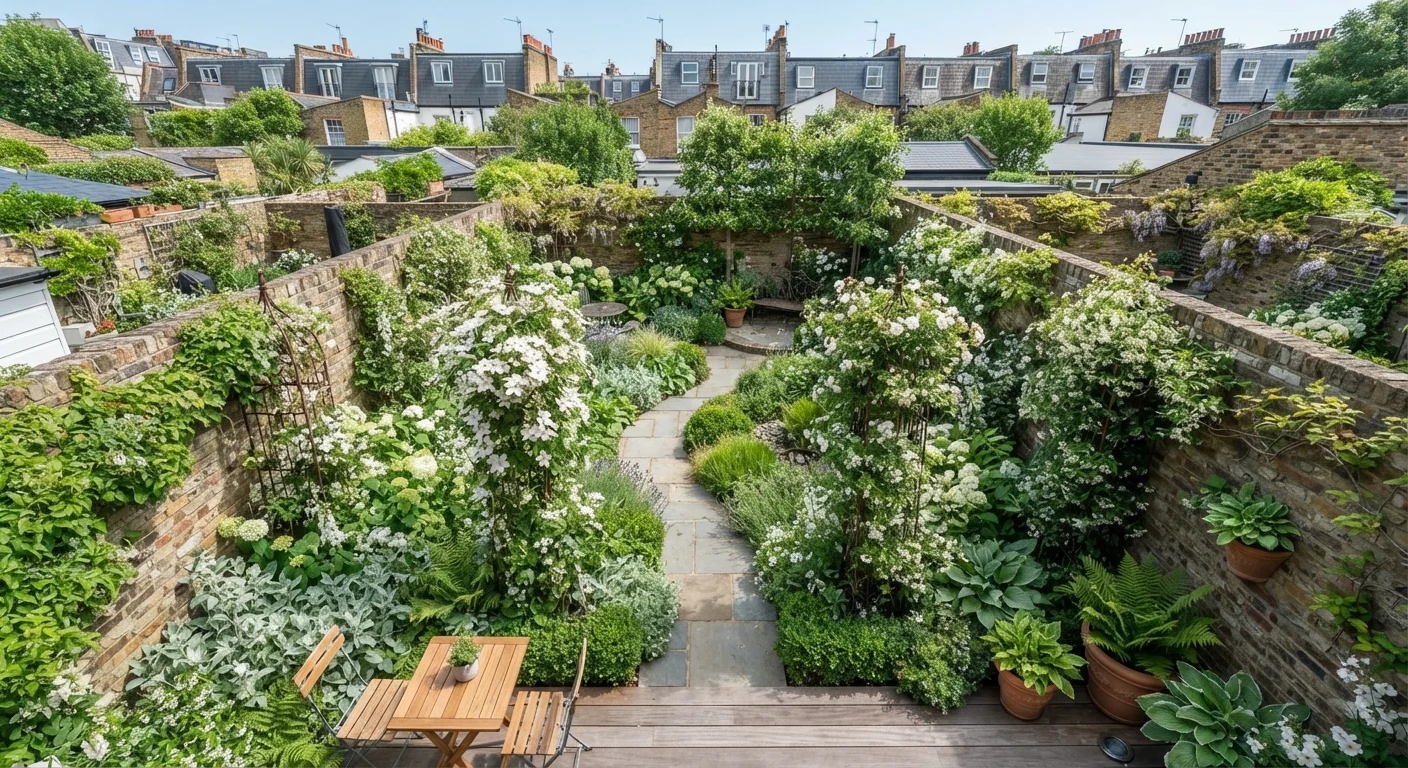
Paths that run parallel to fences lead the eye directly to the boundary, making the space feel like a box. Diagonal or gently curved paths make the eye travel farther before reaching an edge, which creates a sense of distance. This is one of the most effective spatial tricks in small-garden design.
Layer plants in three tiers — ground level, mid-height, and tall
Flat, single-level planting reads as thin and sparse. A layered planting structure creates depth and encourages the eye to move through the composition rather than stopping at the nearest edge. It also maximizes growing area within a small footprint.
Grow vertically on walls, fences, and freestanding structures
Ground space is limited, but vertical space is almost always underused. Trellises, wall planters, and obelisks add height and visual complexity without consuming square footage. Vertical planting also draws the eye upward, which helps a garden feel taller and less enclosed.
Limit your color palette to two or three main tones
Too many colors in a small space create visual noise that makes the garden feel busy and cluttered. A restrained palette — even just green foliage with white and one accent color — produces a calm, coherent effect that reads as spacious rather than squeezed.
Create a clear focal point that draws the eye inward
A garden without a focal point scatters attention and emphasizes its boundaries. A single well-placed element — a container, a small sculpture, a distinctive plant — gives the eye somewhere purposeful to travel, which distracts from the garden's edges.
Keep boundaries soft and partially screened rather than bare and hard
Exposed fencing highlights exactly how small a space is. Softening boundaries with climbing plants, tall ornamental grasses, or layered shrubs blurs the edge, making it harder to read where the garden ends.
Start with Quick Wins Before Replanting Anything
Before moving soil or buying plants, several low-effort changes can immediately shift how your garden feels. These actions cost little and don't require undoing existing work.
Once you've refined the design of your space, you might also consider how planting structure affects productivity — our raised beds vs. in-ground planting guide walks through the tradeoffs for small gardens specifically.
Color, Texture, and Scale: The Details That Do the Heavy Lifting
Plant selection matters as much as layout. In a small space, scale mismatches are especially visible — one oversized shrub can make everything around it feel cramped. Aim for plants whose mature size fits your space without crowding.
Choosing Plants at the Right Scale
Always check a plant's mature spread, not just its height, before placing it in a small garden. A shrub that spreads four feet wide can crowd out an entire border within two to three seasons. Columnar or upright cultivars of common shrubs and trees are often better choices for tight spaces — they provide height and structure without sprawling outward.
Color works the same way in gardens as it does indoors. Cool tones — blues, purples, soft whites — appear to recede, which can make a boundary feel farther away. Warm tones — reds, oranges, bright yellows — advance visually, drawing attention toward them. Placing warm tones near a seating area and cool tones at the far edge of a garden subtly stretches the apparent depth.
Texture also plays a role. Fine-textured foliage (small leaves, delicate stems) reads as being farther away; bold, large-leafed plants feel close. Using finer textures at the garden's edges reinforces the illusion of distance. Pollinators respond well to diverse plant textures too — see our article on attracting pollinators to a suburban garden for planting combinations that serve both design and wildlife.
“The small garden should be thought of not as a shrunken version of a large garden, but as a distinct art form — one where every plant, path, and pause has to earn its place.”
— Beth Chatto, Influential English gardener and author known for ecological planting design
The most enduring small-garden designs avoid trying to do everything at once. A clear intention — whether that's a peaceful retreat, a productive edible garden, or a pollinator habitat — keeps plant choices focused and the overall picture coherent.