

Key Takeaways
Option A
Annual Plants
The high-impact, season-long color specialists.
Best for: Gardeners who want continuous, vivid blooms in a single season and enjoy changing up their garden's look each year.
Option B
Perennial Plants
The reliable, low-effort backbone of a lasting garden.
Best for: Homeowners seeking long-term structure and plants that return each year without replanting.
If you want maximum color impact for a single season
Annual Plants
Annuals bloom continuously from planting until frost, delivering dense, showy color without gaps — ideal for patios, containers, and focal-point beds.
If you want to reduce replanting effort and long-term costs
Perennial Plants
Perennials establish over a couple of seasons and return reliably each year, reducing the time and money spent on annual replanting.
If you're designing a low-maintenance foundation garden
Perennial Plants
Once established, perennials generally require less frequent intervention and form the structural backbone that gives a garden year-round form.
If you're a renter or enjoy redesigning your garden each year
Annual Plants
Annuals commit you to nothing permanent and let you experiment freely with color, texture, and layout from one season to the next.
If you want a well-rounded, visually dynamic garden year-round
Annual Plants
Use perennials as the structural layer and fill gaps with annuals to maintain color during perennial off-seasons — the most practical approach for most homeowners.
What Separates Annuals from Perennials
The distinction comes down to life cycle. Annual plants germinate, grow, flower, set seed, and die — all within a single growing season. They give everything they have in one go, which is why they tend to bloom so prolifically. Common examples include marigolds, petunias, zinnias, and impatiens.
Perennial plants, by contrast, live for more than two years. Their top growth may die back in winter, but their root systems survive and send up new growth the following spring. Coneflowers, black-eyed Susans, hostas, and daylilies are familiar examples found in many American home gardens.
A third category worth knowing: biennials, which complete their life cycle over two years — typically growing foliage in year one and flowering in year two before dying. Foxglove and hollyhock fall into this group. For most planning purposes, biennials behave similarly to short-lived perennials.
Understanding this basic distinction shapes every other decision you'll make about planting, budgeting, and garden maintenance.
Side-by-Side: How Annuals and Perennials Compare
The table below lays out the practical differences across the dimensions homeowners most often weigh when planning a new bed or refreshing an existing one.
| Criterion | Annual Plants | Perennial Plants |
|---|---|---|
| Life span | One growing season | Three or more years |
| Bloom duration | Continuous until frost | Defined seasonal window |
| Upfront cost | Lower per plant | Higher per plant |
| Long-term cost | Recurring each year | Spreads over many seasons |
| Replanting required | Every year | Rarely once established |
| Establishment time | Produces quickly | May take 2–3 seasons to peak |
| Design flexibility | High — easy to change annually | Lower — more permanent layout |
| Typical maintenance | Regular deadheading, watering | Seasonal cutting back, division |
One nuance the table can't capture: a plant labeled a perennial in one region may behave as an annual in another. Tropical perennials like cannas and dahlias, for instance, are winter-hardy in USDA zones 8 and above but must be dug up and stored — or treated as annuals — in colder zones. Always check your hardiness zone before purchasing.
The Real Cost Question
2–3 seasons
Time for perennials to fully establish
Most perennial plants reach their full size and blooming potential within two to three growing seasons after planting.
3–5×
Clump size increase through division
Many perennials can be divided every three to five years, multiplying your plant stock at no additional cost.
100%
Annual replanting requirement
Unlike perennials, every annual plant in your garden must be replanted from seed or transplant each growing season.
Annuals tend to have a lower upfront cost per plant, but those costs recur every single year. Perennials typically cost more at purchase but spread that investment over many seasons. Many perennials also multiply over time — through division or self-seeding — effectively giving you free plants to fill gaps or share with neighbors.
For budget-conscious homeowners, a common strategy is to invest in a core of perennials first, then use less expensive annuals to fill bare spots while the perennials establish and spread. This approach manages upfront spend while building toward a lower-maintenance garden over time.
If you're thinking about how your garden fits into broader outdoor planning, our guide on raised beds vs. in-ground planting explores how your growing setup also affects plant selection and cost.
Mixing Both for a Garden That Works All Season
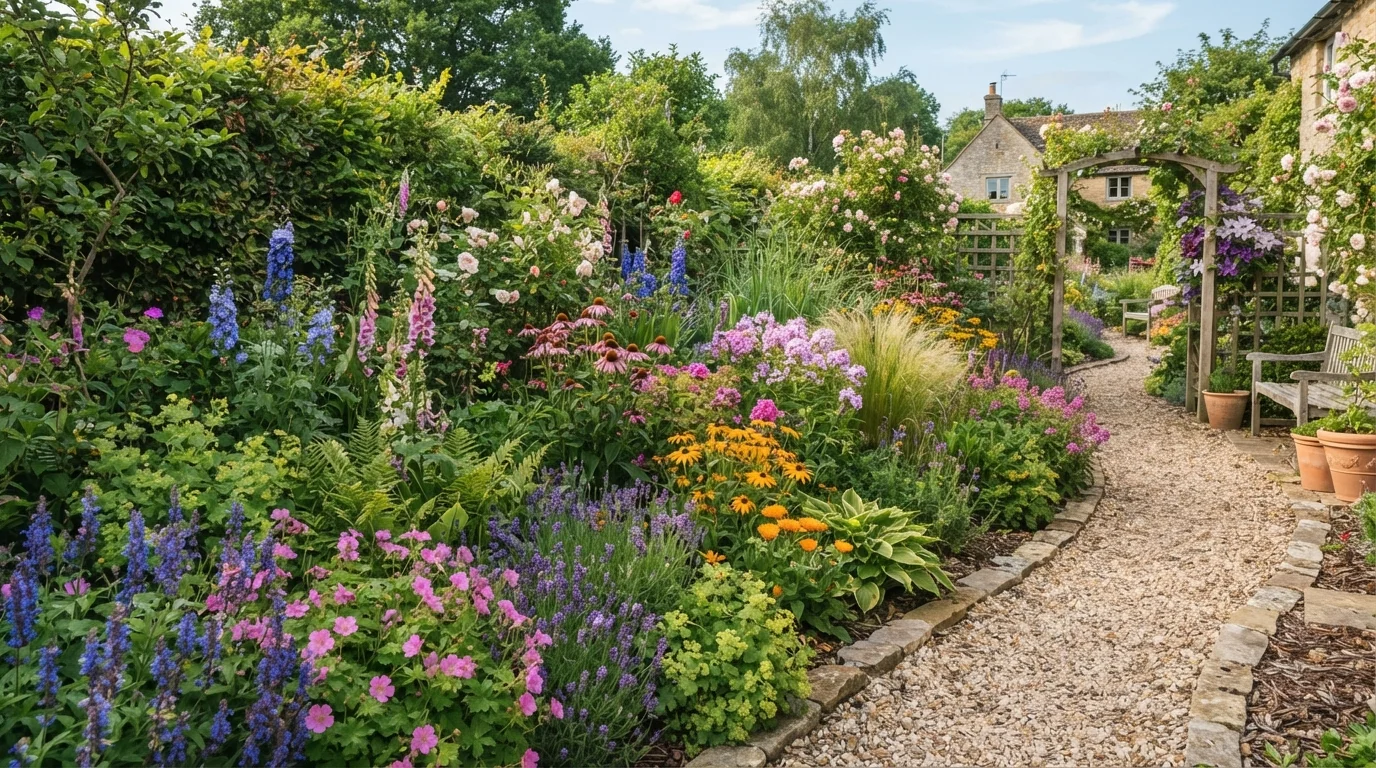
The most resilient and visually satisfying home gardens rarely rely on one type alone. A layered planting approach uses perennials as the structural backbone — providing consistent foliage, form, and reliable blooms at predictable times — while annuals fill in the gaps, extend color into months when perennials aren't at their peak, and allow you to refresh the look without overhauling the entire bed.
Practical ways to combine the two:
- Edge perennial beds with annuals. Borders of marigolds or lobelia add color right at eye level while the perennials behind them do their slower, seasonal work.
- Use annuals to bridge blooming gaps. Most perennials have a defined bloom window. Annuals in containers or open soil patches can cover the weeks when nothing else is flowering.
- Attract more pollinators. A diverse mix of plant types extends your garden's usefulness to bees and butterflies across more of the season. Our article on attracting pollinators to a suburban garden covers plant choices that reliably support local wildlife.
When designing beds, consider sight lines and plant heights carefully — our guide on garden design principles for small spaces applies directly to mixed planting arrangements too.
Maintenance Differences You Should Know
Annuals generally demand consistent attention throughout the season: deadheading spent blooms to keep plants producing, watering more frequently (especially in containers), and complete removal and bed prep in fall. The work is front-loaded into the growing season itself.
Perennials shift the effort to the shoulder seasons. Spring means cutting back dead growth, dividing overcrowded clumps, and mulching. Fall involves cutting stems down (though some gardeners leave seedheads for wildlife) and noting which plants need protection in colder zones. During summer, established perennials typically need less frequent watering than annuals.
Pruning at the right time matters for both types. Cutting perennials back too early — or at the wrong growth stage — can reduce next season's blooms. See our guide on common pruning mistakes for timing and technique guidance that applies to both annuals and perennials.
Watering strategy also differs. Annuals with shallower root systems often benefit from more frequent, targeted moisture delivery. If you're weighing irrigation options, drip irrigation vs. sprinkler systems offers a practical breakdown of which approach suits different planting setups.