

Key Takeaways
Our Verdict
Projects that align with buyer expectations in your market — functional kitchens, updated bathrooms, and strong curb appeal — tend to recover the most cost at resale. Highly customized or luxury additions frequently return well below their investment. Focusing first on condition and functionality, then on broad-appeal upgrades, is a reliable framework for most homeowners.
| Best for | Recommended |
|---|---|
| Homeowners planning to sell within a few years | Minor kitchen refresh, bathroom updates, exterior improvements |
| Homeowners staying long-term and prioritizing enjoyment | Primary suite additions, deck or patio upgrades, landscaping |
| Those with a tight renovation budget | Curb appeal improvements and deferred maintenance correction |
| Homeowners in higher-price markets | Kitchen remodels and energy-efficiency upgrades |
Why Return on Investment Varies So Much
Not all home improvements are equal at resale. Some upgrades make a measurable difference to what buyers will pay; others cost far more than they ever return. The gap often comes down to three factors: whether the project aligns with local buyer expectations, whether it improves function or merely aesthetics, and how the improvement compares to surrounding homes in the neighborhood.
Industry data published annually by remodeling trade organizations consistently shows that no project recovers 100% of its cost on average — but some come far closer than others. Understanding this landscape before committing to a project can prevent costly surprises. For a deeper look at what drives budgets off course, see why renovation costs almost always run over.
~70%
Average cost recovered on garage door replacement
Remodeling Magazine's annual Cost vs. Value report consistently ranks garage door replacement among the top-returning projects nationally.
~60–65%
Average cost recovered on minor kitchen remodels
Mid-range kitchen refreshes — not full rebuilds — tend to outperform major overhauls in cost-recovery benchmarks.
Under 50%
Typical cost recovery for in-ground pools
Pool installations frequently return less than half their cost at resale, according to multiple real estate and remodeling industry analyses.
Projects That Tend to Return the Most Value
Certain categories of improvement reliably show up near the top of cost-recovery analyses year after year. These aren't dramatic transformations — they're targeted upgrades that solve real problems for buyers.
Minor Kitchen Remodels
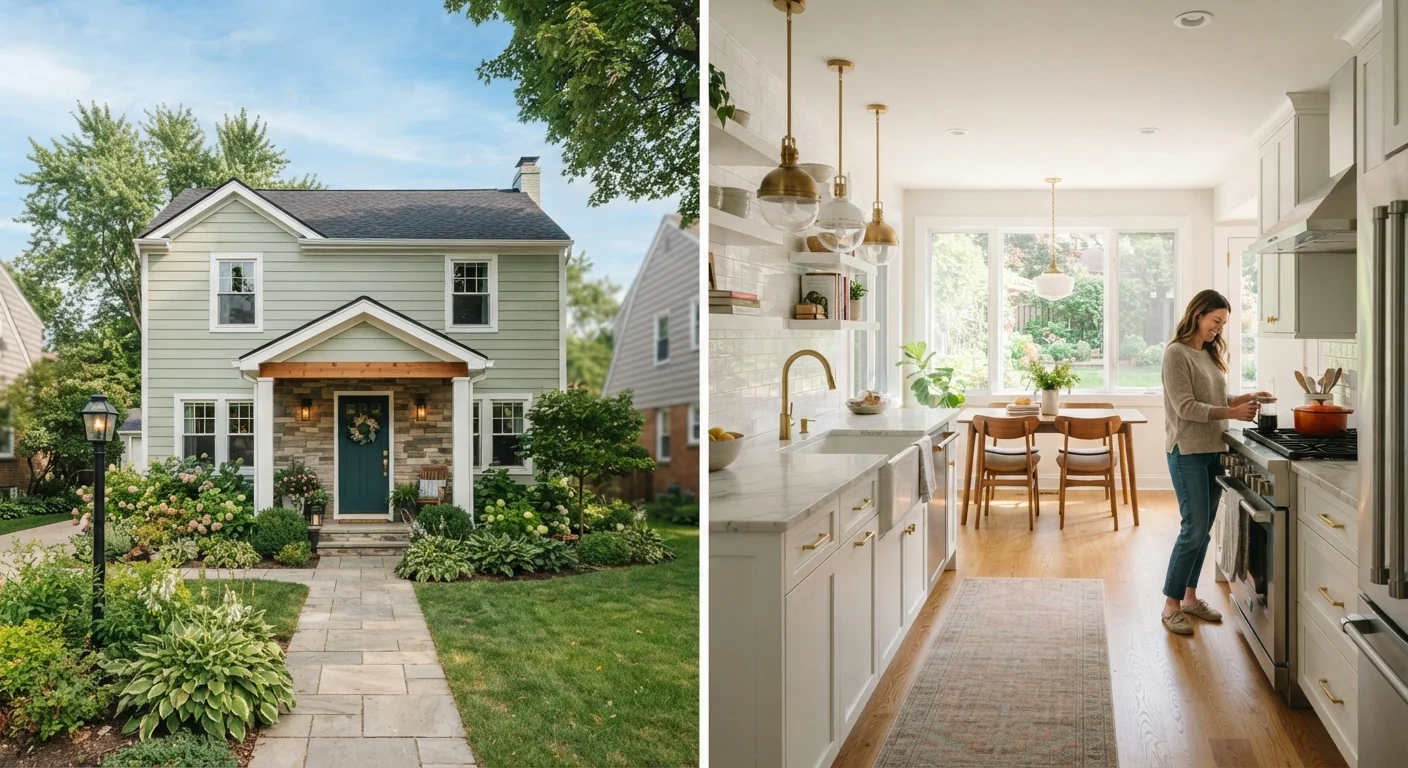
A full gut-and-rebuild kitchen often costs far more than it returns, but a focused refresh — new cabinet fronts, updated hardware, modern countertops, and improved lighting — can recover a significant portion of its cost while making the space substantially more appealing. Buyers notice a functional, clean kitchen immediately.
Bathroom Updates
Replacing dated fixtures, re-grouting tile, and improving ventilation in bathrooms tend to deliver solid returns. A mid-range bathroom remodel consistently places among the better-performing projects in national remodeling surveys.
Curb Appeal and Exterior Work
First impressions drive offers. Garage door replacement, exterior paint or siding, and modest landscaping improvements are among the most cost-efficient upgrades available. Buyers form opinions before they step inside.
Focus on Condition Before Cosmetics
Buyers and their inspectors will scrutinize a home's systems — roof, HVAC, plumbing, and electrical — before they weigh in on finishes. Addressing deferred maintenance before investing in cosmetic upgrades typically produces better financial outcomes and fewer negotiation headaches at closing. Think of it as removing obstacles before adding attractions.
Energy Efficiency Improvements
Insulation upgrades, HVAC servicing, and window replacements that improve energy performance appeal to cost-conscious buyers and can differentiate a home in competitive markets.
Projects That Rarely Return Full Cost
Some upgrades are genuinely enjoyable to live with but make little financial sense if resale return is your primary goal.
| Project Type | Typical Cost Recovery | Broad Buyer Appeal | Notes | |
|---|---|---|---|---|
| Minor kitchen remodel | Moderate to high | Strong | Functional upgrades outperform full rebuilds | |
| Bathroom update | Moderate to high | Strong | Fixture and tile updates perform well | |
| Garage door replacement | High | Very strong | One of the best curb appeal investments | |
| In-ground pool | Low | Variable | High maintenance; polarizes buyers | |
| Luxury finishes in mid-range home | Low | Limited | Market caps value regardless of spend | |
| Sunroom addition | Low to moderate | Narrow | Appeals to a limited buyer profile |
In-Ground Swimming Pools
Pools are expensive to install, expensive to maintain, and polarizing among buyers — many see them as a liability rather than an asset, particularly in regions with short swimming seasons. They rarely add equivalent value to a sale price.
Sunrooms and Home Office Additions
Highly personalized additions often reflect the original owner's lifestyle rather than broad buyer demand. A sunroom or dedicated office suite may cost tens of thousands but appeal only to a narrow subset of buyers, limiting how much the market will recognize it.
High-End Luxury Finishes in Mid-Range Homes
Installing premium materials in a neighborhood where comparable homes don't support those price points is a common mistake. The market will cap your home's value relative to its surroundings regardless of what was spent inside. This is sometimes called "over-improving for the neighborhood."
Whole-Home Repaints in Unusual Colors
Bold interior paint schemes are inexpensive but can actively deter buyers who don't share the taste. Neutral palettes consistently perform better in resale contexts.
The Role of Market and Timing
Return-on-investment figures are averages, and averages can mislead. A kitchen remodel in a high-demand urban market may recover far more of its cost than the same project in a rural area with lower home values and slower turnover. Before committing to a major project, it's worth researching what comparable homes in your neighborhood have sold for and what features they include.
Timing also matters. Making significant improvements shortly before listing is generally more effective than completing them years in advance, since wear and dated trends can erode initial impact. Conversely, deferred maintenance — a leaky roof, failing HVAC, or foundation concerns — should almost always be addressed before cosmetic upgrades, because buyers and home inspectors will find these issues and either negotiate against them or walk away.
If you're preparing for a larger project, it's worth reviewing what to decide before renovation work begins to avoid costly missteps early in the process. And for help deciding which work to hand off to a professional, our guide on DIY versus hiring a tradesperson offers a practical framework.
This article is intended for general informational purposes only. Home improvement return estimates vary widely by region, market conditions, and individual property characteristics. Consult a licensed real estate professional before making decisions based on resale value projections.