

Key Takeaways
Our Verdict
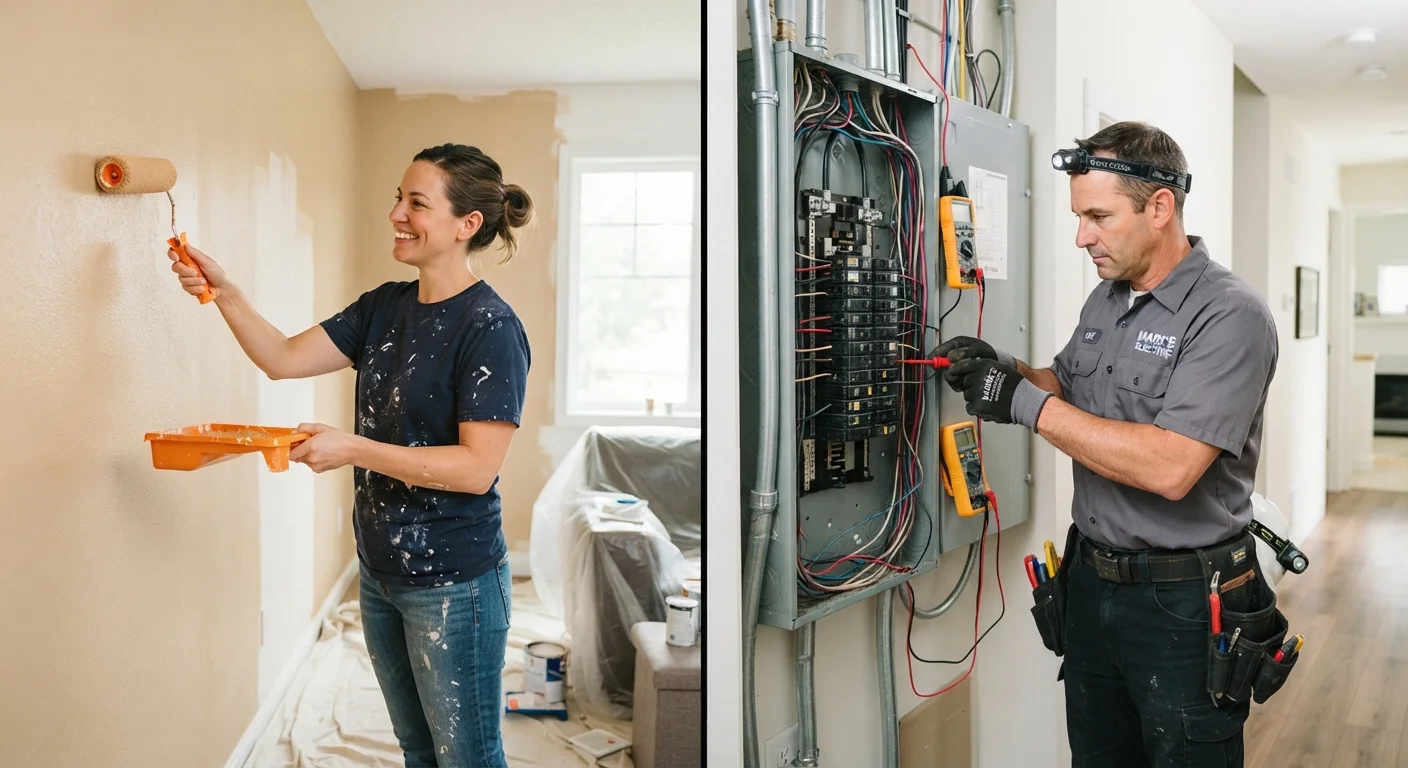
DIY and hiring a tradesperson each have a clear role in home maintenance. Surface-level repairs and straightforward upkeep are well-suited to confident homeowners. Anything involving safety systems, permits, or significant structural risk belongs with a licensed professional. The smartest approach is knowing the difference before you pick up a tool.
| Best for | Recommended |
|---|---|
| Confident homeowners with basic tool skills | DIY |
| Electrical, gas, plumbing-into-mains, or structural repairs | Hire a tradesperson |
| Projects requiring permits or code compliance | Hire a tradesperson |
| Cosmetic updates and routine seasonal maintenance | DIY |
Why the DIY vs. Pro Decision Matters More Than You Think
Every homeowner eventually faces the same question standing in front of a leaky faucet, a cracked drywall panel, or a flickering light switch: Can I handle this myself? The honest answer depends on far more than YouTube confidence. Getting this decision wrong in either direction costs you — either money left on the table by hiring out work you could safely do, or expensive damage caused by tackling something beyond your skill set.
This framework helps you read that line clearly. It's not about being handy or not — it's about matching the task to the right resource every time. For a broader picture of what regular upkeep looks like, see our seasonal home maintenance calendar for month-by-month guidance.
Tasks That Are Genuinely Safe to DIY
A wide range of home maintenance tasks fall comfortably within reach of a careful, patient homeowner with basic tools. These jobs share common traits: low stakes if something goes wrong, no permit requirements, no impact on safety systems, and clear instructional resources.
- Painting interior walls and trim — prep work matters most; the technique is learnable
- Replacing interior door hardware — knobs, hinges, and deadbolts on interior doors involve no structural risk
- Caulking around tubs, sinks, and windows — a maintenance task that prevents water damage when done consistently
- Patching small drywall holes — cosmetic repairs under six inches are manageable with the right compound
- Replacing faucet aerators or showerheads — no cutting into supply lines required
- Installing or replacing light fixtures — when the circuit breaker is off and you're working with existing wiring only (verify local code first)
- Seasonal gutter cleaning and minor landscaping — routine upkeep that doesn't involve rooftop access at height
Build Your Skills on Low-Stakes Repairs First
If you're newer to DIY, start with tasks where a mistake is inexpensive and visible — painting, caulking, or replacing hardware. Each completed project builds judgment about your actual skill level, which is the most valuable input in future repair decisions. Overconfidence built on no experience is the most common cause of costly DIY errors.
If you're newer to homeownership, our guide on home maintenance for first-time owners covers the core systems worth understanding before you start any repair.
When You Should Always Call a Licensed Professional
Some repairs carry risks that extend well beyond the task itself — to your family's safety, your home's structure, and your legal standing as a property owner. These are not judgment calls.
Never DIY These Without a License
Electrical panel upgrades, gas line work, and structural modifications are regulated for good reason. Attempting these without proper licensing not only risks serious injury — it can void your homeowner's insurance policy and create legal liability if the unpermitted work is later discovered during a home inspection or sale. When in doubt, a professional consultation fee is money well spent.
- Electrical panel work — upgrading, adding circuits, or any work inside the breaker panel requires a licensed electrician in virtually every U.S. jurisdiction
- Gas line repairs or appliance connections — gas leaks cause fires and carbon monoxide poisoning; this is licensed-plumber or gas-fitter territory
- Structural modifications — removing or altering load-bearing walls without an engineer's assessment can compromise your home's integrity
- Main plumbing supply and drain work — cutting into supply lines or rerouting drain stacks involves both skill and local permit requirements
- Roofing beyond minor patching — large-scale roofing involves fall risk and code-regulated installation that affects insurance validity
- HVAC installation and major repairs — refrigerant handling is federally regulated and requires EPA certification
Beyond safety, unpermitted work on regulated systems can affect your homeowner's insurance coverage and create disclosure obligations when you sell. Our article on what a building permit actually covers explains how the permit system protects you.
How to Weigh the Gray-Area Repairs
Many repairs sit between clear DIY and clear professional territory. For these, run through four honest questions before deciding:
- What's the cost of getting it wrong? A poorly hung shelf is inconvenient. A misrouted drain causes mold behind walls for months before you notice.
- Do I have the specific tools — not just generic ones? Some tasks require specialized equipment that isn't cost-effective to buy for a single job.
- Is a permit required? If yes, a licensed tradesperson pulling the permit protects you legally and ensures an inspection.
- How much of my time does this actually cost? Factor in research, material runs, and likely do-overs. Professional labor sometimes costs less than your realistic time investment.
| Criteria | DIY | Hire a Tradesperson | |
|---|---|---|---|
| Upfront cost | Lower (materials only) | Higher (labor + materials) | |
| Risk if done incorrectly | Low to moderate (cosmetic tasks) | Mitigated by expertise and insurance | |
| Permit & code compliance | Homeowner's responsibility | Typically managed by contractor | |
| Time investment | High (research + execution) | Low (you hand off the work) | |
| Suitable task types | Cosmetic, minor maintenance | Structural, electrical, gas, plumbing | |
| Impact on home insurance | Potential gaps if work is substandard | Generally covered when licensed |
For context on which improvements tend to justify professional investment at resale, see home improvement projects that tend to return value.
Getting the Most Out of Either Choice
Whether you DIY or hire out, preparation determines outcomes. For DIY projects: source materials before you start, watch multiple instructional videos specific to your exact task (not just the category), and build in time for mistakes. Never begin a repair you can't safely pause mid-project.
When hiring a tradesperson: get at least two written estimates, verify licensing and insurance through your state's contractor licensing board, and ask specifically whether a permit is required for the scope of work. A reputable professional will tell you upfront. If you're planning larger renovations, our guide on planning a home renovation covers the preparation steps that apply before any major work begins.
Busy households benefit most from a consistent maintenance rhythm that prevents small issues from becoming expensive emergencies. See sustainable maintenance habits for busy homeowners for approaches that fit into a realistic schedule.