

Key Takeaways
Why the Interview Matters as Much as the Price
A detailed quote tells you what a contractor plans to charge. The questions you ask before signing reveal whether that plan is realistic, professional, and aligned with how you want your home treated. Many homeowners skip the interview stage or limit it to cost comparisons — and that's where costly misunderstandings begin.
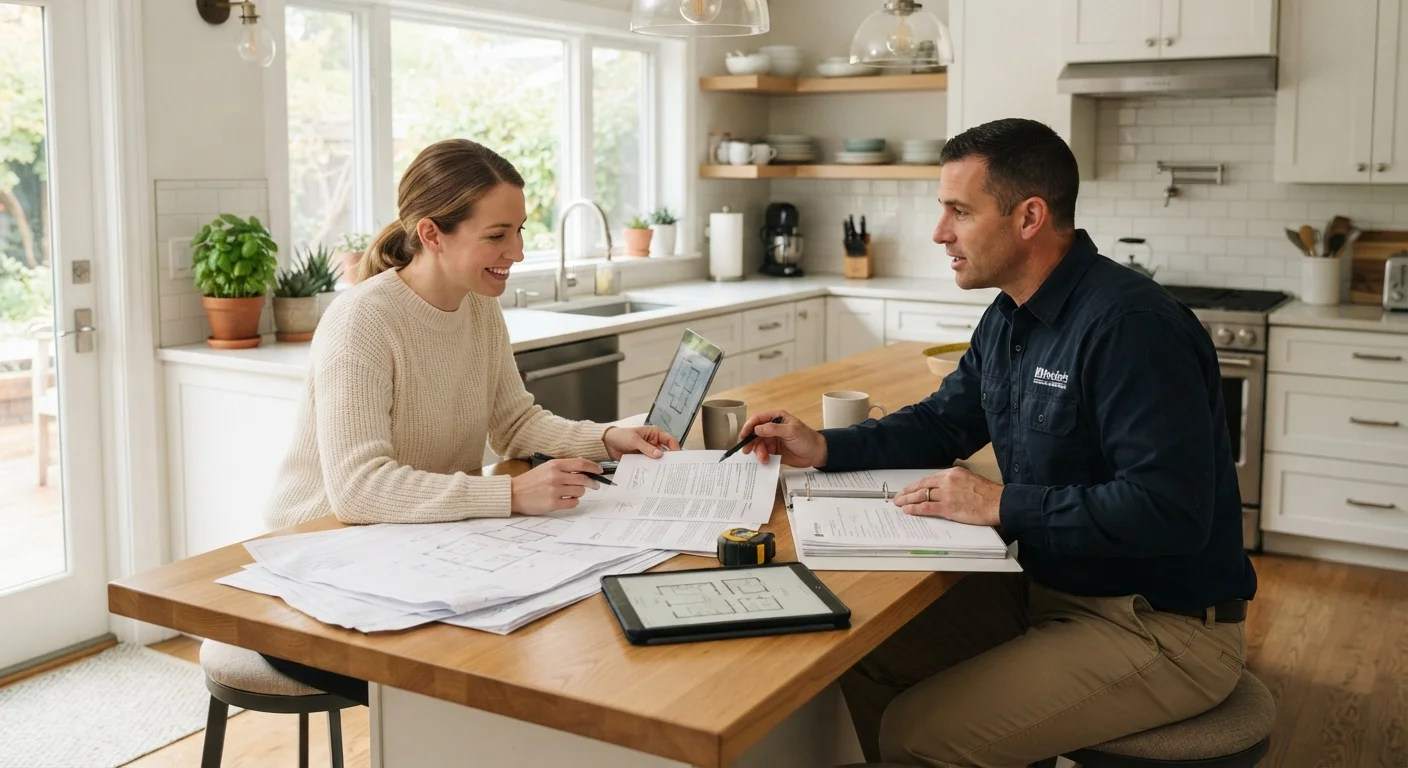
Before you've committed to anyone, treat the contractor meeting as a two-way evaluation. You're assessing their knowledge and character; they're scoping your project. Coming prepared with focused questions shifts that dynamic in your favor. If you're still weighing whether to hire out at all, our guide to DIY vs. hiring a tradesperson can help you decide first.
“The quality of questions a homeowner asks during the hiring process is one of the strongest predictors of a successful renovation outcome. Contractors respond differently when they know they're being evaluated carefully.”
— National Association of the Remodeling Industry, Trade association representing remodeling professionals across the United States
Credentials, Licensing, and Insurance: Ask Directly
Never assume a contractor is licensed and insured — verify it. In most U.S. states, general contractors and specialty tradespeople (electricians, plumbers, HVAC technicians) are required to hold active state or local licenses. Ask for the license number and look it up through your state's contractor licensing board.
Insurance is equally critical. At minimum, request proof of general liability insurance and workers' compensation coverage. If a worker is injured on your property and the contractor lacks coverage, you could face serious financial exposure. A reputable contractor will provide certificates of insurance without hesitation.
Permit Responsibility Varies by Jurisdiction
In most localities, the property owner is ultimately responsible for ensuring that required permits are obtained — even if the contractor agrees to pull them. If a contractor takes payment and fails to apply for permits, the liability often falls on the homeowner. Always confirm in writing who will obtain which permits, and verify with your local building department that permits have actually been issued before work begins.
Also ask: Who is responsible for pulling permits? For most structural, electrical, or plumbing work, permits are legally required. A contractor who suggests skipping permits to save money is signaling a willingness to cut corners — and unpermitted work can complicate home sales and insurance claims later. Our article on planning a home renovation covers the permit process in more depth.
The Practices That Separate Good Contractors from Great Ones
Once credentials check out, dig into how they actually work. The questions below are designed to surface professional habits — not just credentials.
Ask for references from projects completed in the past 12 months that are similar in scope to yours.
Older or unrelated references don't reflect a contractor's current team, suppliers, or workmanship standards. Comparable recent projects give you a meaningful benchmark.
Clarify exactly who will be on-site doing the work each day.
Many contractors subcontract portions of a job, which isn't inherently a problem — but you deserve to know who is entering your home and who is accountable for their work quality.
Request a written breakdown of materials, not just a lump-sum figure.
A detailed materials list lets you compare quotes on equal footing and protects you if a contractor later claims a substitution was necessary. Vague line items are a common source of disputes.
Ask how changes to the original scope will be handled and documented.
Scope changes — often called 'variations' — are among the top causes of budget overruns and contractor disputes. Knowing the process in advance prevents surprises.
Discuss the payment schedule before any paperwork is signed.
Front-loaded payment structures (asking for more than 30–40% upfront) can be a warning sign. Legitimate contractors typically tie payments to project milestones.
Quick Actions You Can Take Before the First Meeting
Preparation on your end makes the interview more productive and signals to contractors that you're an organized, serious client — which often translates to more accurate quotes and better service.
If the project involves financing, it's worth reviewing your borrowing position before you receive quotes. Our pre-application loan checklist walks through what lenders will examine. Once you've selected a contractor, take time to understand what you're signing — our guide to common builder contract terms explains the language you're most likely to encounter.
35%
Homeowners who experienced contractor disputes
According to survey data from HomeAdvisor, roughly one in three homeowners reported a significant dispute with a contractor, often tied to unclear expectations or scope changes.
3+
Quotes recommended before hiring
Consumer protection organizations and remodeling industry guides consistently recommend collecting at least three written quotes to identify outliers in pricing or scope.