

Key Takeaways
Option A
Secured Loans
The collateral-backed borrowing option.
Best for: Borrowers who own a significant asset and want access to larger loan amounts or lower interest rates.
Option B
Unsecured Loans
The credit-based borrowing option.
Best for: Borrowers who want to access funds without pledging an asset and have solid creditworthiness.
If you need a large loan amount and own a home or vehicle
Secured Loans
Pledging collateral allows lenders to extend more credit at lower rates, making large-dollar borrowing more manageable.
If you want to borrow without risking a specific asset
Unsecured Loans
No collateral is on the line, so your home or car isn't at direct risk — though your credit and finances still are.
If your credit score is limited or recovering
Secured Loans
Collateral can offset a weaker credit profile, sometimes making approval more accessible than with unsecured options.
If you need funds quickly for a one-time expense
Unsecured Loans
Personal loans and similar unsecured products often have simpler applications and faster funding timelines.
The Core Difference: Collateral
When a lender hands over money, they're taking on risk. The way they manage that risk is largely what separates a secured loan from an unsecured loan.
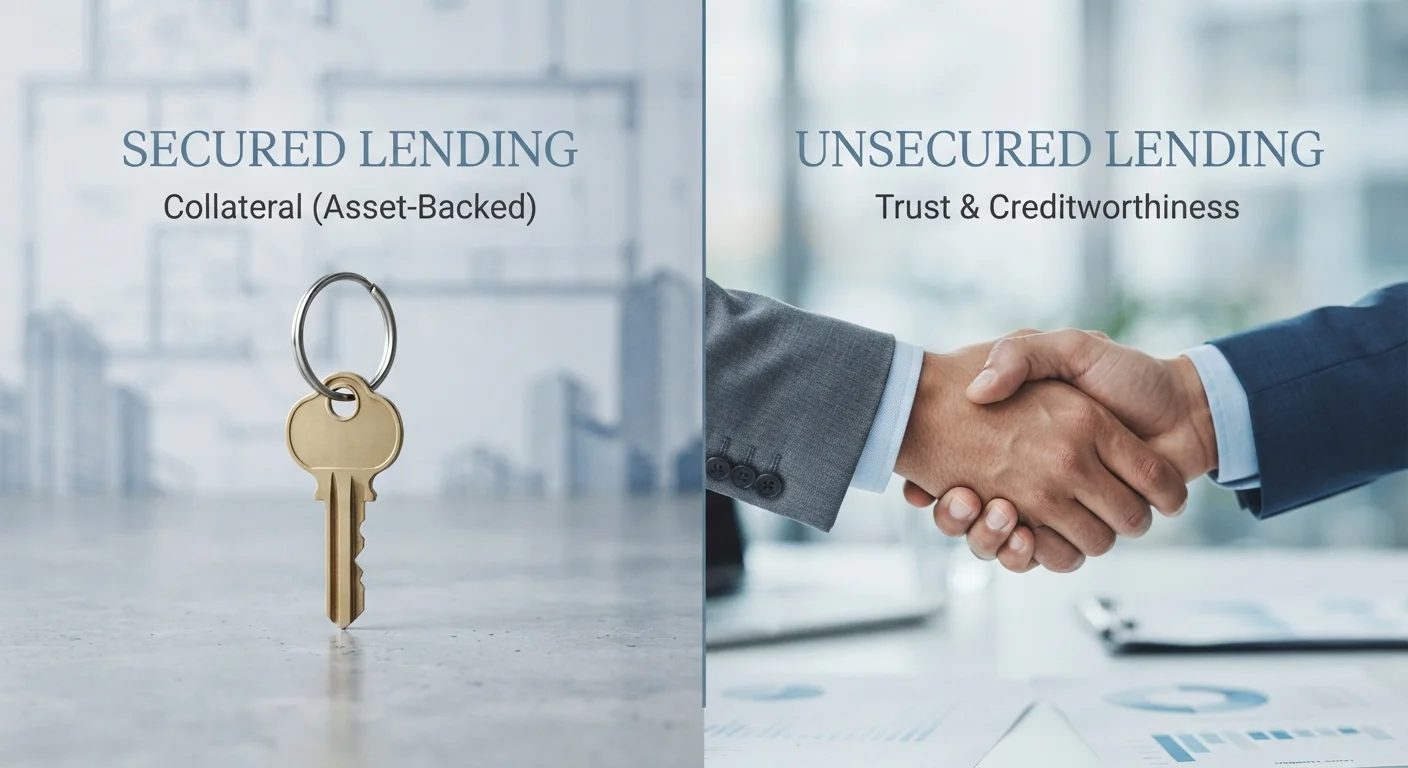
A secured loan requires you to pledge an asset — called collateral — to back the debt. Common examples include mortgages (secured by your home) and auto loans (secured by the vehicle). If you stop making payments, the lender has a legal right to seize that asset to recover what's owed.
An unsecured loan carries no such pledge. The lender relies entirely on your promise to repay, supported by your credit history, income, and overall financial profile. Personal loans and credit cards are typical examples. Because the lender has no asset to fall back on, they take on more risk — and borrowers generally pay for that risk through higher interest rates.
Understanding this distinction is foundational before taking on any debt. For broader context on how borrowing fits into your financial life, see our complete guide to credit and borrowing.
| Criterion | Secured Loans | Unsecured Loans |
|---|---|---|
| Collateral required | Yes — asset pledged | No — credit-based only |
| Typical interest rates | Generally lower | Generally higher |
| Borrowing limits | Often higher | Typically lower |
| Risk on default | Asset repossession or foreclosure | Credit damage, collections, legal action |
| Common examples | Mortgage, auto loan, home equity loan | Personal loan, credit card, student loan |
| Credit score impact on approval | Collateral reduces reliance on score | Score is primary qualifying factor |
| Application complexity | Often more involved (appraisal, title check) | Typically simpler and faster |
How Each Loan Type Affects You
The collateral requirement isn't just a technical detail — it shapes your costs, your risks, and your options in meaningful ways.
~6–7%
Average rate on a 30-year fixed mortgage
Secured by real estate collateral, mortgage rates are typically far below unsecured personal loan rates, which commonly range from 10–25% APR depending on creditworthiness.
35%
Weight of payment history in FICO score
According to FICO, payment history is the single largest factor in your credit score — making consistent repayment critical for both loan types.
$10,000–$50,000
Typical unsecured personal loan range
Most unsecured personal loan limits are constrained by credit profile, compared to secured products like HELOCs that can extend into six figures based on home equity.
Interest Rates and Loan Terms
Because secured loans reduce lender risk, they tend to come with lower interest rates and longer repayment terms. A home equity loan, for example, typically carries a significantly lower rate than an unsecured personal loan for the same amount. Unsecured loans price in the lender's higher risk, which usually means a higher annual percentage rate (APR).
Borrowing Limits
Secured loans generally allow you to borrow more, since the loan is backed by a tangible asset with measurable value. Unsecured loans are typically capped at lower amounts — your creditworthiness determines how much a lender will extend without collateral.
What's at Stake if You Default
This is the most important practical difference. Miss enough payments on a secured loan, and you risk foreclosure on your home or repossession of your vehicle. With an unsecured loan, there's no specific asset that can be seized immediately — but the consequences are still serious: damaged credit, collection activity, and potential legal action. Neither outcome is benign. Before borrowing, it's worth reviewing the principles outlined in our guide to responsible borrowing.
Choosing Between Secured and Unsecured Borrowing
Neither loan structure is inherently better. The right fit depends on what you own, what you need, and what risks you're comfortable taking.
Comparing Borrowing Costs Carefully
When comparing a secured and unsecured loan side by side, look beyond the interest rate. Factor in fees (origination, closing costs, appraisal), the total interest paid over the loan's life, and any prepayment penalties. A lower rate doesn't always mean a lower total cost, especially on a much longer loan term. For help evaluating specific borrowing tools, see our personal loans vs. credit cards comparison.
If you're weighing a larger financial need — a home renovation, debt consolidation, or a major purchase — consider whether you have an asset you're willing to put at risk to access a lower rate. If preserving that asset's security matters more to you, an unsecured loan keeps collateral out of the equation, even if it costs more in interest.
Your credit score becomes especially influential with unsecured products. A stronger score can mean a meaningfully lower rate, while a weaker score may push rates high enough that a secured option becomes worth exploring. It's also worth understanding how applying for any loan affects your credit — our article on hard vs. soft credit enquiries explains what happens when lenders check your file.
Finally, not all debt carries equal long-term consequence. Our piece on good debt vs. bad debt can help you evaluate whether any particular loan — secured or not — moves you forward or holds you back financially.
This article is for general informational purposes only and does not constitute personalized financial or legal advice. Consult a qualified financial professional before making borrowing decisions based on your individual circumstances.