

Key Takeaways
Start here
What Is Resource Guarding?
Next
Recognising the Early Warning Signs
Understand why
Why Dogs Guard Resources
Avoid mistakes
What Not to Do When Your Dog Guards
Take action
Safe Management Strategies at Home
Get help
When to Involve a Professional
What Is Resource Guarding?
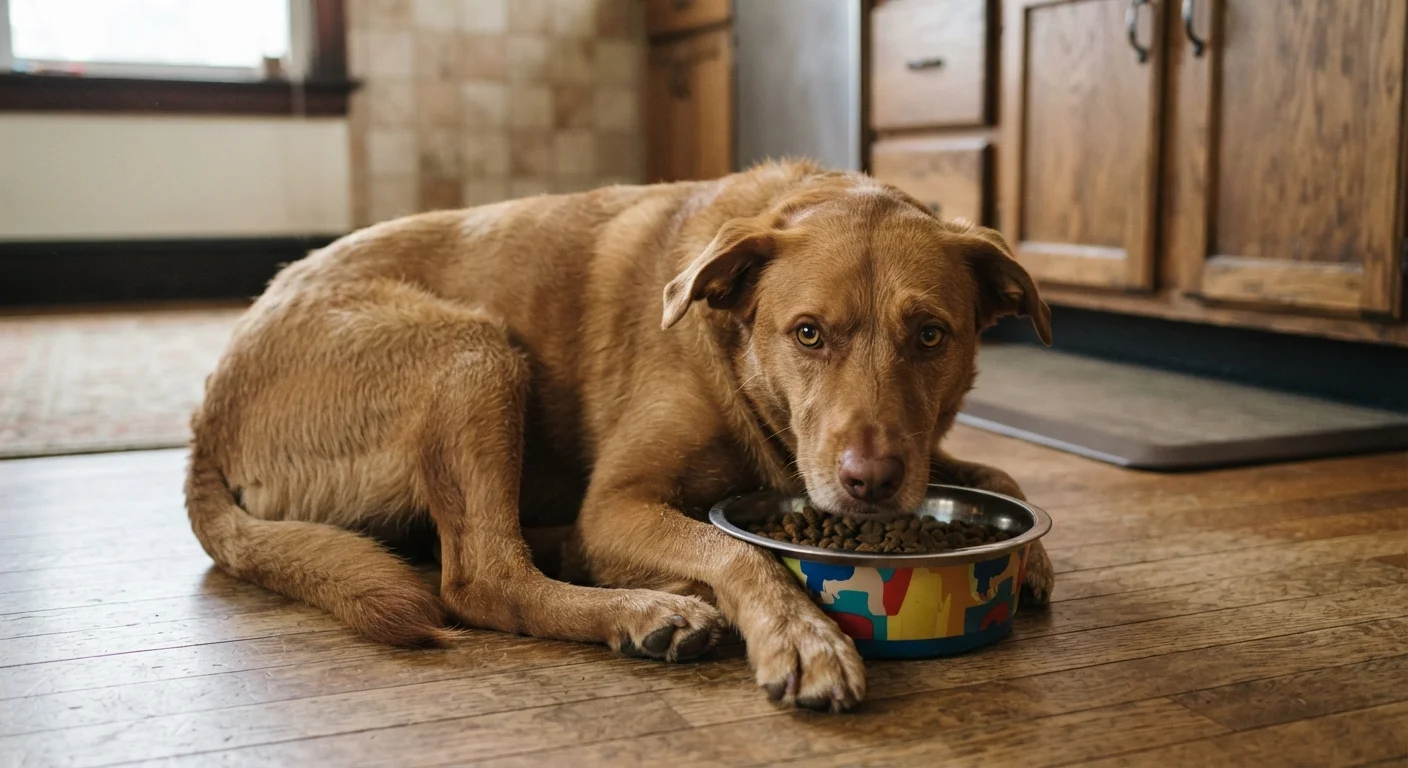
Resource guarding describes any behavior a dog uses to control access to something it values — food, toys, a resting spot, a person, or even space. At its core, it is a normal, evolutionarily practical behavior: animals that successfully held onto food and shelter were more likely to survive. The problem for pet owners is that guarding can range from a tolerable stiffening posture to a bite with little apparent warning.
Understanding this behavior begins with recognizing that your dog is not being spiteful or "bad." It is communicating, in the only language available to it, that it feels threatened by perceived competition for something it values. That framing matters — because how you respond will either reduce or entrench the behavior over time.
Resource guarding
Behavior a dog uses — such as freezing, growling, or snapping — to prevent others from approaching or taking something it values, like food or toys.
Threshold
The point at which a dog's stress becomes intense enough to trigger a visible reaction. Keeping a dog "under threshold" means keeping triggers at a distance or intensity the dog can handle without reacting.
Trade-up
A technique where you offer a dog something more appealing in exchange for a guarded item, helping it associate your approach with something positive rather than a loss.
Whale eye
When the whites of a dog's eyes become visible — typically because the dog is watching something intently without turning its head. It is an early stress signal in dogs.
Behavior modification
A structured process, usually guided by a professional, that gradually changes a dog's emotional response and behavior toward a specific trigger over multiple sessions.
Veterinary behaviorist
A veterinarian with advanced specialist training in animal behavior (board-certified in the U.S. by the American College of Veterinary Behaviorists). They can address both behavioral and medical contributors to a problem.
Recognising the Early Warning Signs
Most owners notice resource guarding only when a dog growls. But growling is actually mid-escalation. Dogs typically signal discomfort well before that point. Learning the full spectrum of signals lets you intervene earlier and more safely.
Early, subtle signs include:
- Freezing or stiffening — the dog becomes suddenly still when approached near a valued item.
- Hard eye — a fixed, unblinking stare directed at the approaching person or animal.
- Hovering — moving the body over or around an item, or turning away to shield it.
- Speeding up eating — gulping food faster as someone approaches the bowl.
- Whale eye — the whites of the eye become visible as the dog tracks movement without turning its head.
As tension rises, you may see lip curling, a low rumbling growl, and snapping. Biting is the endpoint of an escalation that almost always had earlier signals most people missed. For a broader look at how dogs communicate distress through body posture, see our room-by-room body language checklist.
Catch Guarding Before It Escalates
Keep a brief mental note of the contexts where your dog stiffens or hovers — near the food bowl, on the sofa, around a favorite toy. Identifying consistent patterns helps you modify the environment proactively, rather than reacting after a growl has already occurred. The earlier you act on subtle signals, the more options you have.
Why Dogs Guard Resources
Several factors contribute to resource guarding, and it is rarely just one cause:
- History of scarcity — dogs from shelters, neglected backgrounds, or large litters may have learned early that competition for resources is real.
- Genetics and temperament — some individuals are simply more reactive to perceived competition; this varies more between individual dogs than between breeds.
- Inadvertent reinforcement — when owners repeatedly approach a dog's bowl to add food as a "test," the dog may learn that approach predicts loss rather than gain.
- Anxiety — dogs with broader anxiety profiles often guard more intensely. Resource guarding and anxiety sometimes overlap; our article on distinguishing dog anxiety from boredom can help you assess whether anxiety is a wider pattern.
Guarding is not about dominance or challenging your authority — a framework that behavioral science no longer supports. It is better understood as a fear- or competition-driven response that a dog has learned is effective.
What Not to Do When Your Dog Guards
Well-meaning responses often make resource guarding worse. Avoid these common mistakes:
- Punishing the growl. A growl is information — it tells you the dog is uncomfortable. Suppressing it through punishment does not remove the discomfort; it removes the warning, leaving the bite with less notice.
- Alpha rolls or physical dominance. Forcing a dog onto its back or using physical intimidation near a guarded item significantly increases bite risk and erodes trust.
- Repeatedly testing the dog. Approaching your dog's bowl over and over to see if it growls rehearses the behavior and heightens arousal around that trigger.
- Taking the item by force. Direct removal is one of the highest-risk interactions in guarding situations. Unless there is an immediate safety hazard, use a trade-up or distraction strategy instead.
Never Punish a Growling Dog
It may feel counterintuitive, but punishing a dog for growling is one of the most dangerous mistakes in guarding situations. The growl is the dog's last clear warning before escalation. Suppressing it through punishment teaches the dog to skip the warning — making a bite far more likely to occur without any apparent signal. Address the cause of the growl, not the growl itself.
Safe Management Strategies at Home
Management does not modify behavior — it reduces the opportunity for guarding incidents while you work on the underlying response. Common approaches include:
- Feed in a separate, low-traffic area. Remove the trigger of approach during meals by ensuring the dog eats where it will not be disturbed by people or other pets.
- Establish pick-up cues. Teach a reliable "drop it" or "leave it" cue using positive reinforcement long before a guarding situation arises — not during one.
- Trade-up exercises. When you need to retrieve an item, offer something of higher value in exchange. Over time, a dog can learn that a human approaching means something good is coming, not something being taken.
- Avoid resource competition between pets. Feed multiple pets separately, and provide enough toys or resting spots so competition is reduced.
- Predictable routines. Dogs that can anticipate when feeding, play, and rest occur are generally calmer around those activities.
These strategies are practical starting points, not a substitute for behavioral rehabilitation if guarding is frequent or intense.
American College of Veterinary Behaviorists — Find a Specialist
The ACVB maintains a directory of board-certified veterinary behaviorists across the U.S. — the highest credential level for dogs with moderate to severe behavioral concerns.
Certification Council for Professional Dog Trainers (CCPDT)
CCPDT's trainer locator helps you find credentialed trainers who use evidence-based, reward-focused methods — important when working with any guarding behavior.
Animal Behavior Society — Certified Applied Animal Behaviorists
The ABS certifies applied animal behaviorists (CAABs) with graduate-level expertise in animal learning and behavior. Their directory can help you locate a specialist near you.
When to Involve a Professional
Seek qualified help promptly if your dog has snapped at or bitten a person, if children or vulnerable individuals live in the home, or if guarding involves multiple items and is escalating in intensity. A certified applied animal behaviorist (CAAB) or a veterinary behaviorist (Dip ACVB) can conduct a thorough assessment and design a behavior modification plan appropriate to your dog's specific history and triggers.
Your primary care veterinarian is a good first call — they can rule out pain or medical contributors (a dog in discomfort may guard more defensively) and refer you to a qualified specialist. Medication is sometimes part of a behaviorist's recommendation when anxiety is a significant driver, but that decision belongs with a veterinary professional, not a general trainer.
If you are navigating aggression in other pets too, our article on cat aggression triggers and home management addresses how similar behavioral principles apply across species.
This article is for general informational and educational purposes only. It is not a substitute for professional veterinary or behavioral advice. If your dog has bitten or poses a safety risk, contact a qualified veterinary or animal behavior professional promptly.