

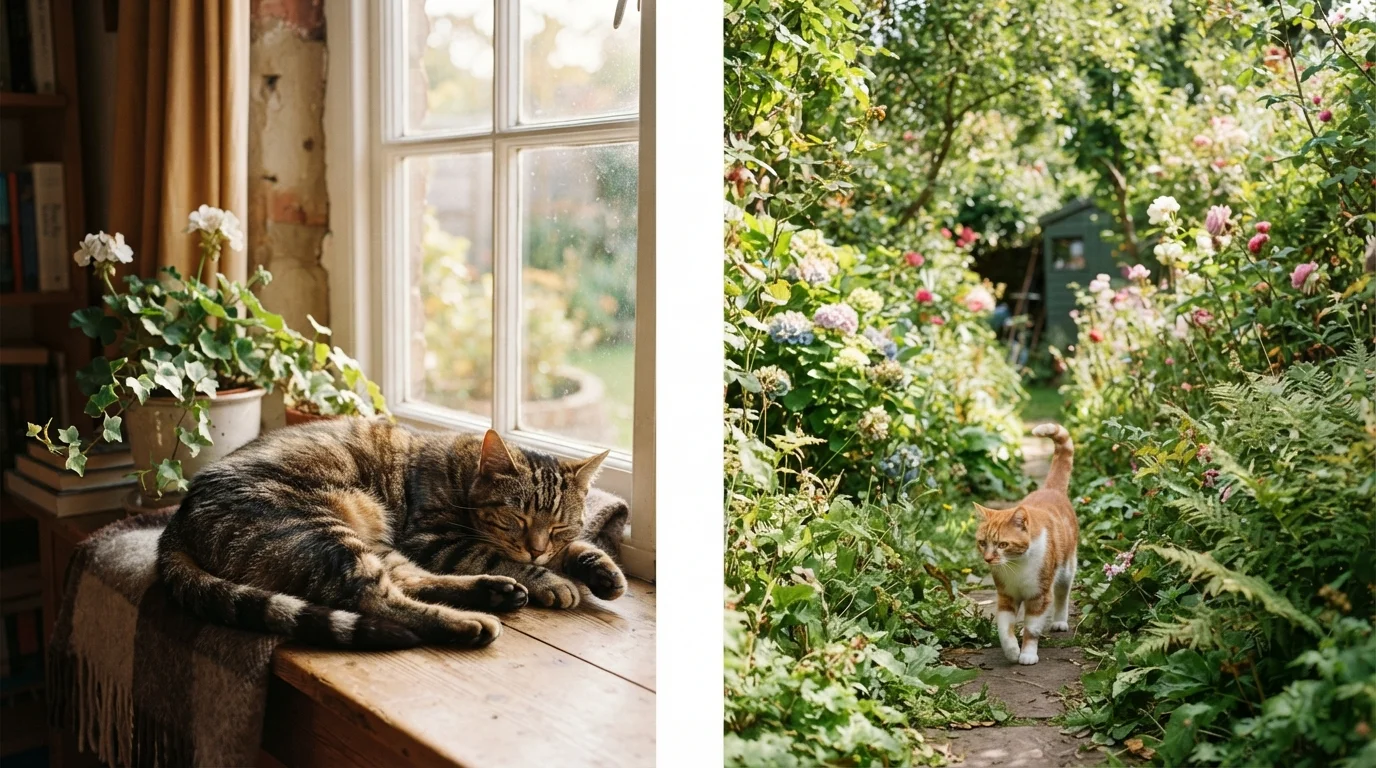
Key Takeaways
Option A
Indoor Cats
The protected, controlled environment choice.
Best for: Cats in urban or high-traffic areas where outdoor hazards are significant, or those with health conditions requiring close monitoring.
Option B
Outdoor Cats
The free-roaming, behaviorally stimulated alternative.
Best for: Cats in lower-density rural or suburban settings where owners can manage parasite prevention and accept elevated environmental risk.
If your cat lives in a busy urban area with heavy traffic
Indoor Cats
Traffic is one of the leading causes of premature death in free-roaming cats. An indoor environment eliminates this risk entirely.
If your cat shows signs of boredom, stress, or weight gain indoors
Indoor Cats
Rather than releasing cats outside, add enrichment — puzzle feeders, vertical space, and interactive play — to address these issues safely. Consult your vet about weight management.
If you live in a rural area and prioritize behavioral freedom
Outdoor Cats
Lower traffic and predator density reduces some risks, but robust vaccination, parasite control, and microchipping remain essential.
If you want a middle ground with supervised access
Outdoor Cats
Leash walks, catios, or enclosed garden runs allow cats to experience the outdoors while keeping the most serious hazards controlled.
The Lifespan Gap: What the Numbers Suggest
One of the starkest differences between indoor and outdoor cat lifestyles is longevity. Veterinary literature consistently indicates that indoor cats live considerably longer on average than cats with regular outdoor access, though precise figures vary by study. The American Veterinary Medical Association (AVMA) and similar bodies have noted this disparity, attributing it primarily to trauma, infectious disease, and predation rather than any single cause.
Outdoor cats encounter a broad range of acute hazards — vehicle collisions, attacks from dogs or wildlife, and accidental poisoning from garden chemicals or rodenticides. These risks are not theoretical: trauma is routinely cited in veterinary emergency data as a leading cause of death in free-roaming cats. Meanwhile, infectious diseases such as feline leukemia virus (FeLV) and feline immunodeficiency virus (FIV) spread far more readily among cats that fight or share territory outdoors.
12–18 yrs
Typical indoor cat lifespan
Veterinary sources commonly cite this range, compared to significantly shorter estimates for free-roaming outdoor cats.
~50%
US cats estimated to be overweight or obese
The Association for Pet Obesity Prevention has documented elevated obesity rates in domestic cats, with indoor-only cats at particular risk.
Top 3
Rank of trauma as cause of outdoor cat death
Vehicle collisions and predator attacks consistently appear among the leading causes of premature death in free-roaming cats per veterinary emergency data.
Indoor Health Risks: Not Without Downsides
Keeping a cat indoors eliminates many hazards, but it introduces a different set of health vulnerabilities. Reduced activity combined with ad-libitum dry food feeding is a common driver of weight gain. Obesity in cats raises the risk of diabetes mellitus, hepatic lipidosis, and joint degeneration — consequences that are covered in depth in our guide to weight management in pets.
Lower water intake — common when cats eat predominantly dry food — contributes to feline lower urinary tract disease (FLUTD), a cluster of conditions affecting the bladder and urethra. Behavioral issues are also more frequent indoors: without adequate stimulation, cats may develop overgrooming, redirected aggression, or litter box avoidance. Our litter box avoidance troubleshooting guide addresses many of the behavioral triggers commonly seen in under-stimulated indoor cats.
| Criterion | Indoor Cats | Outdoor Cats |
|---|---|---|
| Average lifespan | Longer (estimates: 12–18+ years) | Shorter (estimates: 2–5 years, varies) |
| Trauma risk | Very low | High (vehicles, predators) |
| Infectious disease exposure | Low | High (FeLV, FIV, parasites) |
| Obesity risk | Higher without enrichment | Lower due to activity |
| Behavioral stimulation | Requires active enrichment | Naturally higher |
| Urinary health risk | Elevated (low activity, diet) | Somewhat lower |
| Parasite exposure | Minimal | Frequent (fleas, ticks, worms) |
Bridging the Gap: Enrichment and Supervised Outdoor Access
The good news is that many of the behavioral and physical disadvantages of indoor living are addressable. Veterinary behaviorists recommend environmental enrichment as the primary tool: this includes climbing structures, window perches, puzzle feeders, and scheduled interactive play sessions. These interventions support normal predatory behavior patterns without requiring unsupervised outdoor access.
For owners who want to offer outdoor experience with reduced risk, enclosed outdoor runs — often called catios — have grown in popularity. Leash training is another option some cats tolerate well, though it requires patience and early habituation. These approaches let cats engage with natural stimuli (birdsong, fresh air, varied surfaces) while avoiding vehicles, predators, and unvaccinated cats. Diet also plays a role in indoor cat health; our wet vs. dry food comparison discusses how meal format affects hydration — a particular concern for cats prone to urinary issues.
What Vets Generally Recommend
Major veterinary organizations, including the AVMA and the American Association of Feline Practitioners (AAFP), generally advise keeping cats indoors or providing only supervised outdoor access. This stance reflects the cumulative evidence on trauma, disease transmission, and lifespan. However, vets also recognize that individual circumstances — geography, the cat's history, and behavioral needs — matter. Discussing your specific situation with your veterinarian is the most reliable way to make the right call for your cat.
As cats age, both lifestyle groups face shifting health needs. Our article on senior pet health outlines what to watch for as your cat moves into its later years, regardless of lifestyle.
This article is for general informational purposes only and does not constitute veterinary advice. Always consult a licensed veterinarian for guidance specific to your cat's health and circumstances.