

Key Takeaways
Pet Food Ingredient List
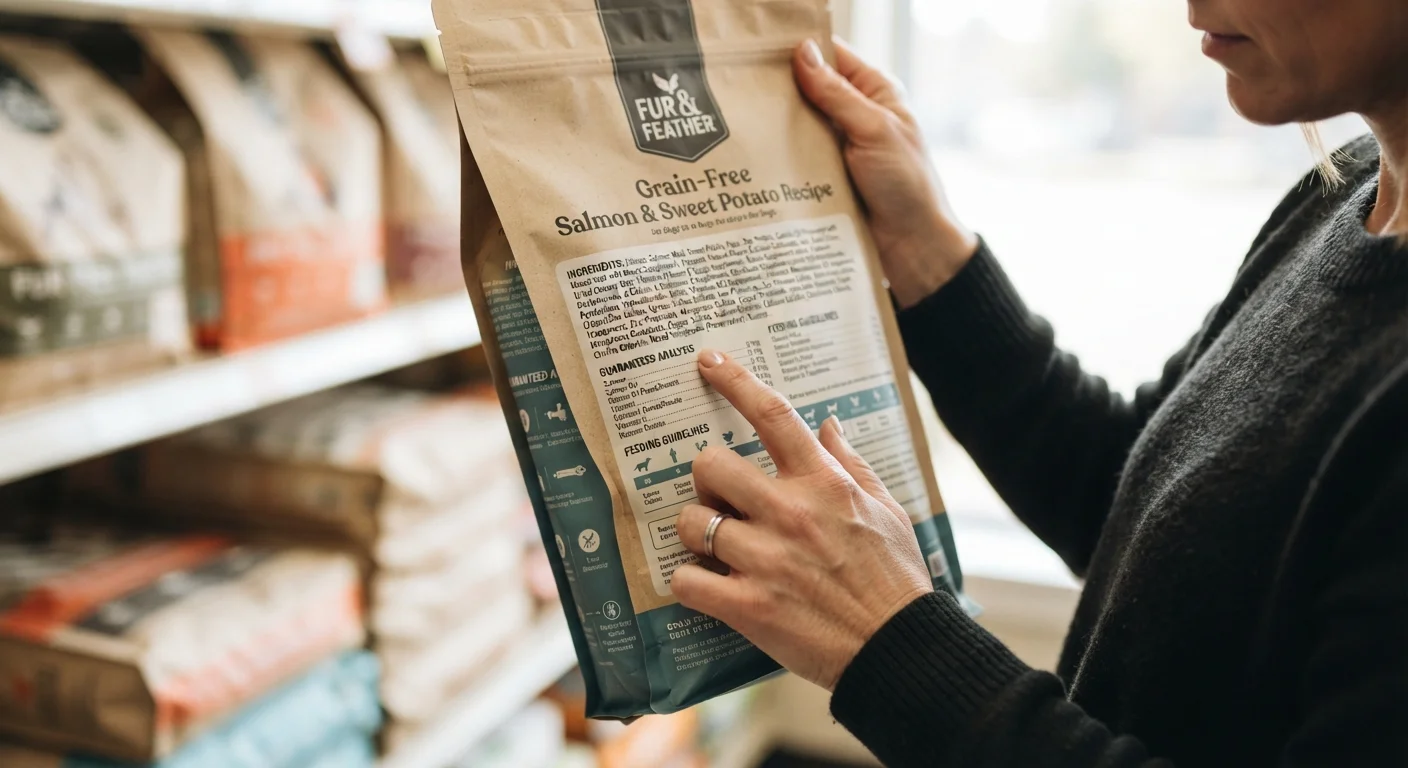
The ingredient list on a pet food label ranks every component of the food by weight before processing, from heaviest to lightest. Regulated by the Association of American Feed Control Officials (AAFCO) and the FDA, it must include every ingredient used in the formula. Reading it correctly gives you a clearer picture of what your pet is actually eating.
Ingredients are listed by pre-cooking weight, which means moisture-heavy whole meats can appear near the top even if they contribute less protein than a concentrated meal ingredient listed further down.
How the Ingredient List Is Organized
Every ingredient on a pet food label must appear in descending order of pre-processing weight — meaning the heaviest ingredient before cooking appears first. This rule is mandated under AAFCO guidelines and enforced at the federal level by the FDA.
In practice, this creates a subtle but important nuance. Whole chicken, for example, is roughly 70% water before cooking. After moisture evaporates during processing, its actual contribution to the finished product may be less than a lower-listed ingredient like 'chicken meal,' which is already a concentrated, water-removed protein source. Understanding this helps explain why a food listing 'chicken' first isn't automatically superior to one listing 'chicken meal' second. For a deeper look at how protein sources compare, see our guide to protein sources in pet food.
Ingredient Order Has Limits
While ingredient order provides useful context, it's one data point among several. A food with a plant-based ingredient in second position is not automatically inferior to one with a named meat in every slot. Digestibility, amino acid completeness, and AAFCO compliance matter alongside the order of listing. Use the full label — not just the top three ingredients — to assess a food.
A related labeling tactic worth knowing is ingredient splitting. This occurs when a single ingredient appears under multiple names — for instance, 'brown rice,' 'rice bran,' and 'rice flour' listed separately. Each individual entry looks minor, but their combined weight might place rice above the named meat protein. It doesn't necessarily make the food poor quality, but it warrants attention.
The Guaranteed Analysis Panel: What Those Percentages Actually Represent
Just below or beside the ingredient list, you'll find the guaranteed analysis panel. It lists minimum percentages of crude protein and crude fat, and maximum percentages of crude fiber and moisture. The word 'crude' refers to the measurement method, not the quality of the nutrient.
These are regulatory floors and ceilings, not precise values. A food listing '26% minimum crude protein' could contain 28% or 30% — the label only commits to 'at least 26%.' Comparing guaranteed analysis figures across wet and dry foods also requires a moisture adjustment, since wet food is typically 75–82% water. Our plain-language guide to the guaranteed analysis panel walks through the dry-matter conversion step by step.
70%
Water content of whole meat before processing
Because ingredients are listed by pre-cooking weight, moisture-heavy whole meats can rank higher on the label than their post-processing protein contribution would suggest.
75–82%
Typical moisture content of wet pet food
This high water content means guaranteed analysis protein percentages on wet foods cannot be directly compared to those on dry kibble without converting to a dry-matter basis.
2
Methods to earn an AAFCO adequacy statement
Pet food manufacturers can substantiate an AAFCO nutritional adequacy claim either through laboratory formulation or controlled animal feeding trials — the latter providing additional real-world validation.
The panel won't tell you about amino acid profiles, vitamin potency, or ingredient digestibility — all factors that meaningfully affect how well a pet uses the nutrition in the bag. That's why the guaranteed analysis works best as a rough filter, not a final verdict.
AAFCO Statements, Feeding Trials, and Life Stage Claims
One of the most important lines on any pet food package is the AAFCO nutritional adequacy statement. It will read something like: ' is formulated to meet the nutritional levels established by the AAFCO Dog Food Nutrient Profiles for adult maintenance.'
This statement tells you two things: whether the food meets nutrient standards, and for which life stage. Foods labeled 'for all life stages' must meet the more demanding standards for growth and reproduction — this can be a reasonable choice, but it also means the food may carry higher nutrient concentrations than a healthy adult pet needs.
There are two ways a manufacturer can earn this statement. The first is formulation — the recipe is calculated to hit AAFCO nutrient targets. The second is a feeding trial, in which the food is fed to animals under controlled conditions and assessed for measurable outcomes. Feeding trial claims carry the phrase 'animal feeding tests.' Neither method guarantees a food will suit every individual animal, but trial-validated foods provide an additional layer of evidence. If your pet shows signs that their current diet may not be serving them well, our article on when a pet's diet quietly goes wrong covers key signals to watch for.
Look for a Life Stage Match
Always check that the AAFCO nutritional adequacy statement matches your pet's current life stage — kitten or puppy, adult, or senior. Foods labeled 'for all life stages' meet growth standards and may not be the most appropriate choice for every adult pet. When in doubt, ask your veterinarian which life-stage designation fits your animal.
Feeding Guidelines and Working With Your Veterinarian
Feeding guidelines on pet food packaging provide a general starting range by body weight. They are useful reference points but are population-level estimates — not tailored to your specific animal. A senior dog with low activity, or a nursing cat, will need adjustments that no printed chart can fully account for.
Treats, toppers, and supplemental foods should factor into your overall calorie picture. Our annual pet nutrition audit checklist offers a structured set of questions to bring to your next veterinary appointment. If you're considering moving away from commercial food entirely, understand that home-cooked diets require careful planning — our overview of homemade pet food nutrition explains what complete and balanced truly means in that context.
This article is for general informational purposes only and does not constitute veterinary or dietary advice. Always consult a licensed veterinarian for guidance specific to your pet's health, weight, and nutritional needs.