

Travel Know-How

Before You Leave: A Pre-Trip Safety Checklist for Travelers

Share
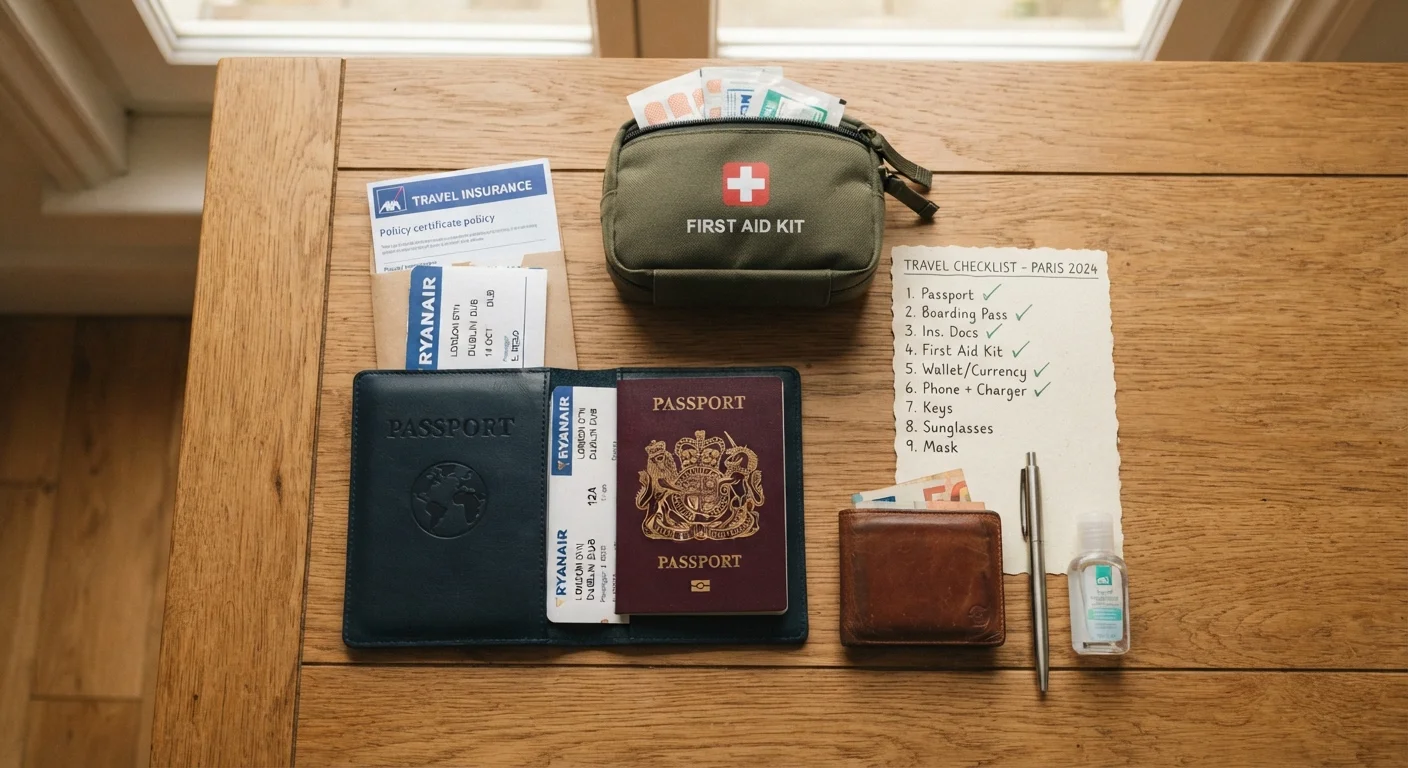
Travel documents, passport, insurance papers, and a safety checklist laid out on a table before a trip.

Key Takeaways

Verify passport validity and visa requirements well before your departure date, not the night before.
Travel insurance should be confirmed active and cover your specific activities and destination.
Emergency contacts and key document copies should exist both digitally and on paper.
Health preparation — including vaccinations — may require weeks of lead time before travel.
Home security and financial access checks are as important as packing your bags.
45–90 min

Summary

24 items · 45–90 minutes

Why a Pre-Trip Safety Checklist Matters

Most travel mishaps are preventable — not by luck, but by preparation. Expired visas, lapsed insurance, forgotten emergency contacts, and unsecured homes are among the most common (and most avoidable) problems travelers face. Yet the pre-departure window is typically rushed, and critical safety steps get skipped in the scramble to pack.

This checklist is designed to close that gap. Work through it at least 72 hours before departure — ideally a week out — so you have time to act on anything that needs attention. If you're heading abroad for the first time, our guide for first-time international travelers covers the foundational safety knowledge that sits alongside this list.

Use the checklist below as a working audit. Each group addresses a distinct category of risk, and items are marked by priority so you know where to focus first.

Required

U.S. Department of State — Travel.State.Gov

Official source for country-specific entry requirements, travel advisories, and the Smart Traveler Enrollment Program (STEP).

Required

Travel Insurance Policy Documents

Used to verify coverage dates, exclusions, and your insurer's emergency assistance contact number.

Required

Secure Cloud Storage (e.g., any encrypted document service)

Used to store digital copies of your passport, visa, and insurance documents in a location accessible from any device.

Optional

Offline Map Application

Allows navigation at your destination without requiring a mobile data connection.

Required

Travel First Aid Kit

Provides basic medical supplies for minor injuries and common travel illnesses.

The Pre-Trip Safety Checklist

Work through each group in order. "Must" items are non-negotiable — don't leave without completing them. "Should" items are strongly recommended for most trips. "Nice to have" items are worth adding if time allows.

Travel Documents

Confirm your passport is valid for at least six months beyond your return date, as many countries enforce this requirement at entry. Must
Verify visa requirements for every country on your itinerary through official government sources, and confirm your visa is approved and correctly dated. Must
Make photocopies and digital scans of your passport, visa, travel insurance policy, and any required vaccination certificates. Must
Store digital document copies in a secure, cloud-based location you can access from any device if your phone is lost. Should
Leave a printed copy of your itinerary and key documents with a trusted contact at home. Should

Travel Insurance

Confirm your travel insurance policy is active, covers your destination, and begins on your departure date. Must
Review your policy for exclusions — particularly for adventure activities, pre-existing conditions, or high-value items — and address any gaps before you leave. Must
Save your insurer's 24-hour emergency assistance number in your phone and write it in your travel documents. Must
Check whether your policy includes medical evacuation coverage, which can be critical in remote or underserved destinations. Should

Health Preparation

Consult a travel medicine professional or your primary care provider about destination-specific vaccinations or health precautions well before departure. Must
Pack an adequate supply of any prescription medications you take regularly, along with a copy of the prescription in case of loss or customs inspection. Must
Assemble a basic travel first aid kit including bandages, antiseptic wipes, pain relief, anti-diarrheal medication, and any destination-specific items your clinician recommends. Should
Research healthcare facilities near your accommodations so you know where to go if you need medical attention. Nice to have

Emergency Contacts and Communication

Compile a written emergency contact list including local embassy or consulate contact details, your insurer's helpline, your accommodation's address and phone number, and a trusted home contact. Must
Register your trip with the U.S. Department of State's Smart Traveler Enrollment Program (STEP) if traveling internationally, so the embassy can reach you in an emergency. Should
Confirm your mobile phone plan works in your destination or arrange an international SIM or local data option. Should
Download offline maps for your destination so you can navigate without a data connection. Nice to have

Financial Access and Security

Notify your bank and credit card providers of your travel dates and destinations to prevent transactions from being flagged or blocked. Must
Carry at least two payment methods (e.g., two different cards or a card and cash) in case one is lost, stolen, or declined. Must
Confirm you have access to sufficient local currency or a fee-friendly method of withdrawing it at your destination. Should

Home Security Before You Leave

Lock all windows and doors, and set any alarm system before departing. Must
Arrange for mail collection, or pause delivery, and ask a trusted neighbor or contact to monitor your property. Should
Unplug non-essential electronics and confirm that stoves, irons, and other appliances are off. Should
Use timers on interior lights to maintain the appearance of occupancy while you're away. Nice to have

Visa and Entry Rules Change — Always Verify Officially

Visa policies, entry requirements, and health documentation rules can change with little notice. Never rely solely on travel blogs or third-party booking platforms for this information. Always verify current requirements directly through the official government website of your destination country and the U.S. Department of State's travel advisories before you depart.

For a deeper look at the documents and contact information that matter most in a crisis, see our companion resource on emergency contacts and documents every traveler should have. And if you want to ensure your trip budget is solid before you go, the pre-trip cost audit checklist is worth running alongside this one.

After the Checklist: What to Do If Something Is Missing

If you discover a gap — an expired document, missing vaccination, or insurance exclusion — don't panic, but do act promptly. Many issues that seem insurmountable a week out become genuine problems if you wait until the day before departure.

Don't Leave Passport Issues Until Departure Day

Passport renewal and emergency replacement can take significantly longer than travelers expect, even with expedited processing. If you discover your passport is expired or will expire before your return date, contact the U.S. Department of State immediately and explore your options. Attempting to resolve this at the airport is rarely successful and can result in denied boarding or entry.

For health-related preparation, consult a travel medicine professional as early as possible. Some vaccinations require multiple doses spaced weeks apart. Our article on health precautions for travel explains what to discuss with a clinician and when to schedule that appointment.

Once you've ticked every item, you're not just packed — you're prepared. Safe travels.

Travel Know-How Editorial Team is the collective byline for our editorial team and contributor network. Articles published under this byline or an editorial pen name are researched, written, and reviewed according to our editorial standards for clarity, consistency, and independence before publication.

View all articles by Travel Know-How Editorial Team →
Disclaimer: The content provided on our blog site traverses numerous categories, offering readers valuable and practical information. Readers can use the editorial team’s research and data to gain more insights into their topics of interest. However, they are requested not to treat the articles as conclusive. The website team cannot be held responsible for differences in data or inaccuracies found across other platforms. Please also note that the site might also miss out on various schemes and offers available that the readers may find more beneficial than the ones we cover.