

| STEP Program | Free enrollment at travel.state.gov; enables embassy alerts and crisis contact (U.S. Department of State) |
| Universal Emergency Number (Many Countries) | 112 (Europe and many others); varies by region — research before travel |
| Documents to Copy | Passport, visa, insurance summary, vaccination records, key reservations |
| Backup Storage Locations | Minimum two: one cloud-based, one accessible via email login |
| Insurance Emergency Line | Distinct from general support — locate and record it before departure |
Why This Preparation Matters Before You Leave
Most travel emergencies don't come with a warning. A medical incident, a lost passport, a sudden natural disaster — these situations demand quick, clear action at exactly the moment when stress makes clear thinking hardest. The one preparation that consistently helps is having the right information already organized and accessible.
This reference guide covers the specific contacts and documents that matter most when something goes wrong abroad. It pairs well with the pre-trip safety checklist and the pre-departure checklist — use all three together before any international trip.
| STEP Program | Free enrollment at travel.state.gov; enables embassy alerts and crisis contact (U.S. Department of State) |
| Universal Emergency Number (Many Countries) | 112 (Europe and many others); varies by region — research before travel |
| Documents to Copy | Passport, visa, insurance summary, vaccination records, key reservations |
| Backup Storage Locations | Minimum two: one cloud-based, one accessible via email login |
| Insurance Emergency Line | Distinct from general support — locate and record it before departure |
The Emergency Contacts Every Traveler Should Carry
Keep these contact numbers written on paper and saved digitally. Do not rely solely on your phone — batteries die and screens crack.
- U.S. Embassy or Consulate in your destination country: The State Department's STEP program (Smart Traveler Enrollment Program) lets you register your trip so the embassy can reach you in a crisis. Find embassy contacts at travel.state.gov before departure.
- Local emergency numbers: 911 does not work universally. Research the police, fire, and ambulance numbers for each country you visit. In most of Europe it's 112; other regions vary.
- Your travel insurance provider's 24-hour emergency line: This is separate from the general customer service number. It connects you to case managers who can coordinate medical evacuation or hospital payments directly.
- Your bank's international collect number: Standard toll-free numbers often don't work abroad. The collect number on the back of your card does. Write it down before you leave.
- A trusted home contact: Someone who has copies of your documents and can act on your behalf if needed — booking a new flight, contacting your insurer, or notifying family.
For trips to regions with political volatility, also review the guide to traveling during civil unrest for additional preparedness steps.
STEP (Smart Traveler Enrollment Program)
A free U.S. State Department service that registers your trip with the nearest embassy or consulate. It allows the embassy to contact you during emergencies and helps your family reach you if communication breaks down.
Medical Evacuation (Medevac)
Emergency transport to an adequate medical facility, sometimes including transport back to your home country. Many standard travel insurance policies include this; verify coverage limits before travel.
Consular Assistance
Support provided by a U.S. embassy or consulate to citizens abroad, including help with lost passports, arrests, and serious medical emergencies. It does not cover personal costs such as hotel or medical bills.
International Collect Call Number
A bank or card issuer's phone number that works when calling from abroad, typically by reversing charges. Standard toll-free numbers often fail outside the U.S., making this number critical to have written down.
Documents to Carry and Documents to Back Up
Organize your documents in two layers: physical originals you carry, and secure digital copies stored separately.
Physical Documents to Keep on Your Person or in Your Bag
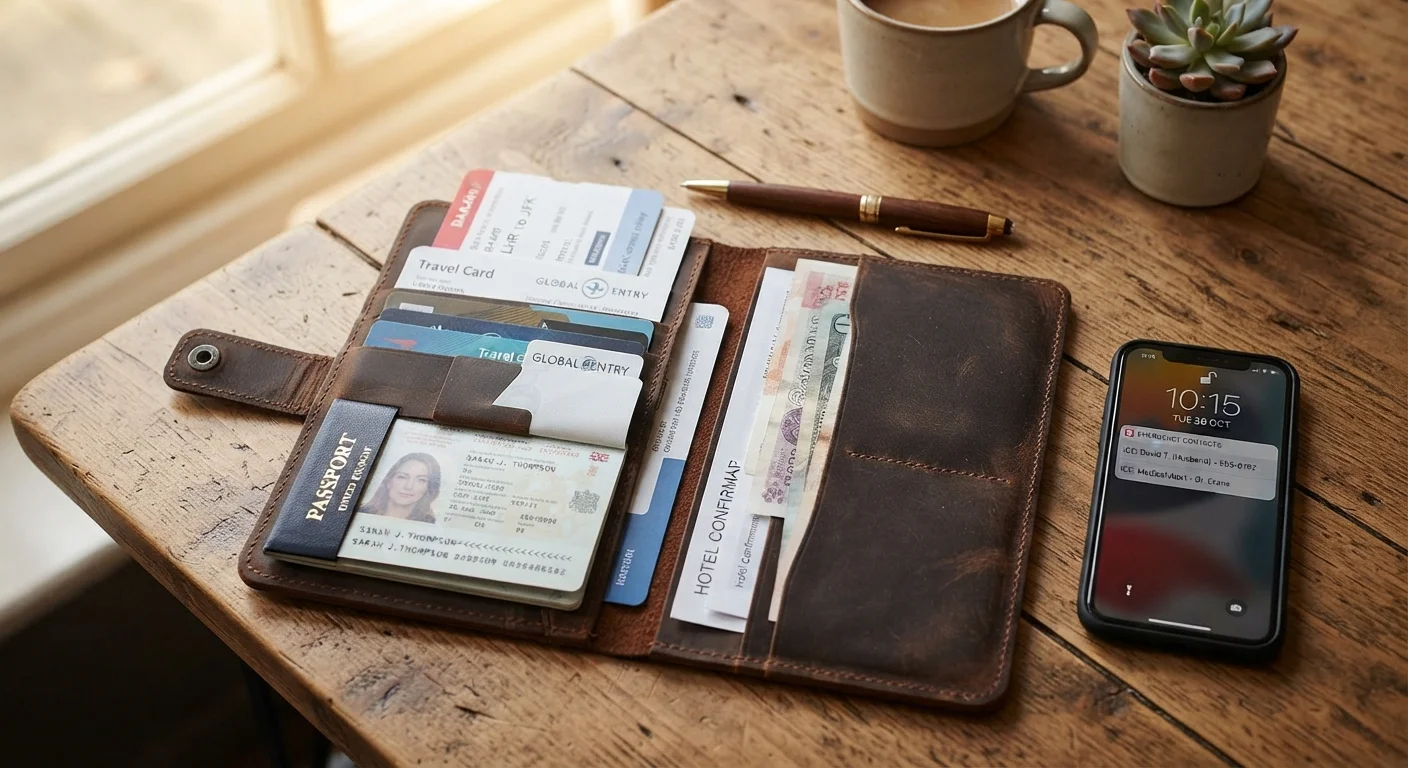
- Passport (and a photocopy stored separately from the original)
- Visa approvals or entry permits, if applicable
- Travel insurance policy summary with the emergency contact number circled
- Any required vaccination records (requirements vary by destination — verify with official sources before travel)
- Printed hotel confirmations and key itinerary details for the first 48 hours
Digital Backups Worth Maintaining
Scan or photograph every document above and store copies in at least two places: a secure cloud folder you can access from any device, and an email you can log into from anywhere. Avoid storing sensitive scans on a phone alone. For guidance on keeping those digital files safe while traveling, see digital safety while traveling.
Verify Entry Requirements Through Official Sources
Visa rules, vaccination requirements, and entry conditions change without notice. Always confirm current requirements directly with the destination country's official government website or embassy and with your airline before departure. Travel information sites — including this one — provide general guidance only and cannot guarantee accuracy at the time of your trip.
Experienced travelers treat document redundancy as a habit, not an afterthought. The planning habits that experienced travelers swear by article covers how to build this into your routine.
~1 in 6
Travelers who experience a health issue abroad
General industry estimates suggest a significant share of international travelers encounter a health-related incident during longer trips.
Free
Cost to enroll in the U.S. State Department's STEP program
According to the U.S. Department of State, STEP enrollment is completely free and takes under five minutes to complete online.