

Key Takeaways
Movement Snacks
Movement snacks are brief, informal bouts of physical activity - typically lasting anywhere from one to ten minutes - woven into the natural pauses of your day. Unlike structured workouts, they don't require special clothes, equipment, or a dedicated block of time. The idea is that small, frequent doses of movement can accumulate into a meaningful contribution to your overall daily activity.
Researchers sometimes use the term 'activity bouts' or 'exercise snacks' in peer-reviewed literature; the concept overlaps with NEAT (non-exercise activity thermogenesis), which encompasses all movement outside formal exercise.
Why 'All or Nothing' Is Holding You Back
The most common reason people give for not exercising is time. Between managing a household, a job, and family responsibilities, carving out 45 minutes for a gym session can feel genuinely impossible on most days. The 'all or nothing' mindset - the belief that exercise only counts if it's long, structured, and sweaty - is one of the biggest barriers to consistent physical activity.
Movement snacks challenge that assumption directly. Rather than treating physical activity as a single, dedicated event, this approach distributes it across your day in small, informal doses. The science behind it is increasingly compelling, and the practical appeal is obvious: most people can find two free minutes several times a day, even when a 45-minute workout is out of reach.
For those looking to build more consistent movement habits, see our movement strategies for busy schedules for a broader look at fitting activity into a packed day.
25%
Reduction in cardiovascular disease risk
Research suggests that replacing sitting time with light or moderate movement - even in short bouts - is associated with meaningfully lower cardiovascular risk in adults.
~30 min
Recommended daily movement accumulation
Public health guidelines from organizations like the CDC note that moderate-intensity activity can be accumulated in shorter bouts across the day, not just in one session.
11 min
Daily activity linked to lower mortality risk
A 2023 analysis published in the British Journal of Sports Medicine found that as little as 11 minutes of moderate activity per day was associated with a lower risk of early death.
What the Research Actually Says
A growing body of evidence supports the idea that brief activity bouts carry real physiological value. Studies published in journals including Applied Physiology, Nutrition, and Metabolism have found that short bouts of moderate-intensity activity - such as brisk stair climbing repeated across a day - can improve cardiovascular fitness and help regulate blood sugar levels after meals.
One frequently cited finding is the effect of short walking breaks on postprandial blood glucose (blood sugar after eating). Research has suggested that even a brief walk following a meal can blunt the blood sugar spike that often contributes to the afternoon energy slump. For more on that connection, our explainer on why energy crashes after meals happen covers the dietary side of the equation.
It's worth noting that much of this research involves relatively short follow-up periods or specific populations. The consensus is promising but still evolving - movement snacks appear beneficial, particularly for sedentary adults, but they are best understood as one tool among several rather than a complete solution.
“Emerging evidence suggests that breaking up prolonged sitting with short bouts of activity may be just as important as structured exercise for metabolic and cardiovascular health.”
— Dr. Brendon Gurd, Exercise physiology researcher, Queen's University
How to Build Movement Snacks Into Your Day
The most effective movement snacks are ones you'll actually do - which means tying them to existing habits rather than relying on willpower alone. This technique, often called habit stacking, pairs a new behavior with a routine you already perform reliably.
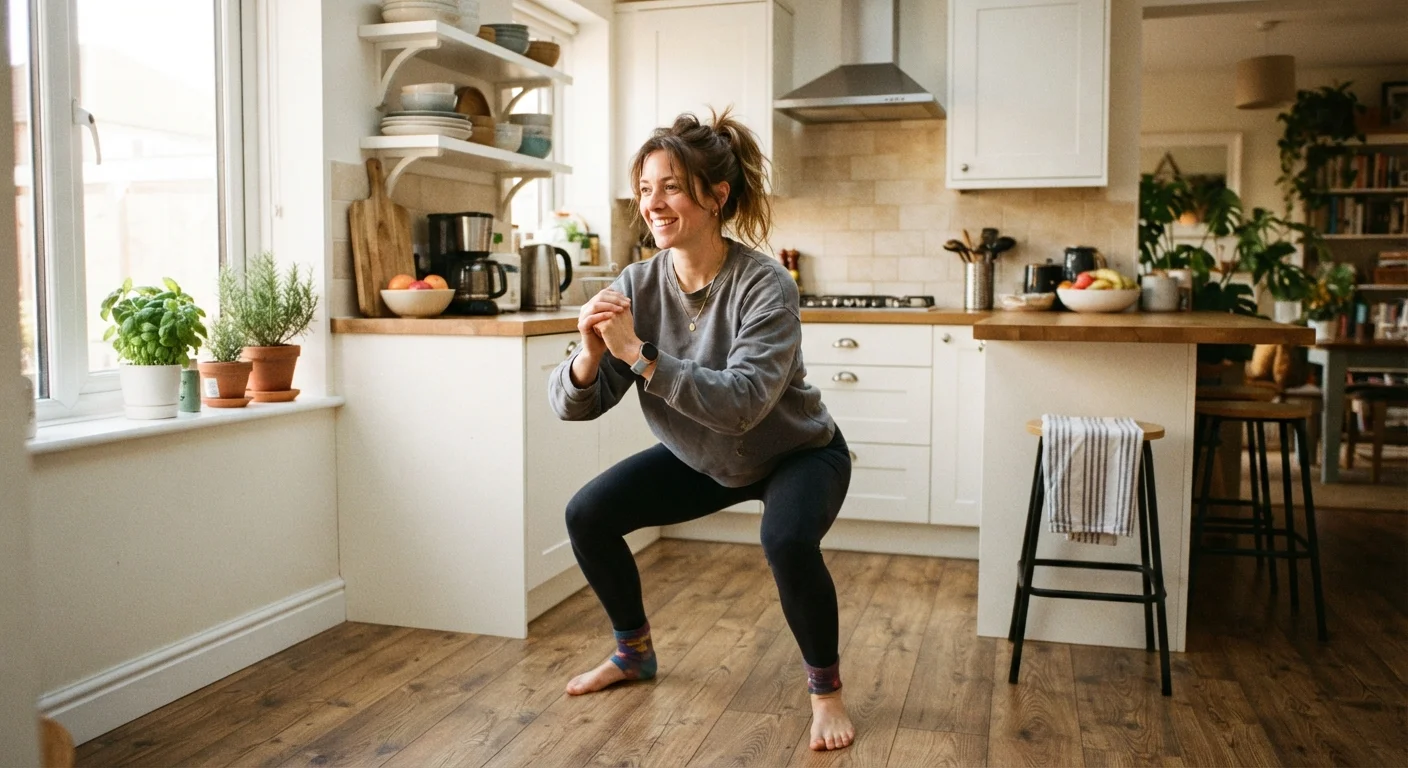
- Before your morning coffee brews: Do a two-minute stretching sequence or a set of bodyweight squats while you wait.
- After each virtual meeting: Stand up, walk to a different room, or take a single flight of stairs before sitting back down.
- During a phone call: Walk around your home or yard instead of staying seated.
- After lunch: A five-minute brisk walk outside - this is also the moment research most strongly supports for blood sugar management.
Movement snacks overlap conceptually with NEAT - non-exercise activity thermogenesis - which refers to all the physical activity you accumulate outside formal workouts. Our article on what NEAT actually is explores why this background movement matters so much for overall health.
Start With Just One Snack Per Day
If the idea of multiple movement breaks feels overwhelming, begin with a single consistent one - such as a five-minute walk after lunch. Once that feels automatic, add a second. Building habits incrementally is far more sustainable than trying to overhaul your whole day at once.
Movement, Mood, and the Bigger Picture
Physical activity doesn't only affect the body - there's substantial evidence linking even light movement to improved mood, reduced stress, and better focus. For people managing the mental load of a busy household, a two-minute movement break can offer a genuine cognitive reset, not just a calorie burn.
This is one reason movement snacks can be particularly valuable: they're accessible in moments when you most need relief. The relationship between physical activity and mental wellbeing is well-documented, and short bouts of movement appear to contribute positively even when they don't meet the threshold for 'exercise' in the traditional sense.
If you've been largely sedentary and are considering building a more structured routine, movement snacks are an excellent starting point. Our guide to a realistic first month of exercise can help you build from there.
This article is for general informational and educational purposes only and is not a substitute for professional medical advice, diagnosis, or treatment. Always consult a qualified healthcare provider before starting a new exercise program, particularly if you have a chronic health condition, injury, or other medical concern.