

Key Takeaways
Macronutrients
Macronutrients are the three main categories of nutrients your body needs in relatively large amounts every day: carbohydrates, protein, and fat. Each one provides energy (measured in calories) and performs specific functions that keep your body running. Unlike vitamins and minerals — which are needed in tiny amounts — macronutrients form the bulk of everything you eat.
Carbohydrates and protein each provide 4 calories per gram; fat provides 9 calories per gram. These values underpin how nutrition labels calculate total calorie counts.
Why Macronutrients Matter for Everyday Health
Every time you eat, you are delivering a mix of carbohydrates, protein, and fat to your body. These three macronutrients power every cell, support organ function, and shape how energized — or fatigued — you feel throughout the day. Yet nutrition headlines frequently pit them against each other, leaving many people confused about which ones to embrace or avoid.
The reality is simpler: your body needs all three, and each does something the others cannot fully replace. Understanding what each macronutrient actually does — rather than what diet culture claims — is the first step toward making food choices you can feel confident about. For a practical look at how these nutrients appear on packaging, our guide to reading nutrition labels is a helpful companion to this article.
45–65%
Recommended daily calories from carbohydrates
According to the Dietary Guidelines for Americans, carbohydrates should make up roughly 45–65% of total daily calorie intake for most healthy adults.
10–35%
Recommended daily calories from protein
The Dietary Reference Intakes established by the National Academies of Medicine place protein's acceptable macronutrient distribution range at 10–35% of total daily calories.
20–35%
Recommended daily calories from fat
The same National Academies guidance recommends that dietary fat account for 20–35% of total daily calorie intake for adults.
Carbohydrates: Your Body's Preferred Fuel
Carbohydrates are broken down into glucose — a simple sugar your cells use as their primary energy source. Your brain alone depends almost exclusively on glucose to function, which is why very-low-carb eating can sometimes cause brain fog, irritability, or fatigue, at least initially.
Not all carbs behave the same way in the body. Simple carbohydrates (found in table sugar and many processed foods) digest quickly and can cause rapid spikes in blood sugar. Complex carbohydrates — from whole grains, legumes, and vegetables — digest more slowly, delivering steadier energy. Dietary fiber, technically a carbohydrate, resists digestion entirely and feeds beneficial gut bacteria, supports bowel regularity, and may help moderate blood sugar levels.
The takeaway: prioritizing fiber-rich, minimally processed carbohydrate sources over refined ones gives you the sustained fuel your body is designed to run on. If you have encountered the claim that carbs automatically cause weight gain, our article on common nutrition myths addresses that and similar misconceptions directly.
Build Meals Around All Three Macros
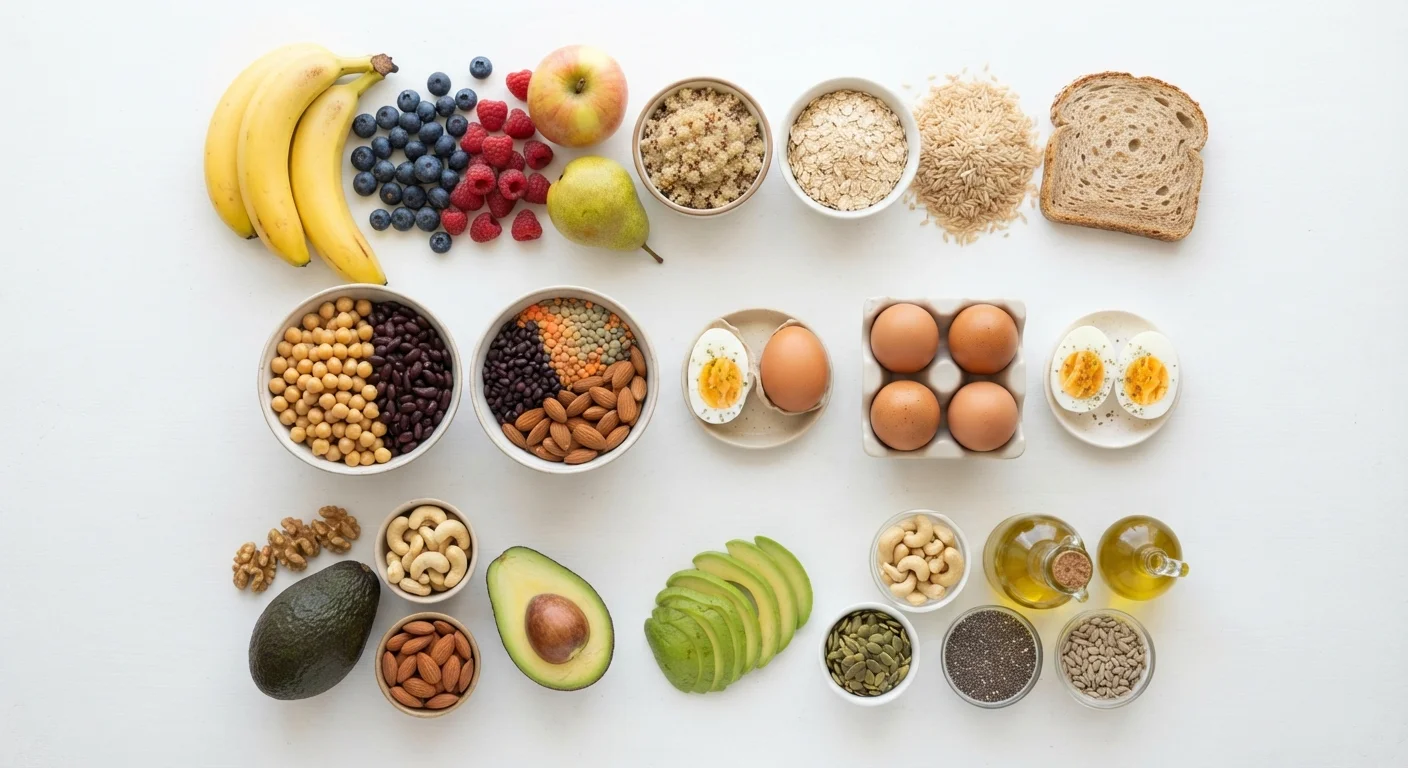
A simple way to ensure balanced macronutrient intake is to structure meals with a carbohydrate source (ideally fiber-rich), a protein source, and a small amount of healthy fat. This approach naturally delivers variety and helps prevent the energy dips that come from carb-heavy meals eaten without protein or fat. You don't need to weigh or calculate — visual portioning is often enough for most healthy adults.
Protein: Builder, Repairer, and More
Protein is made up of smaller units called amino acids. Your body uses these building blocks to construct and repair muscle tissue, produce enzymes that drive chemical reactions, manufacture hormones, and support immune function. Of the 20 amino acids the body works with, nine are considered essential — meaning your body cannot make them and must obtain them from food.
Animal-based proteins (meat, poultry, fish, eggs, dairy) typically supply all nine essential amino acids in sufficient quantities and are called complete proteins. Many plant proteins are lower in one or more essential amino acids, though eating a varied diet across legumes, grains, nuts, and seeds throughout the day can meet all essential amino acid needs.
Protein also has a notable satiety effect — it tends to keep you feeling fuller for longer compared with the same calories from carbohydrates or fat, which can support healthy appetite management.
Fat: Essential, Not the Enemy
Dietary fat has a complicated reputation, but the research is clear: fat is physiologically essential. It enables your body to absorb fat-soluble vitamins (A, D, E, and K), cushions organs, insulates against cold, and serves as a dense long-term energy reserve. Fat is also central to the production of steroid hormones, including those that regulate metabolism and reproductive health.
Where it gets nuanced is the type of fat. Unsaturated fats — found in olive oil, avocados, nuts, seeds, and fatty fish — are generally associated with cardiovascular health in mainstream dietary research. Saturated fats (common in fatty meats and full-fat dairy) are recommended in moderation by most major health bodies. Trans fats, largely industrially produced, are widely considered the most harmful and have been significantly restricted in the U.S. food supply. For a deeper look at fat types, see our article on saturated, unsaturated, and trans fats.
“There are no good or bad foods in isolation — what matters is the overall pattern of eating, the quality of the foods chosen, and how they fit into an individual's lifestyle and health goals.”
— Walter Willett, Professor of Epidemiology and Nutrition, Harvard T.H. Chan School of Public Health
This article is for general informational purposes only and is not a substitute for professional medical or nutritional advice. Consult a qualified healthcare provider or registered dietitian for guidance specific to your health needs.