

| Total essential vitamins | 13 (4 fat-soluble, 9 water-soluble) (National Institutes of Health, Office of Dietary Supplements) |
| Essential macro-minerals | Calcium, phosphorus, magnesium, sodium, potassium, chloride, sulfur (Harvard T.H. Chan School of Public Health) |
| Commonly under-consumed nutrients (U.S. adults) | Vitamin D, calcium, potassium, dietary fiber (2020–2025 Dietary Guidelines for Americans) |
| Iron absorption tip | Pairing plant iron with vitamin C can significantly increase uptake (Academy of Nutrition and Dietetics) |
| Vitamin D sun synthesis note | Sunscreen, skin tone, and latitude all reduce cutaneous vitamin D production (National Institutes of Health, Office of Dietary Supplements) |
Why Micronutrients Matter More Than You Think
Macronutrients — carbohydrates, protein, and fat — tend to dominate nutrition conversations, but vitamins and minerals do the essential behind-the-scenes work that keeps every system in your body running. These compounds are called micronutrients because the body requires them in small amounts, yet even modest shortfalls can affect energy, immunity, bone density, and mood over time.
Unlike macronutrients, most micronutrients cannot be synthesized by the body in sufficient quantities, so they must come from food. Understanding which nutrients do what — and where to find them — is one of the most practical things a busy adult can do to support long-term health. For a broader view of how these pieces fit together, see The Foundational Principles of a Balanced Diet.
| Total essential vitamins | 13 (4 fat-soluble, 9 water-soluble) (National Institutes of Health, Office of Dietary Supplements) |
| Essential macro-minerals | Calcium, phosphorus, magnesium, sodium, potassium, chloride, sulfur (Harvard T.H. Chan School of Public Health) |
| Commonly under-consumed nutrients (U.S. adults) | Vitamin D, calcium, potassium, dietary fiber (2020–2025 Dietary Guidelines for Americans) |
| Iron absorption tip | Pairing plant iron with vitamin C can significantly increase uptake (Academy of Nutrition and Dietetics) |
| Vitamin D sun synthesis note | Sunscreen, skin tone, and latitude all reduce cutaneous vitamin D production (National Institutes of Health, Office of Dietary Supplements) |
Key Vitamins: Roles and Food Sources
Vitamins fall into two categories: fat-soluble (A, D, E, K), which the body stores in fatty tissue and the liver, and water-soluble (C and the B vitamins), which are not stored in significant amounts and need regular replenishment through diet.
Micronutrients
Vitamins and minerals required by the body in small amounts to support normal physiological function. Unlike macronutrients, they provide no calories but are essential for health.
Fat-soluble vitamins
Vitamins A, D, E, and K, which dissolve in fat and are stored in the body's fatty tissue and liver. Because they accumulate, very high supplemental doses can reach harmful levels over time.
Water-soluble vitamins
Vitamin C and the B-vitamin family, which dissolve in water and are not stored in significant amounts. Excess is generally excreted, so regular dietary intake is important.
Trace minerals
Minerals required in very small quantities — including iron, zinc, iodine, and selenium — that still perform critical functions in immunity, metabolism, and hormonal regulation.
Daily Value (DV)
A reference amount set by the FDA used on nutrition labels to show what percentage of a nutrient a single serving provides, based on a standard 2,000-calorie daily diet.
Bioavailability
The proportion of a nutrient that the body can actually absorb and use. Bioavailability varies by food source, preparation method, and what else you eat at the same meal.
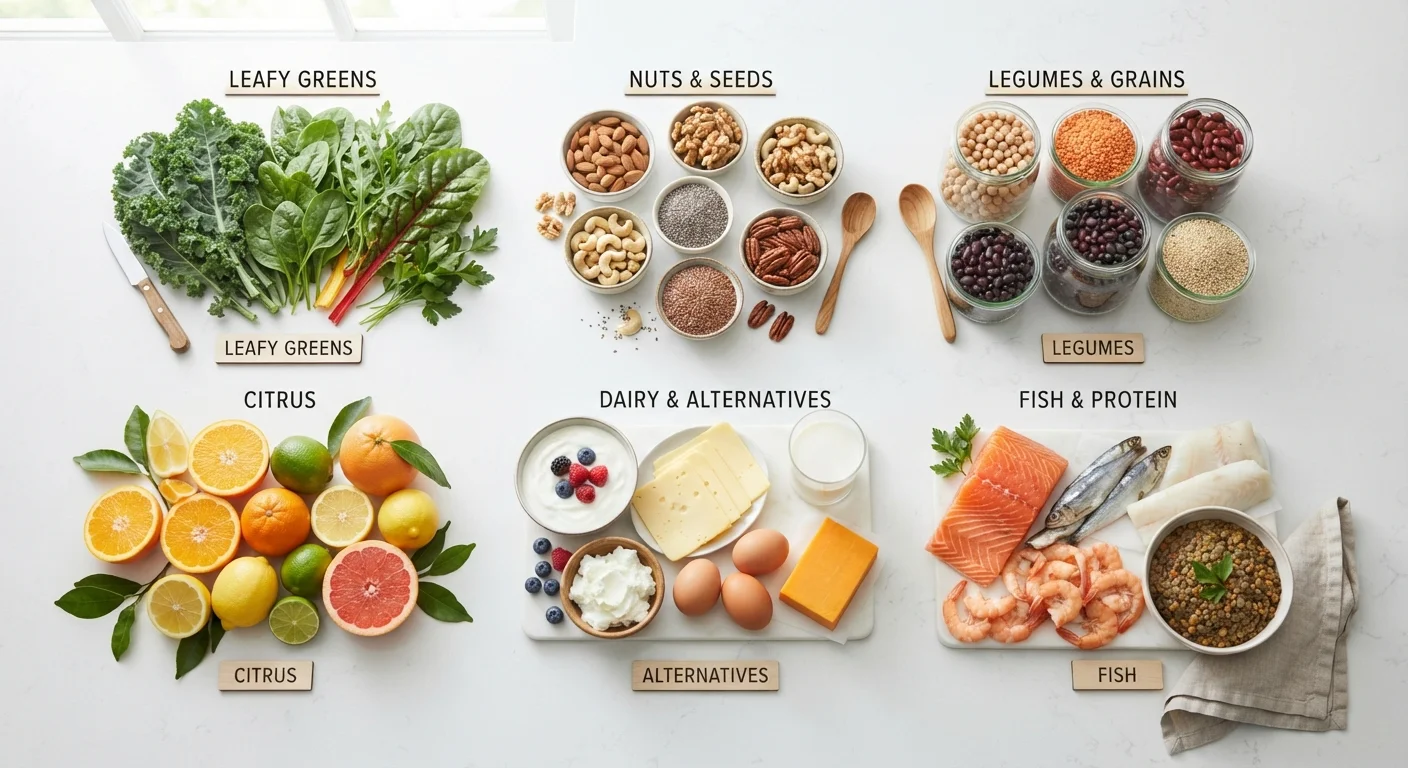
- Vitamin A supports vision, immune function, and skin cell turnover. Rich sources include liver, eggs, dairy, and orange-pigmented produce like sweet potatoes and carrots.
- Vitamin D is critical for calcium absorption and bone health, and plays a role in immune regulation. Fatty fish, fortified milk, and limited sun exposure are the primary sources; deficiency is common in northern latitudes.
- Vitamin C is a powerful antioxidant that supports collagen synthesis and immune defense. Citrus fruits, bell peppers, broccoli, and strawberries are excellent sources.
- B Vitamins — including B12, folate, B6, riboflavin, and thiamine — are collectively involved in energy metabolism, red blood cell formation, and neurological function. Whole grains, legumes, leafy greens, meat, eggs, and dairy each supply different members of this group.
- Vitamin K is essential for blood clotting and bone metabolism. Leafy greens such as kale, spinach, and collards are the densest sources.
When reading packaged foods, the % Daily Value column on a nutrition label reflects how much a serving contributes toward established reference intakes — a useful shortcut covered in more detail in our guide to reading a nutrition label.
Essential Minerals: What They Do and Where to Find Them
Minerals are inorganic elements the body uses for structural and regulatory functions. Macro-minerals — calcium, magnesium, phosphorus, sodium, and potassium — are needed in larger amounts. Trace minerals — iron, zinc, iodine, selenium, and copper — are required in smaller quantities but are no less important.
42%
U.S. adults estimated to be vitamin D deficient
A commonly cited analysis using NHANES data found that a substantial share of American adults have insufficient vitamin D levels, with higher rates among certain demographic groups.
300+
Enzymatic reactions requiring magnesium
According to the National Institutes of Health, magnesium is a cofactor in more than 300 enzyme systems regulating diverse biochemical reactions in the body.
~10 mg
Daily iron need for adult men and post-menopausal women
The Recommended Dietary Allowance for iron varies by age, sex, and life stage; adult men and post-menopausal women generally need less than pre-menopausal women, per the NIH.
- Calcium builds and maintains bone and tooth density and assists in muscle contraction and nerve signaling. Dairy products, fortified plant milks, tofu made with calcium sulfate, and leafy greens supply it.
- Iron carries oxygen through the bloodstream as part of hemoglobin. Lean red meat, legumes, fortified cereals, and dark leafy greens are good sources. Pairing plant-based iron sources with vitamin C improves absorption.
- Magnesium participates in more than 300 enzymatic reactions, including energy production and muscle relaxation. Nuts, seeds, whole grains, and dark chocolate provide it.
- Potassium helps maintain healthy blood pressure and supports muscle and heart function. Bananas, potatoes, beans, and avocados are reliable sources.
- Zinc is vital for immune response, wound healing, and taste perception. Shellfish, meat, legumes, and pumpkin seeds are among the best dietary sources.
- Iodine is essential for thyroid hormone production. Iodized salt and seafood are the main sources in the American diet.
Adequate hydration also affects how efficiently the body absorbs and transports these minerals — a connection explored in Hydration and Nutrition: How What You Drink Shapes How You Feel.
Practical Takeaways for Everyday Eating
You don't need to track every micronutrient daily. Instead, focus on dietary patterns that reliably deliver a broad spectrum of vitamins and minerals:
- Eat a wide variety of colors. Different pigments in produce correspond to different phytonutrients and vitamins — rotating your choices across the color spectrum is the simplest way to cover your bases.
- Prioritize whole foods over supplements where possible. Whole foods deliver nutrients alongside fiber, water, and complementary compounds that support absorption. Supplements can play a useful role, but they are not a direct substitute for a varied diet — always consult a healthcare provider before starting any supplement regimen.
- Combine strategically. Pair iron-rich plant foods with a vitamin C source, and consume fat-soluble vitamins alongside a small amount of healthy fat to improve uptake.
- Audit your gaps. If you follow a restricted diet — vegan, dairy-free, or otherwise — specific nutrients such as B12, calcium, and vitamin D warrant extra attention. A weekly nutrition self-check can help you spot recurring shortfalls.
When Supplements May Be Appropriate
Certain life stages and dietary patterns can make it genuinely difficult to meet micronutrient needs through food alone. Pregnant individuals, older adults, people following vegan or very restrictive diets, and those with diagnosed absorption conditions may benefit from targeted supplementation. Always discuss supplement use with a healthcare provider or registered dietitian — appropriate dose and form vary significantly by individual circumstances.
This article is for general informational purposes only and does not constitute medical or nutritional advice. If you have specific health concerns, dietary restrictions, or questions about supplementation, please consult a qualified healthcare professional or registered dietitian.