

Key Takeaways
Why Damp Diagnosis Gets It Wrong So Often
Walk into almost any older home — pre-1960s construction especially — and you're likely to encounter some form of damp. Tidemarks on walls, peeling paint, a musty smell, or dark patches near the floor can all point to moisture problems. The trouble is, each symptom can have very different causes, and treating the wrong one is both expensive and ineffective.
Three distinct mechanisms are most commonly at play: rising damp, condensation, and penetrating damp. They look similar, especially in their early stages, but they behave differently and demand different responses. Homeowners who understand the distinctions are far better positioned to ask the right questions, hire the right help, and avoid unnecessary remediation costs. For a broader look at identifying moisture-related issues by wall symptom, see our guide to what damp walls are telling you.
Myth
The damp on my lower walls must be rising damp — that's what always causes it in old houses.
Fact
Rising damp is consistently overdiagnosed. Condensation and penetrating damp are far more frequent causes of lower-wall moisture in older homes.
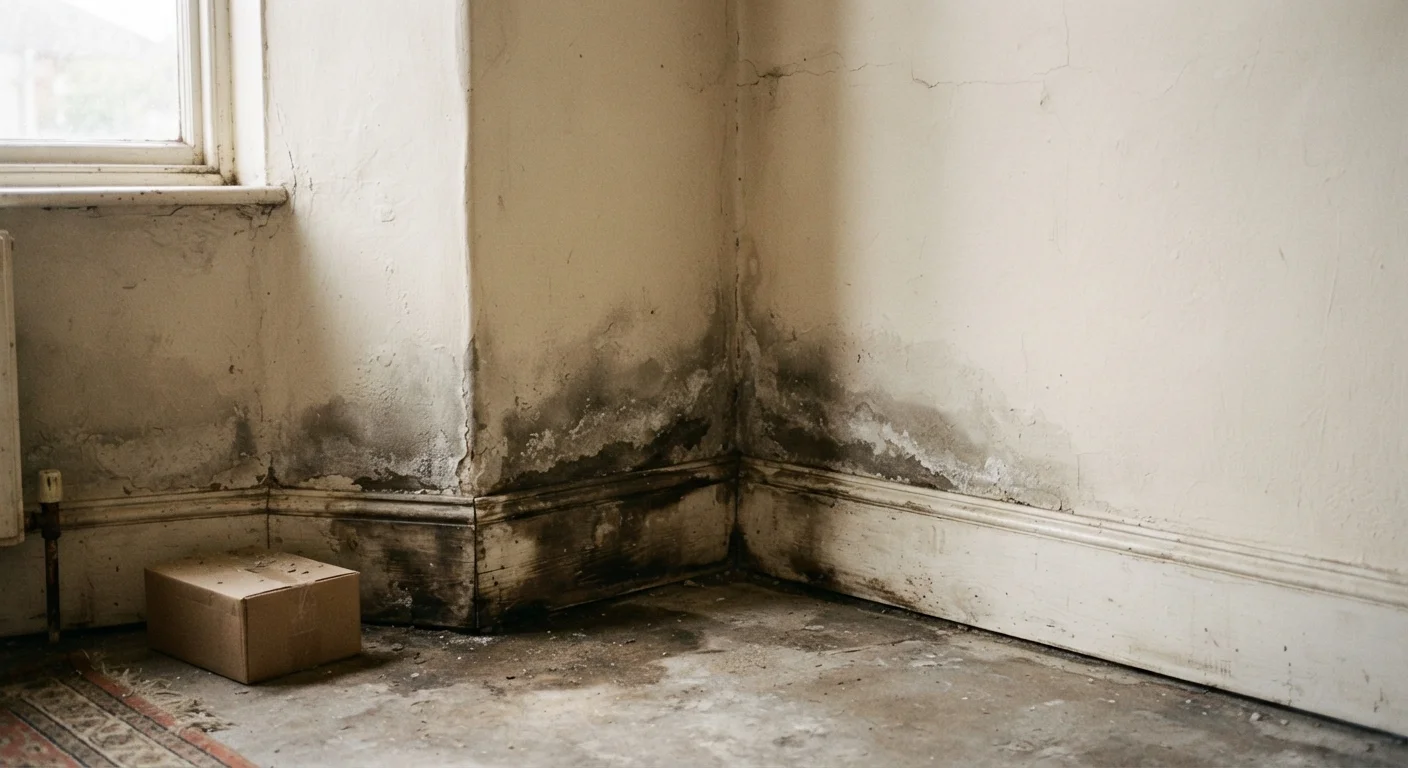
Rising damp — where groundwater travels upward through masonry via capillary action — does exist, but independent research and building surveys suggest it's much rarer than the remediation industry implies. Many properties diagnosed with rising damp are actually suffering from condensation settling at low levels, or from penetrating damp entering through defects in the building envelope. A proper diagnosis requires moisture profiling at different wall heights, salt analysis of plaster, and ideally an independent surveyor with no commercial stake in the outcome.
Myth
If there's black mould near the ceiling, it must be a roof or structural leak.
Fact
Black mould at ceiling level or in corners is one of the most reliable indicators of condensation, not structural water ingress.
Warm, moisture-laden air rises and meets cold surfaces — often external corners, north-facing walls, and ceiling junctions — where it cools and deposits moisture. Mould follows. Structural leaks typically produce staining in specific locations that track downward from a visible defect, and they tend to worsen during or after rainfall. Condensation-related mould is more diffuse, occurs in predictable cold spots, and often improves with better ventilation regardless of weather conditions.
Myth
Older homes without a damp-proof course will inevitably have serious damp problems.
Fact
Many pre-DPC homes have managed moisture effectively for decades through thick walls, breathable lime-based materials, and good ventilation.
Traditional construction — solid brick or stone walls finished with lime plaster and lime mortar — was designed to absorb and release moisture rather than block it. This breathable approach works well when left intact. Problems often arise when modern materials are introduced: cement-based renders, vinyl wallpapers, and foam-backed carpets trap moisture that the original fabric was designed to pass through. Retrofitting cement render or impermeable coatings onto a traditionally built wall can create worse damp conditions than existed before.
Myth
Installing a chemical damp-proof course injection will permanently fix rising damp.
Fact
Chemical DPC injections have a variable track record and will not address damp caused by condensation or penetrating water — the two most common culprits.
Even in cases of confirmed rising damp, injected chemical barriers must be combined with replastering using appropriate materials, and results can be inconsistent in rubble-filled or irregular masonry. When applied to walls that are actually suffering from condensation or external water ingress, injection treatments achieve nothing — moisture continues to appear, and the homeowner is left with a large bill and the same problem. Independent diagnosis first, treatment second, is always the safer sequence.
Myth
If the walls dry out in summer, the damp problem has resolved itself.
Fact
Seasonal drying masks rather than resolves underlying damp causes; the problem typically returns when conditions change.
Condensation is strongly seasonal — it intensifies in autumn and winter when indoor-outdoor temperature differences are greatest and ventilation tends to drop. Penetrating damp eases in dry periods but returns with rainfall if the defect is unrepaired. Apparent drying in warmer months can give a false sense of resolution, leading homeowners to delay investigation. Tracking when and where damp appears — noting weather conditions, room use, and heating patterns — provides far more diagnostic information than a single inspection at any one time of year.
What You Can Actually Do About It
Once you have a reliable diagnosis — ideally from an independent surveyor rather than a company that profits from remediation work — your options become much clearer.
70%+
Of indoor damp cases linked to condensation
Building pathology researchers and independent surveyors consistently find condensation to be the dominant cause of residential damp across UK and US housing stock.
~1 in 5
Homes misdiagnosed with rising damp
Independent surveys of properties referred for rising damp treatment frequently find alternative causes — particularly condensation — as the primary moisture source.
For condensation, the interventions are largely behavioural and mechanical: improving ventilation in kitchens and bathrooms, using extractor fans consistently, keeping indoor temperatures stable, and reducing moisture-generating activities without adequate airflow. Draught-proofing can help retain heat — but only if ventilation is addressed alongside it, or condensation risk increases.
For penetrating damp, the fix starts outside: repointing crumbling mortar, replacing damaged flashing, clearing blocked gutters, or resealing around window frames. These are maintenance tasks that, if deferred, tend to escalate — minor issues rarely stay minor. Water ingress through plumbing faults can look deceptively similar to penetrating damp; plumbing warning signs are worth ruling out early.
Get an Independent Survey Before Any Remediation
Companies that sell damp-proofing treatments have a financial interest in diagnosing treatable conditions. Before committing to any remediation work — especially chemical injection or full replastering — seek a paid assessment from an independent building surveyor or structural engineer who receives no commission from the work recommended. This single step can prevent thousands of dollars in unnecessary treatments.
For genuine rising damp, a structural damp-proof course may eventually be warranted, but only after independent confirmation of the diagnosis and an assessment of less invasive options. New homeowners encountering damp for the first time will find it useful to build a broader maintenance framework — our first-time homeowner maintenance guide covers the core systems and warning signs worth knowing from day one.