

| Normal household water pressure | 40–80 psi (U.S. Environmental Protection Agency guidelines) |
| Common cause of slow drains | Buildup of grease, hair, or soap scum |
| Leak detection tip | Check your water meter before and after a 2-hour no-use period |
| When to call a licensed plumber | Any time pipes, valves, or main supply lines are involved |
| Sewer gas odor source | Dry P-traps, cracked drain vents, or damaged sewer lines |
Why Plumbing Symptoms Deserve Early Attention
Plumbing problems rarely announce themselves all at once. More often, they build slowly — a stain here, a gurgle there — until something minor becomes a significant repair. For homeowners, recognizing what early symptoms actually mean is the difference between a quick fix and a costly emergency.
This reference covers the most common warning signs, what each one may indicate beneath the surface, and when the situation calls for a licensed plumber rather than a DIY approach. If you're newer to homeownership, our home maintenance foundation guide provides helpful context on how plumbing fits into your home's overall systems.
| Normal household water pressure | 40–80 psi (U.S. Environmental Protection Agency guidelines) |
| Common cause of slow drains | Buildup of grease, hair, or soap scum |
| Leak detection tip | Check your water meter before and after a 2-hour no-use period |
| When to call a licensed plumber | Any time pipes, valves, or main supply lines are involved |
| Sewer gas odor source | Dry P-traps, cracked drain vents, or damaged sewer lines |
Common Warning Signs and What They May Indicate
Low or Inconsistent Water Pressure
A sudden or gradual drop in pressure throughout your home — not just one fixture — often points to a problem with the main supply, a failing water pressure regulator, or sediment buildup inside older pipes. If only a single faucet is affected, the aerator (the small mesh screen at the tip) may simply be clogged and can be removed and rinsed. Pressure issues across multiple fixtures warrant a professional assessment.
Slow or Gurgling Drains
A single slow drain usually indicates a localized blockage from hair, grease, or soap residue. However, when multiple drains are slow simultaneously — or you hear gurgling sounds from one drain when another is in use — this can signal a blockage deeper in the system, potentially in the sewer lateral. Gurgling from a toilet when the shower runs is a particularly telling sign. Repeated chemical drain treatments can damage pipes over time and are not a substitute for properly clearing a blockage.
Water Stains or Discoloration on Walls and Ceilings
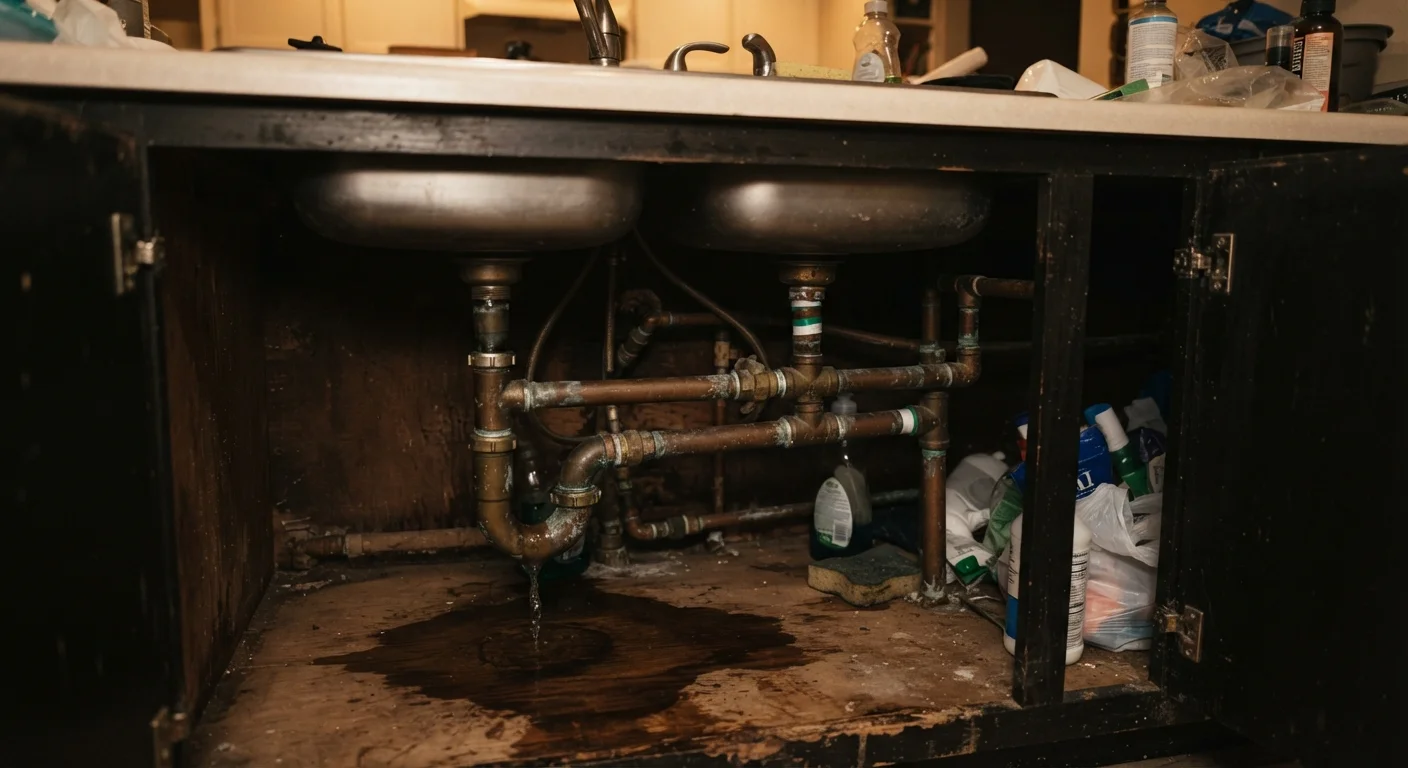
Brown or yellowish stains on ceilings below an upper bathroom, or along walls near supply lines, often indicate an active or intermittent leak. These stains rarely resolve on their own — the moisture source needs to be identified and stopped. See our related article on what damp walls are actually telling you for help distinguishing leak-related moisture from condensation or rising damp.
Sewage or Rotten-Egg Odors
A sulfur or sewer smell indoors typically means sewer gases are escaping somewhere they shouldn't be. Common causes include a dry P-trap (often in a rarely used sink or floor drain), a cracked drain vent pipe, or damage to the sewer lateral itself. Running water briefly in unused drains can resolve a dry P-trap. Persistent odors despite that fix suggest a more serious issue requiring professional diagnosis.
Banging or Knocking Pipes
Loud banging when you turn off a faucet quickly — sometimes called water hammer — is caused by a pressure surge as flow stops abruptly. While occasional minor knocking is common, frequent or severe water hammer can stress joints and fittings over time. Homes with older plumbing or very high supply pressure are more susceptible. A licensed plumber can install water hammer arrestors or adjust pressure regulation if needed.
When to Stop and Call a Professional
Any plumbing work involving the main shutoff valve, gas-adjacent lines, or structural elements of the home should be handled by a licensed plumber. Unpermitted plumbing work can create code violations and affect your homeowner's insurance coverage. Always verify local permit requirements before attempting any repair beyond basic drain clearing.
Unexpectedly High Water Bills
A spike in your water bill without a clear lifestyle reason — more guests, seasonal irrigation — is a reliable indicator of a hidden leak. A simple way to check: record your water meter reading, avoid using any water for two hours, then re-read the meter. Any change suggests a leak somewhere in the system. Silent toilet leaks (where water continuously runs from tank to bowl) are among the most common and easiest-to-overlook culprits. You can confirm one by placing a few drops of food coloring in the tank — if color appears in the bowl without flushing, the flapper needs replacing.
Understanding the Bigger Picture
Many of these warning signs are interconnected. Slow drains and sewage odors together suggest a systemic drain issue rather than isolated clogs. Water stains alongside high bills point strongly toward an active leak rather than past condensation. Treating symptoms individually without considering what they may share in common can lead to repeated repairs rather than a lasting fix.
It's also worth knowing that ignored plumbing issues tend to escalate. Our article on what happens when minor maintenance gets ignored walks through how small problems compound over time. And if you're unsure whether a particular repair is within DIY territory, our guide to DIY vs. hiring a tradesperson offers a practical decision framework.
Water hammer
A loud banging or knocking sound inside pipes caused by a sudden change in water flow or pressure, often when a valve closes quickly. It can stress pipe joints over time and may indicate a pressure regulation issue.
P-trap
The curved pipe section beneath a sink or drain that holds a small amount of water, forming a seal that blocks sewer gases from entering the home. A dry or damaged P-trap allows odors to escape.
Water pressure regulator
A device installed on the main water supply line that reduces incoming pressure to a safe, consistent level for household use. A failing regulator can cause both low and excessively high pressure.
Efflorescence
White, chalky mineral deposits left on concrete or masonry surfaces when water moves through and then evaporates. On basement walls, it often indicates water is migrating through the foundation.
Backflow
The unwanted reversal of water flow in a plumbing system, which can allow contaminated water to enter the clean supply. This is a potential health hazard and often requires a licensed plumber to address.
Sewer lateral
The underground pipe connecting your home's internal drain system to the municipal sewer main. Damage, root intrusion, or blockages in this pipe are the homeowner's responsibility to repair.
Plumbing is one of several home systems worth monitoring together. Moisture problems, for example, can originate from gutters as easily as from internal pipes — see why gutters deserve more attention than you're giving them for that angle. Similarly, if you're noticing multiple warning signs across systems, consider a broader home assessment that includes signs your electrical wiring needs professional assessment.
This article is for general informational purposes only and does not constitute professional plumbing advice. Always consult a licensed plumber for diagnosis and repair of plumbing issues in your home, and verify local code and permit requirements before undertaking any work.